How to Fix a Running Toilet in 6 Steps (and Stop the Hissing)
By Mike Holt, NJ Master Plumber · October 31, 2026 · 6 min read · Updated November 1, 2026
Quick answer
A running toilet is almost always one of three things: a worn flapper that lets water leak into the bowl, a chain that's too short to let the flapper close, or a float set so high that water spills into the overflow tube. Check each in that order; a dye test shows if it's the flapper.
- Difficulty
- Easy
- Time
- 15 to 45 minutes
- You need
- Food coloring, a new flapper, a flathead screwdriver, towels
Rather not risk it? A licensed plumber can handle this for you, with written upfront flat-rate pricing options before any work starts.
A toilet that runs or hisses between flushes is losing water from the tank and refilling it over and over. The good news: the fix is almost always inside the tank, needs no special tools, and the parts cost a few dollars at any hardware store in Central New Jersey. Work through the steps in order, because each one rules out a cause.
How does a toilet tank work?
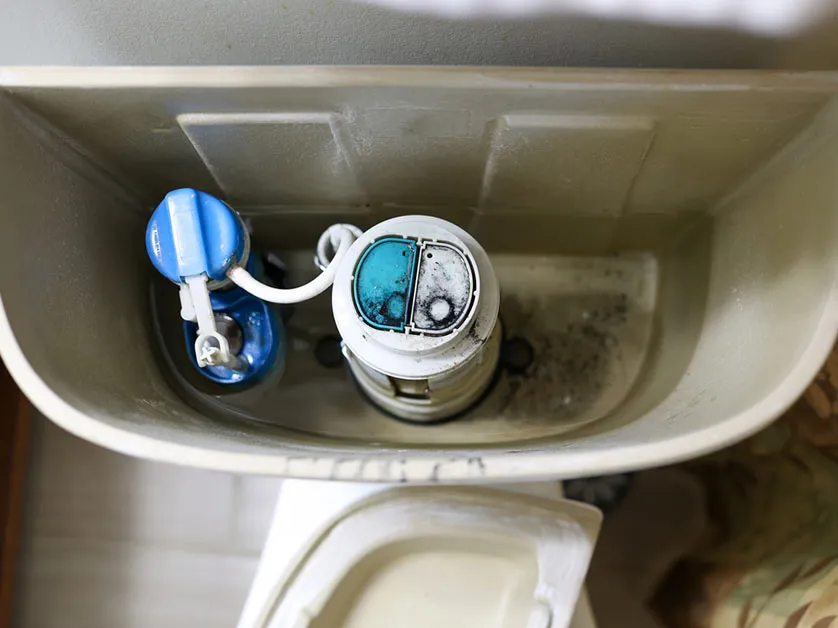
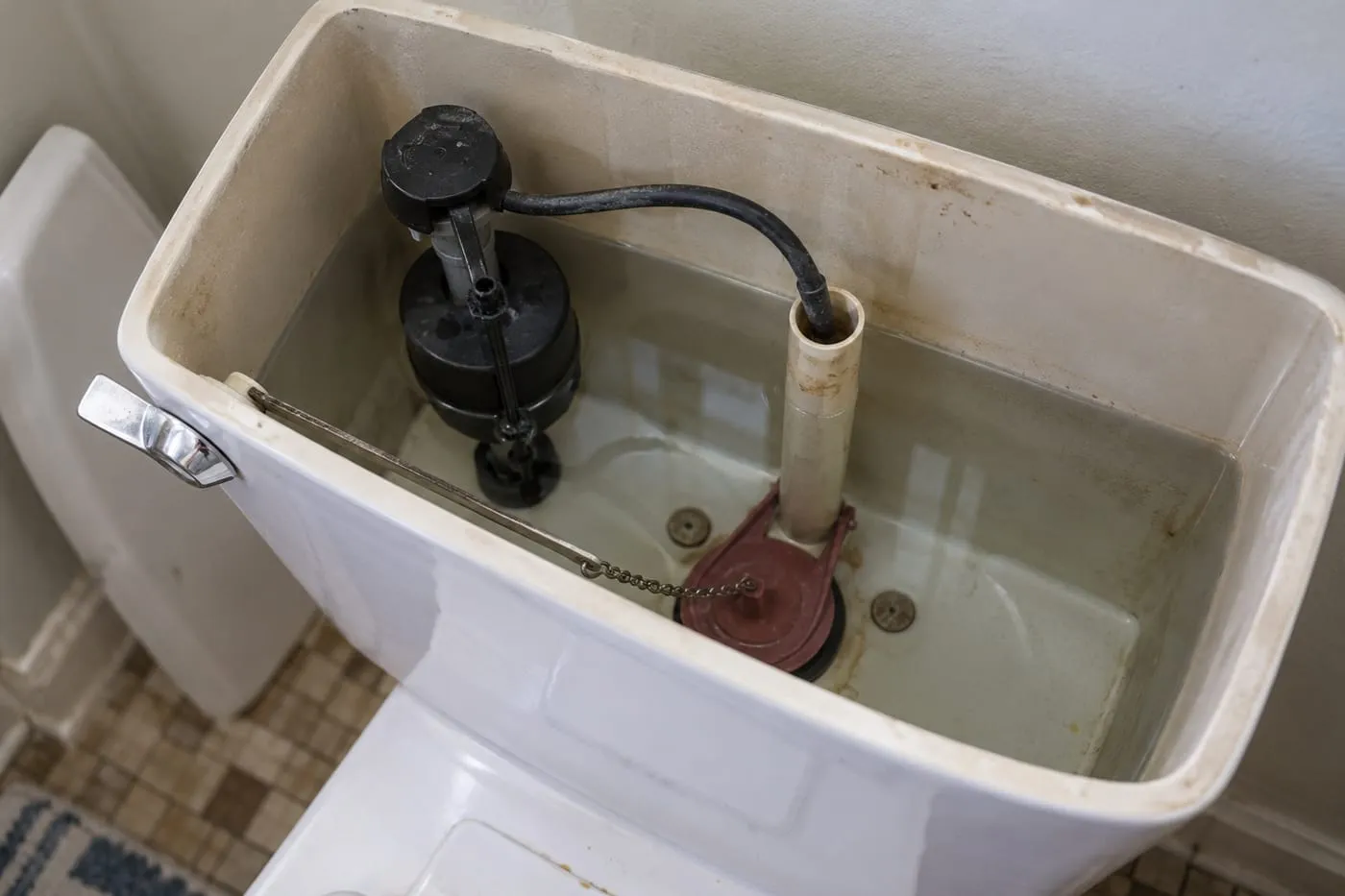
Knowing the three parts makes the rest easy. When you flush, the handle pulls a chain that lifts the flapper, a rubber seal at the bottom of the tank, and the water rushes into the bowl. The flapper drops shut as the tank empties. Then the fill valve, the tall part on the left with a float, refills the tank until the float rises and shuts it off. The overflow tube, the open pipe in the middle, is a safety drain in case the water gets too high. A running toilet means one of these isn't doing its job.
How to fix a running toilet
Step 1: Lift the lid and watch a flush
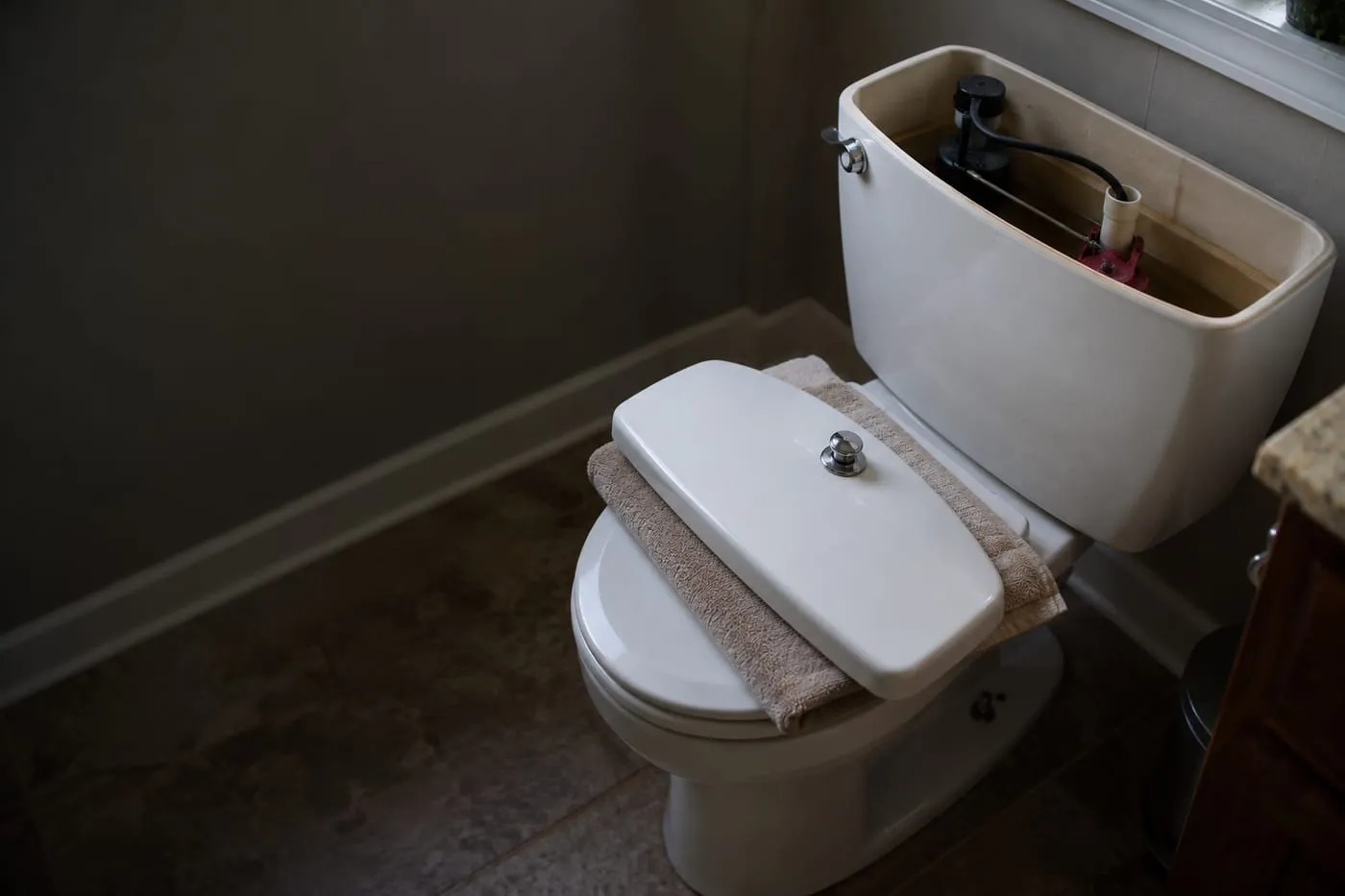
Take the tank lid off and set it on a towel on the floor. It's heavier than it looks and cracks easily. Flush and watch what happens:
- The flapper should lift, then drop flat over the drain hole once the tank empties.
- The water should stop rising about an inch below the top of the overflow tube.
- The hissing should stop within a minute.
What you see points to the fix. If water keeps spilling into the overflow tube, go to step 5. If everything looks normal but it runs again later, the flapper is leaking slowly. The dye test confirms it.
Step 2: Do a dye test
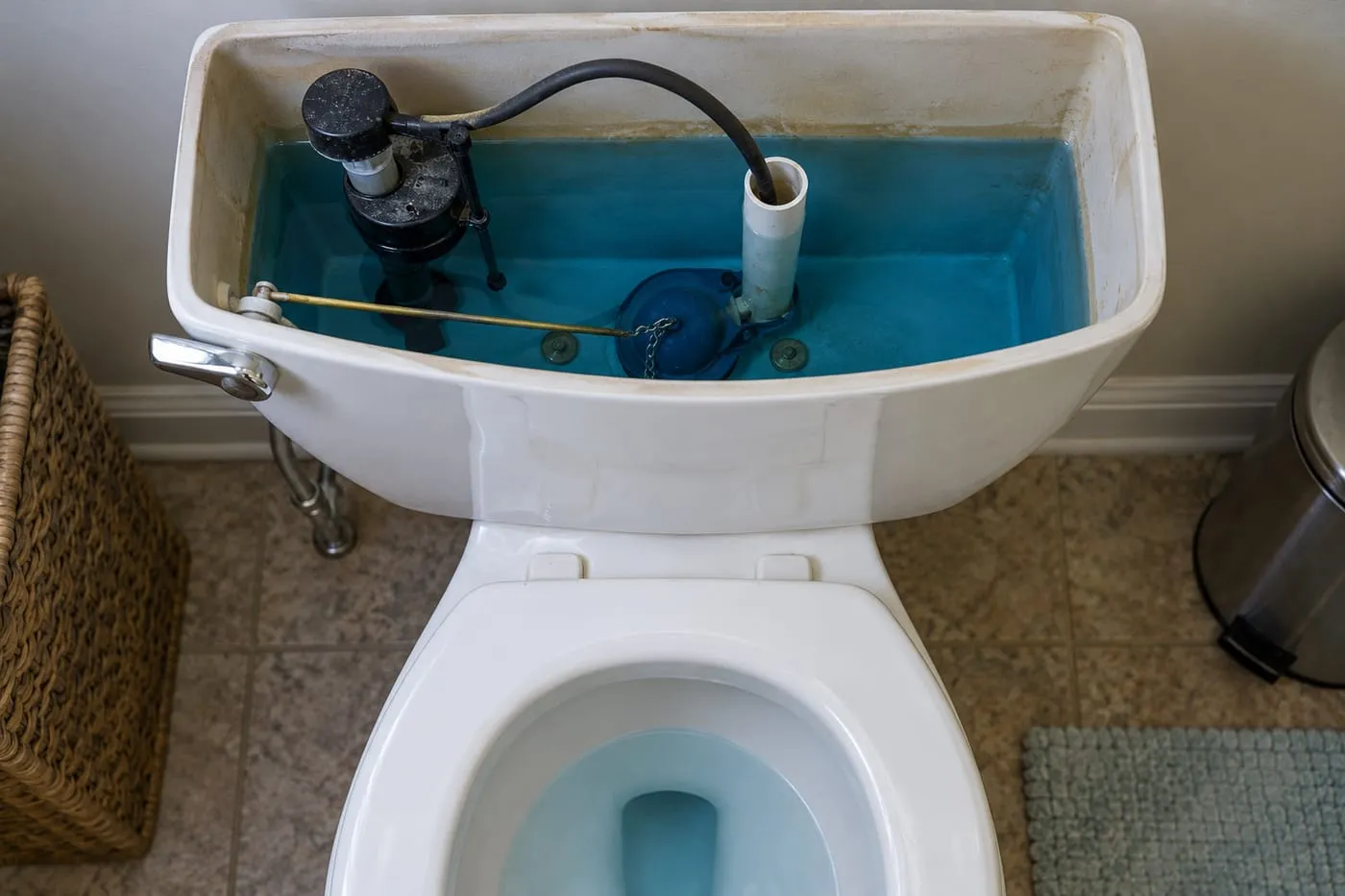
Put 5 to 10 drops of food coloring in the tank water. Don't flush, and wait 20 minutes. Water leaking past the flapper carries the color into the bowl.
- Color in the bowl: the flapper or the seat under it is leaking. Go to steps 3 and 4.
- Bowl stays clear, but the toilet still runs: the water is escaping through the overflow tube. Go to step 5.
Flush afterward so the dye doesn't stain the bowl.
Step 3: Check the chain
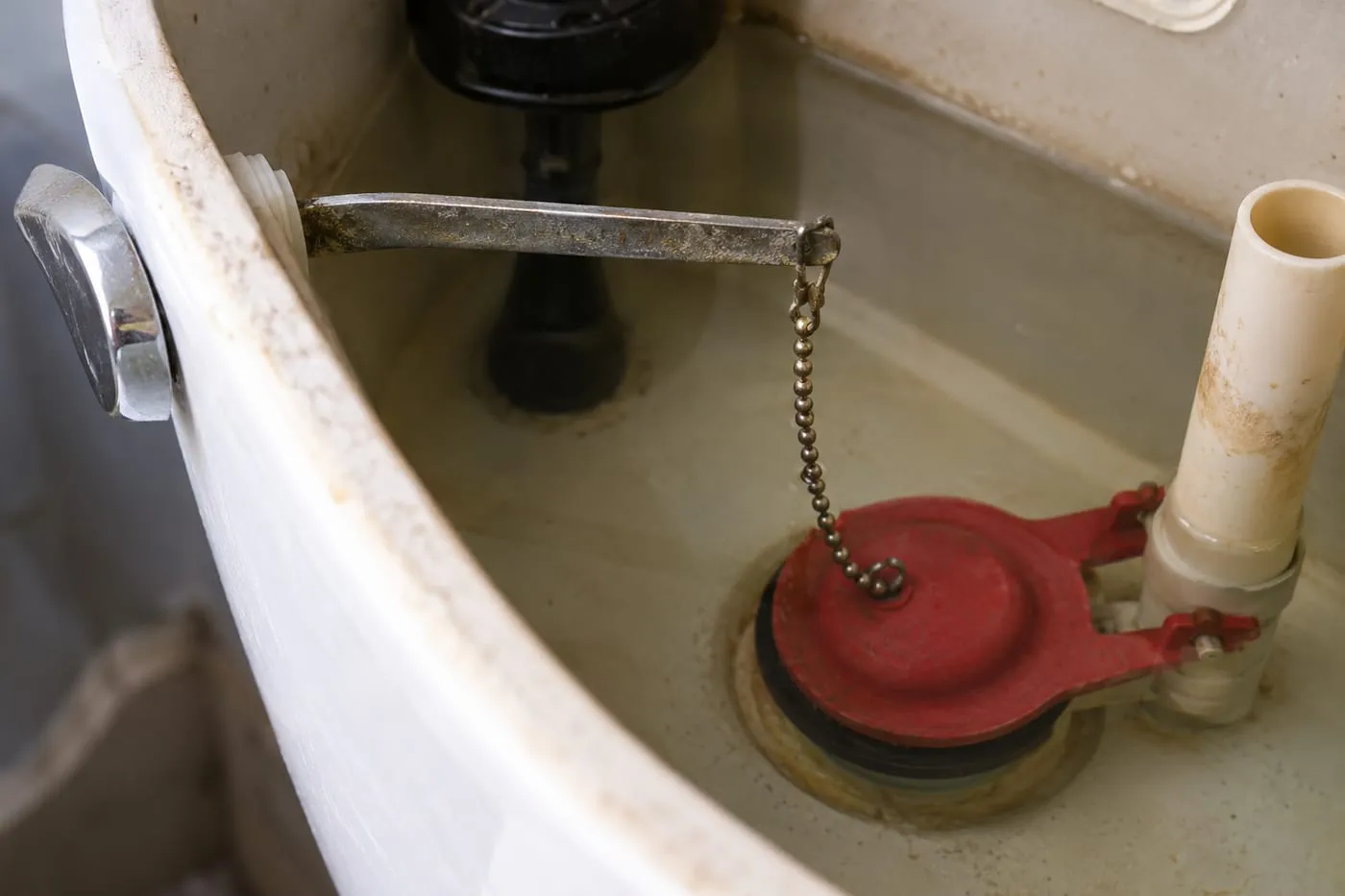
The chain from the flush handle to the flapper needs about half an inch of slack when the flapper is closed. Too short, and it holds the flapper slightly open, so the tank leaks nonstop. Too long, and the extra chain gets trapped under the flapper and holds it open.
Move the clip one link at a time, flush and check again. A common mistake is leaving a long tail of extra chain. Trim it or hook it back on itself so it can't drift under the flapper. You'll know it worked when the flapper drops flat every time and the tank stays full.
Step 4: Replace the flapper
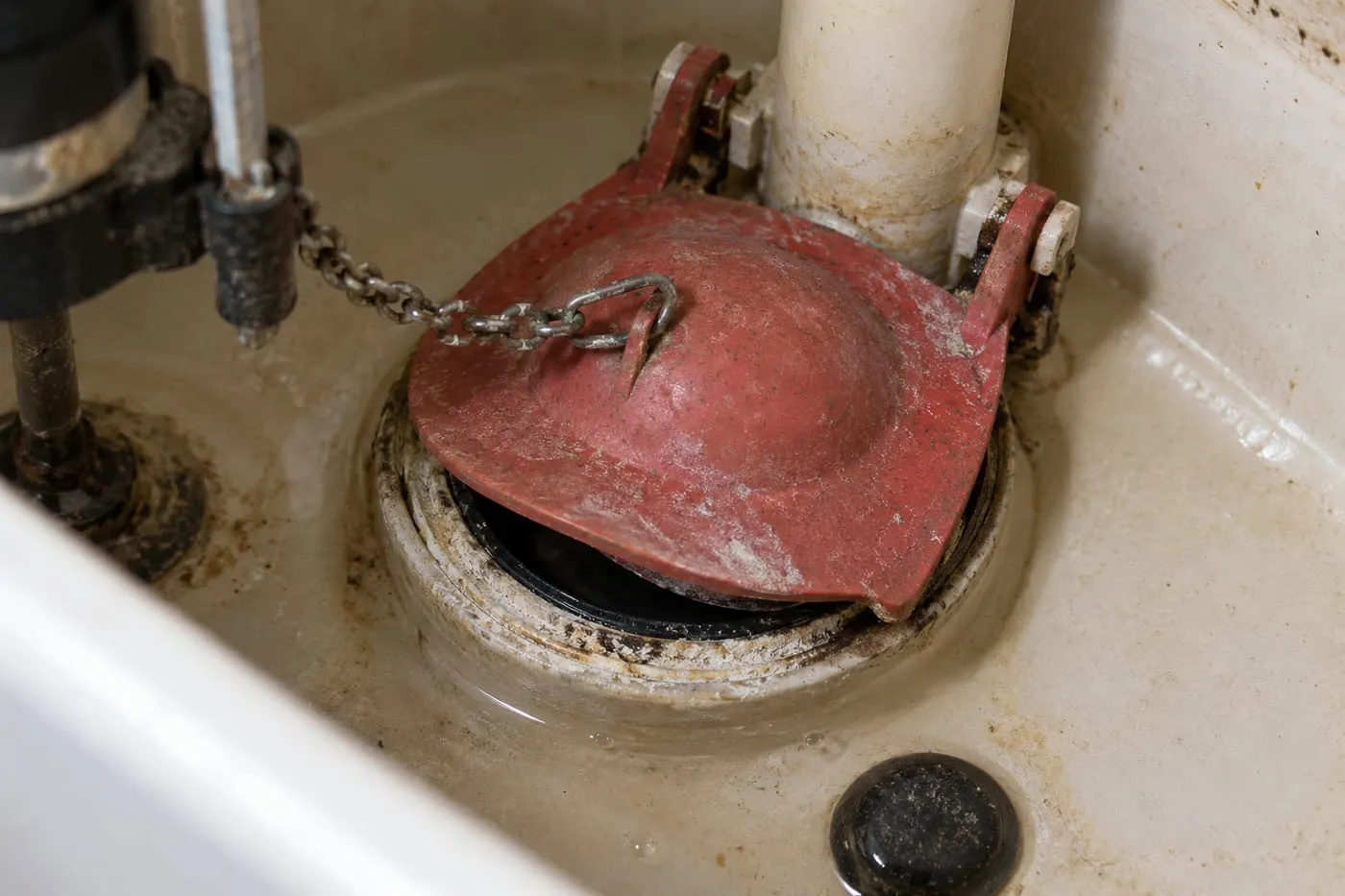
Flappers wear out every few years. Chlorine in the water makes the rubber hard, warped or slimy, and then it stops sealing. Rub it with your finger. If it feels stiff, or leaves black on your fingertip, replace it.
- Turn the valve behind the toilet clockwise to shut the water off, then flush to empty the tank.
- Unhook the flapper's ears from the two pegs on the overflow tube and unclip the chain.
- Take it to the hardware store. Most are 2 inch; some newer toilets use 3 inch. Matching the old one is the easiest way to get it right.
- Clip the new one on, attach the chain with half an inch of slack, and turn the water back on.
Wipe the round seat under the flapper with a rag while the tank is empty. Mineral buildup there can stop even a new flapper from sealing. Do the dye test again to confirm.
Step 5: Lower the water level
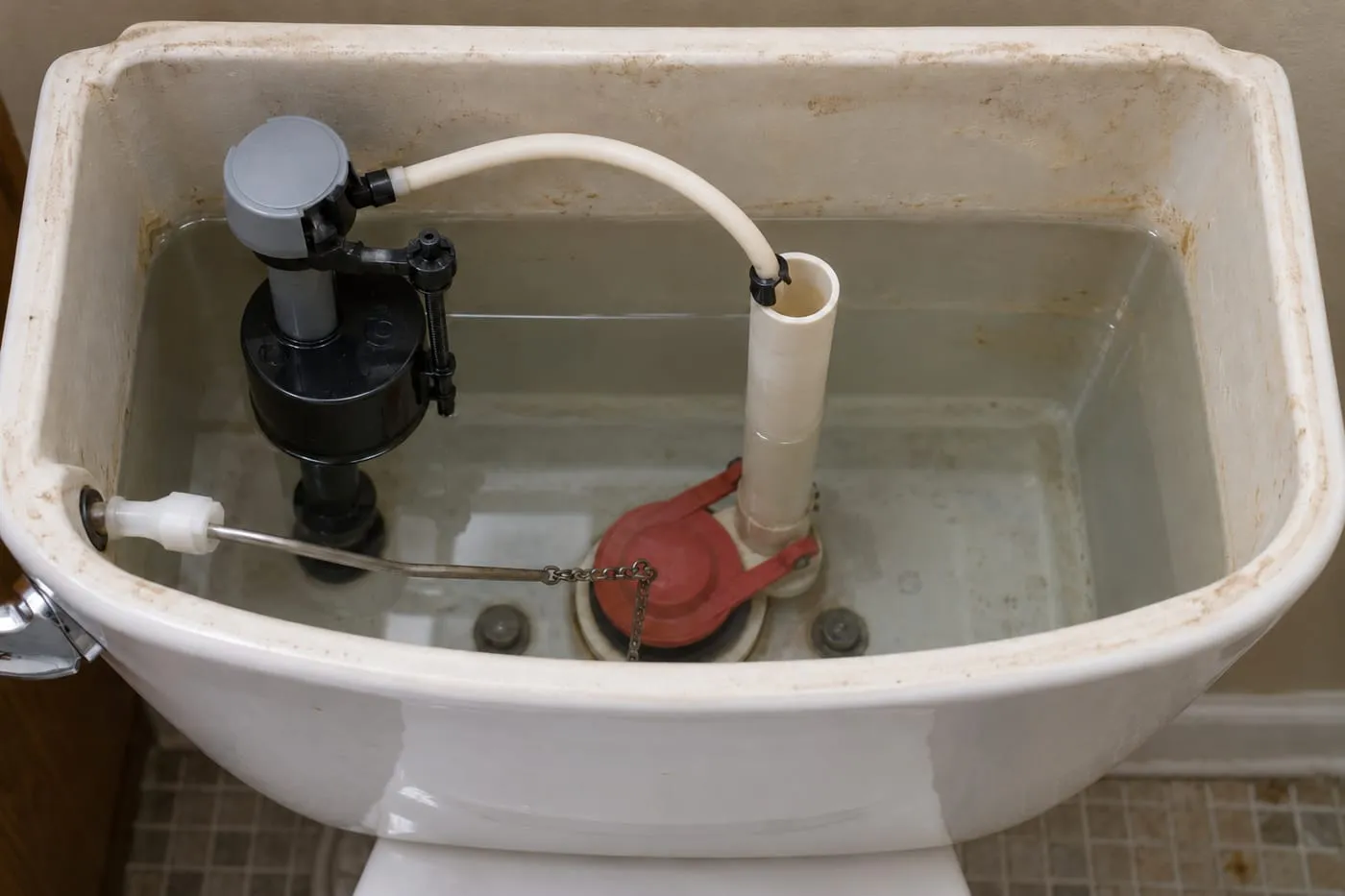
If water spills into the top of the overflow tube, the float is set too high, so the fill valve never gets the signal to shut off. Most tanks have a line marked on the inside wall; otherwise aim for about an inch below the top of the overflow tube.
- Modern fill valve (a float that slides on the valve): turn the adjustment screw or squeeze the clip and slide the float down.
- Older ball float on an arm: turn the screw on top of the valve, or bend the arm down slightly.
Lower it a little at a time and flush between adjustments. Too low and the flush gets weak.
Step 6: Fix a fill valve that keeps hissing
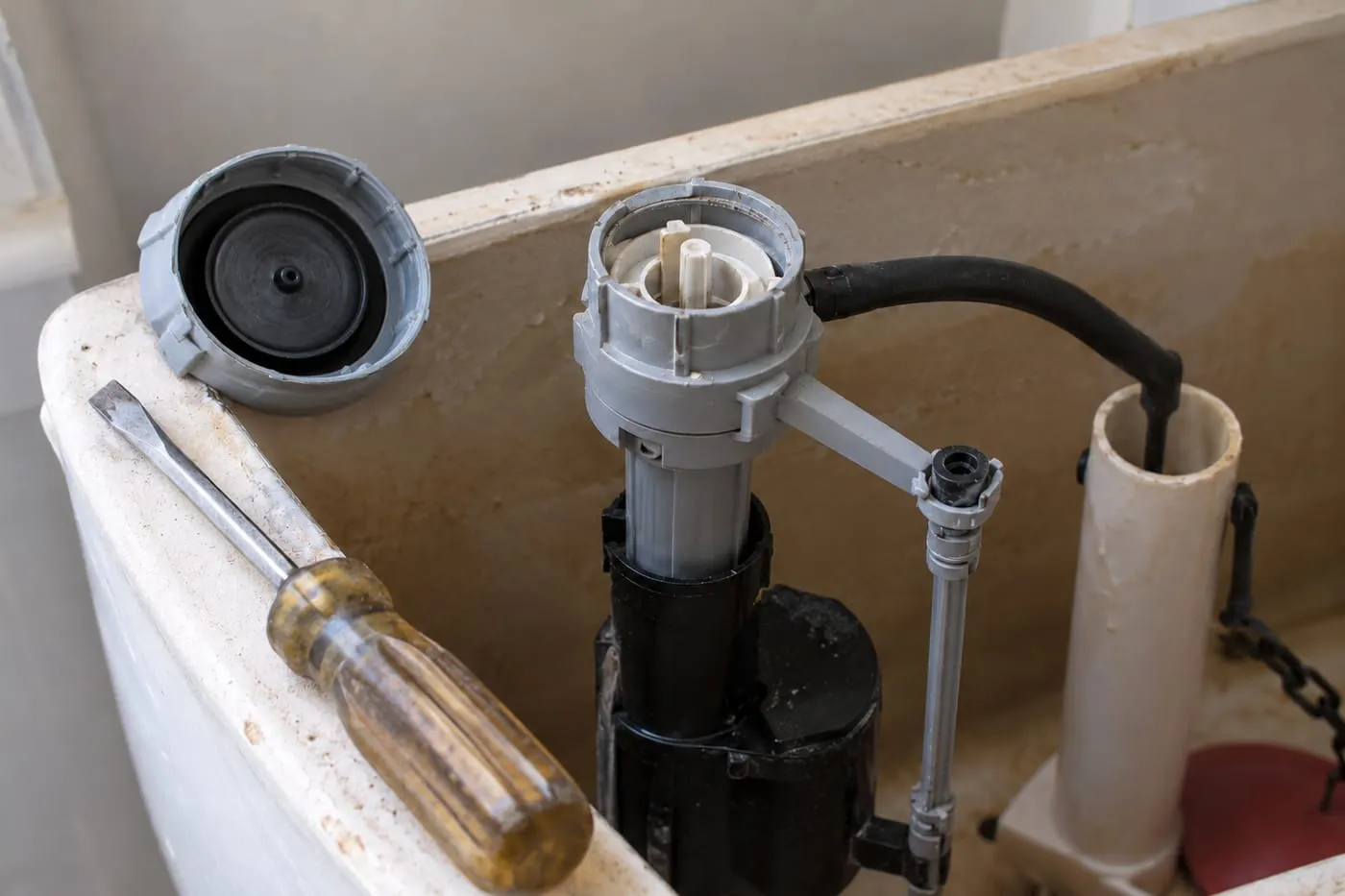
If the flapper seals and the water level is right but the hiss won't stop, grit or a worn seal is keeping the fill valve from closing. Shut off the water and flush. On many valves you can twist off the top cap, rinse the seal and hold a cup over the open valve while you turn the water on for a second to flush out debris.
If that doesn't stop it, replace the whole fill valve. It comes as one kit that fits most toilets and takes about 20 minutes. You'll know it worked when the tank fills, the valve clicks off and the bathroom goes quiet.
Why does my toilet run every few minutes?
That's called phantom flushing. The tank slowly leaks into the bowl until the level drops far enough to trigger a short refill. It's the flapper, or the flush valve seat it sits on. If a new flapper doesn't stop it, the seat may be chipped or worn, and replacing it means taking the tank off the bowl.
How much water does a running toilet waste?
More than it sounds like. A flapper that leaks silently can waste hundreds of gallons a day, and you won't notice until the water bill comes. If your bill jumped and you can't find a leak, start with a dye test on every toilet in the house. If a toilet won't fill at all, see our guide to toilets that won't fill.
Common mistakes to avoid
- Buying the wrong flapper size. Bring the old one to the store.
- Overtightening anything plastic inside the tank. Hand tight is enough.
- Using tablet cleaners that sit in the tank. Many contain bleach that wears out the flapper faster.
- Bending a modern fill valve's float. Only old brass ball floats are meant to be bent.
When should I call a plumber?
Call us if the toilet still runs after a new flapper and a float adjustment, if water drips from the tank bolts onto the floor, or if the valve behind the toilet won't turn off. We replace flappers, fill valves, flush valves and whole toilets, with written upfront flat-rate pricing options before we start. See toilets, faucets and fixtures. If your toilet is clogged instead, see how to unclog a toilet.
Get tips and reminders
New guides and seasonal reminders. A few emails a year.
Stop and call us if
- The toilet still runs after you've replaced the flapper and adjusted the float.
- Water is leaking onto the floor from the tank bolts or the base of the toilet.
- The valve behind the toilet won't turn off, or drips when you turn it.
- The tank is cracked.
- The flush valve seal under the flapper is worn and the tank has to come off to replace it.
Call 908-873-6686.

Michael Holt
Owner and operator of Plumbing Doctor, NJ Master Plumber (Lic. #36BI01345600) and U.S. Marine Corps veteran.
More about Mike