Call 908-873-6686Veteran-owned · NJ Master Plumber Lic. #36BI01345600
Plumbing Doctor van, protecting your health and sanitation4.9 174 reviews
on Google
4.9 121 reviews
on Thumbtack
Call 24/7908-873-6686Request service
Plumbing Tips

Plumbing how-to guides

Plain guidance from a NJ Master Plumber, including when to stop and call a professional.

4.9 stars, 174 Google reviews · NJ Master Plumber Lic. #36BI01345600

New Homeowner Plumbing Checklist: 9 Things to Do in Your First Week

By Mike Holt, NJ Master Plumber · September 13, 2024 · 3 min read · Updated November 1, 2026

Quick answer

In your first week, find and test the main water shut-off, learn where the other shut-off valves are, check the water heater's age, test the sump pump, use the water meter to check for hidden leaks, find the sewer cleanout, and run every faucet and toilet. Then book a plumbing inspection with a sewer camera if the house is older.

Difficulty
Easy
Time
About 1 hour
You need
Flashlight, bucket, phone camera

Save this guide so it's one tap away in an emergency.

Add our number

Rather not risk it? A licensed plumber can handle this for you, with written upfront flat-rate pricing options before any work starts.

The first week in a new home is the best time to learn how its plumbing works, before anything goes wrong. These nine steps take about an hour, and you'll know where to go if a pipe ever bursts.

Your first-week plumbing checklist

Step 1: Find and test the main water shut-off
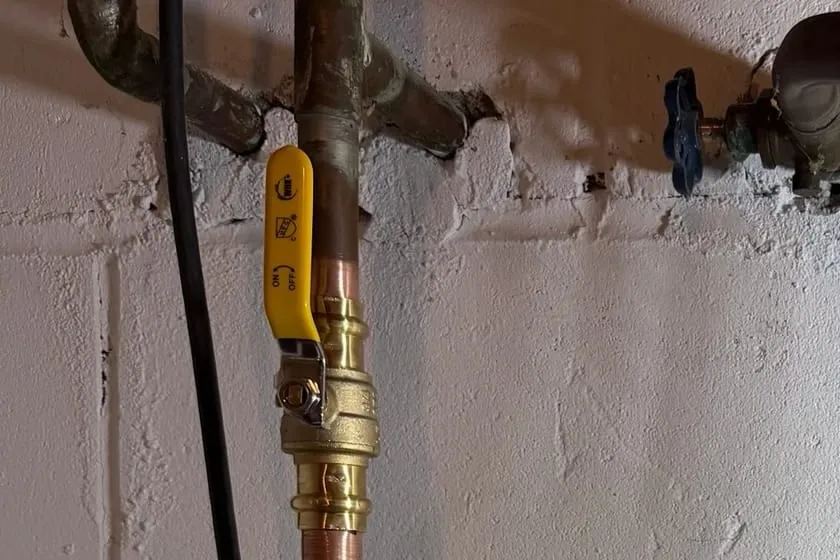
Main water shut-off valve with a yellow handle on a copper pipe in a basement

It's usually in the basement next to the water meter, where the line comes through the foundation wall. Turn it off, open a faucet to confirm the water stops, then turn it back on. If it's stuck or leaks at the stem, get it replaced before you need it.

Step 2: Find the other shut-off valves
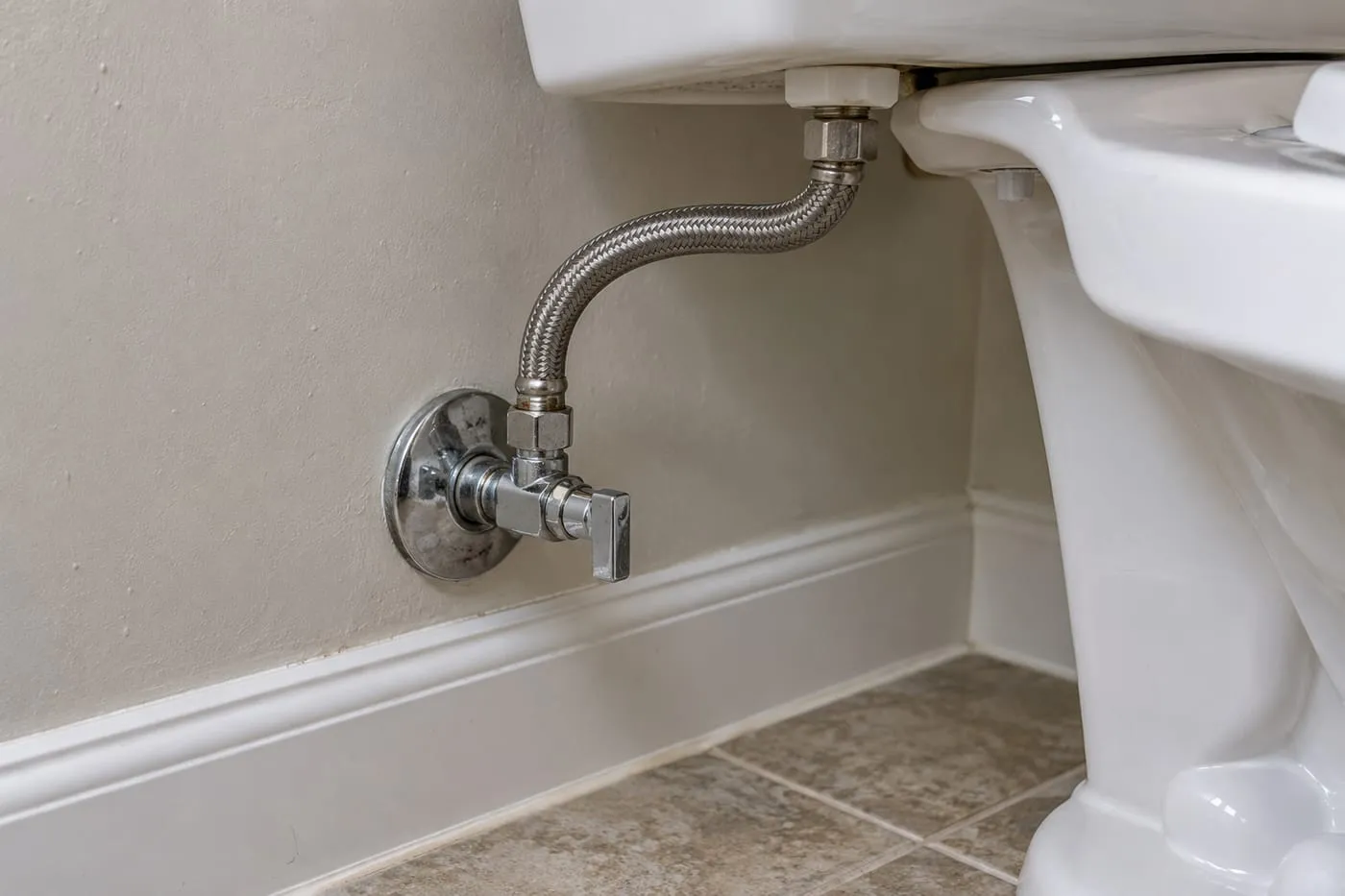
Chrome shut-off valve and braided supply line behind a toilet

Check for a shut-off valve under each sink, behind each toilet, on the cold water pipe above the water heater and behind the washing machine. Outdoor faucets usually have their own valve in the basement. Take photos so you remember where they are.

Step 3: Check the water heater's age and condition
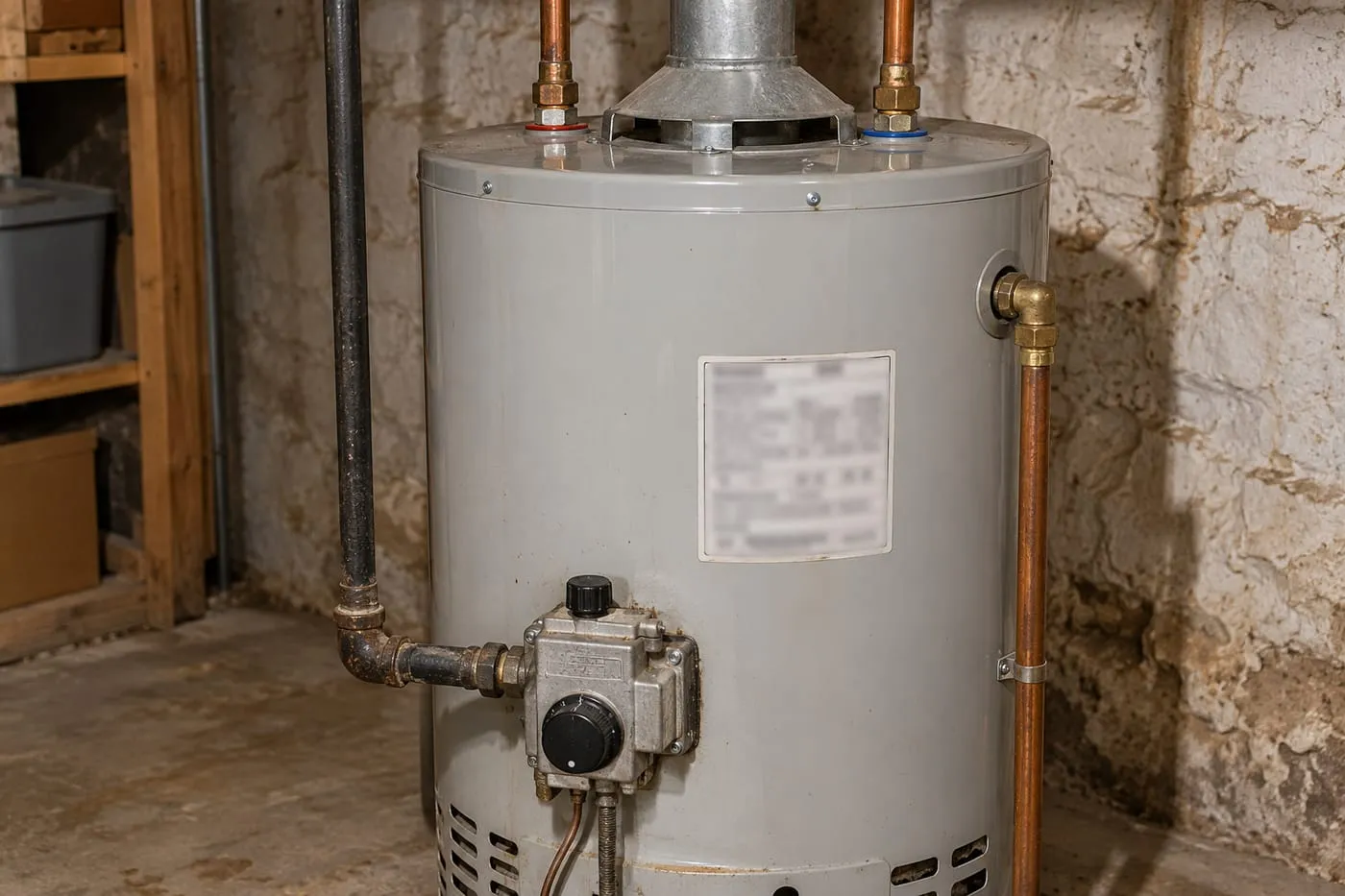
Side of a gas water heater showing the rating plate, gas valve and water pipes

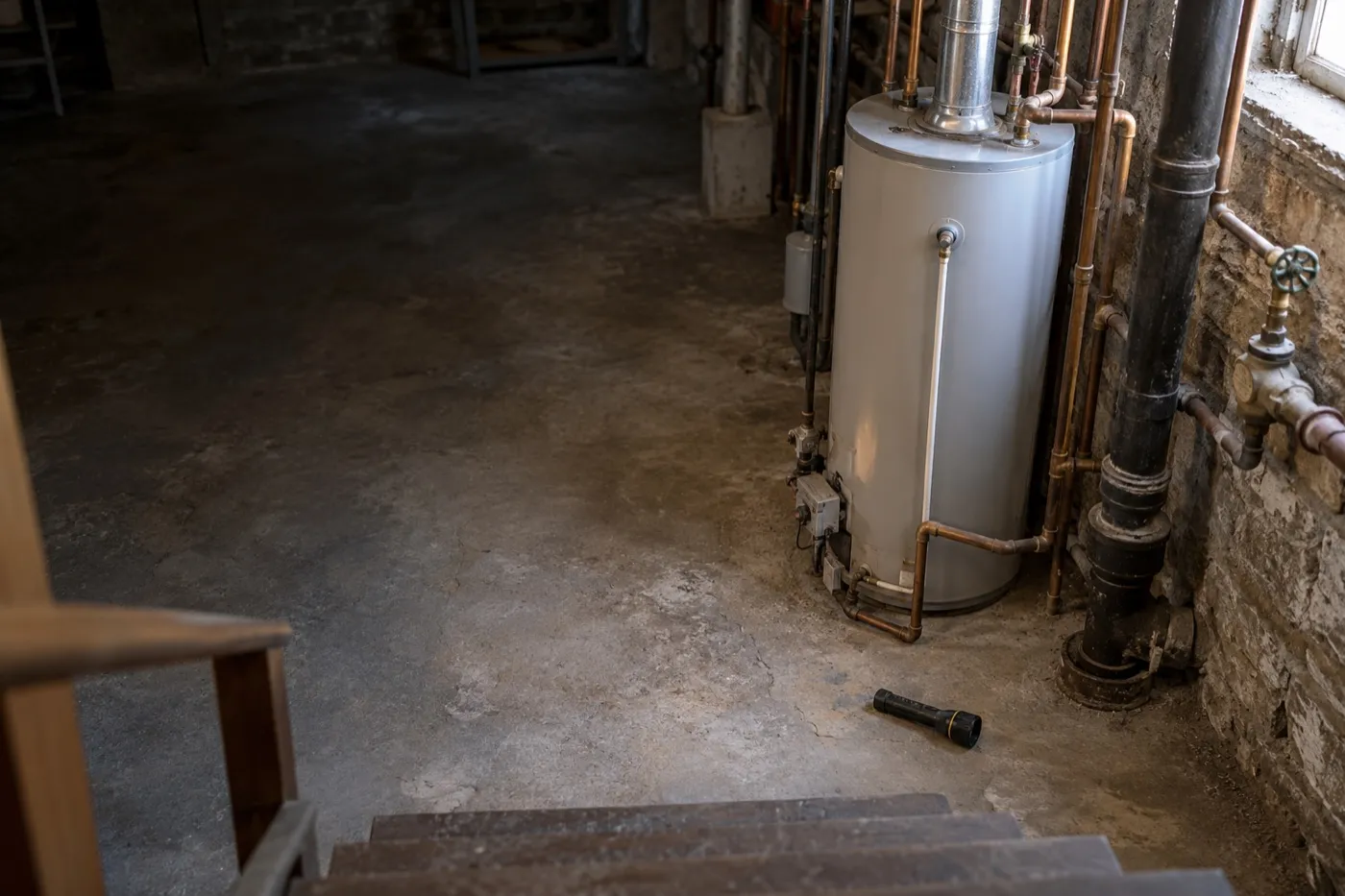
Find the rating plate on the side of the tank. The manufacture date is on it or coded in the serial number. Look for rust, water around the base and a pipe on the relief valve that runs down toward the floor. How long a heater lasts varies, so have a plumber look at one that's showing its age.

Step 4: Test the sump pump
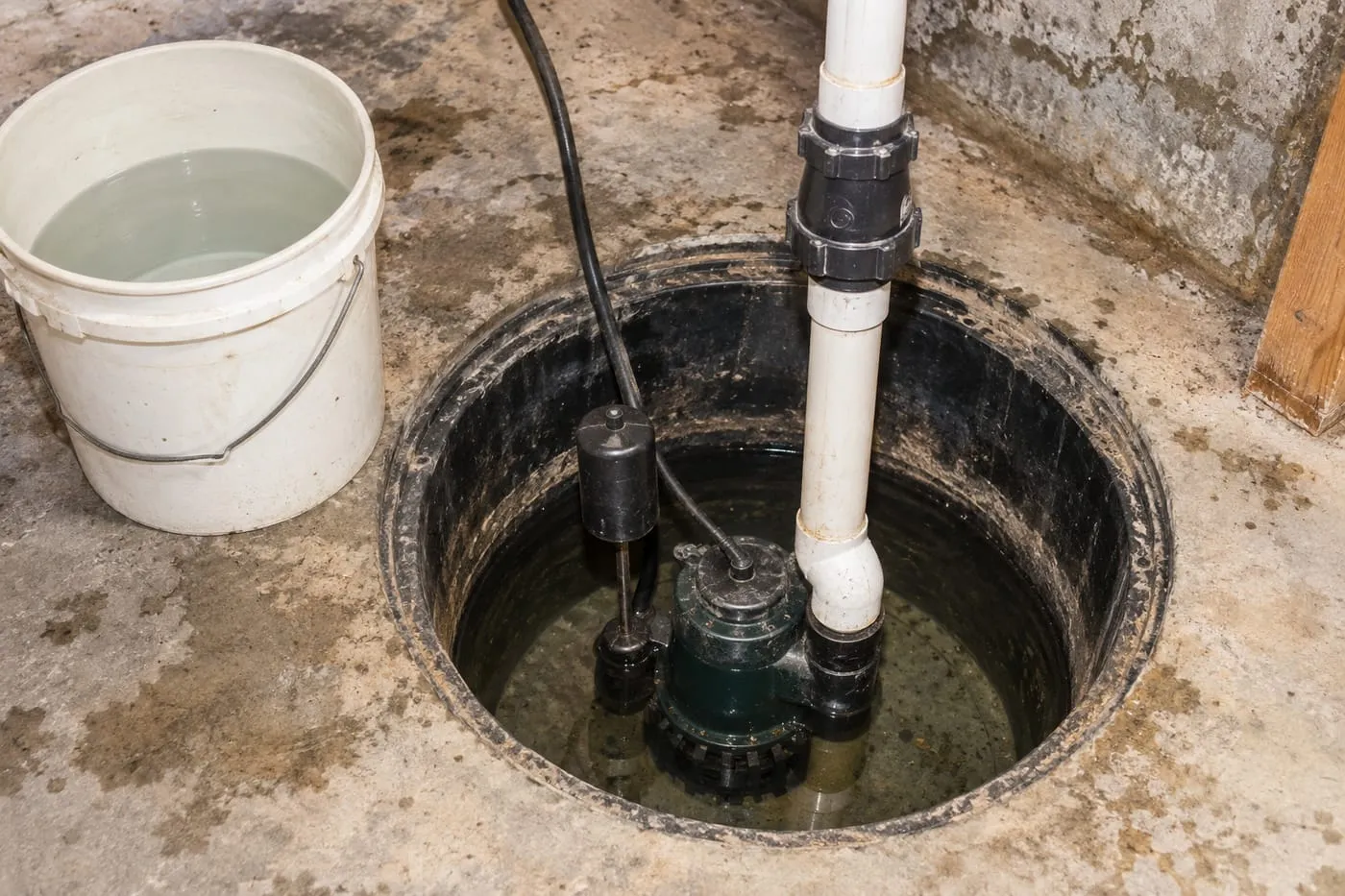
Sump pump in a basement pit with its float and discharge pipe

If the house has a sump pit and the floor around it is dry, stand clear and pour a bucket of water into it. The pump should start, empty the pit and stop on its own. Then check outside that the discharge pipe sends the water away from the house. Don't touch a plug, outlet or pump if there's standing water.

Step 5: Check for hidden leaks with the water meter
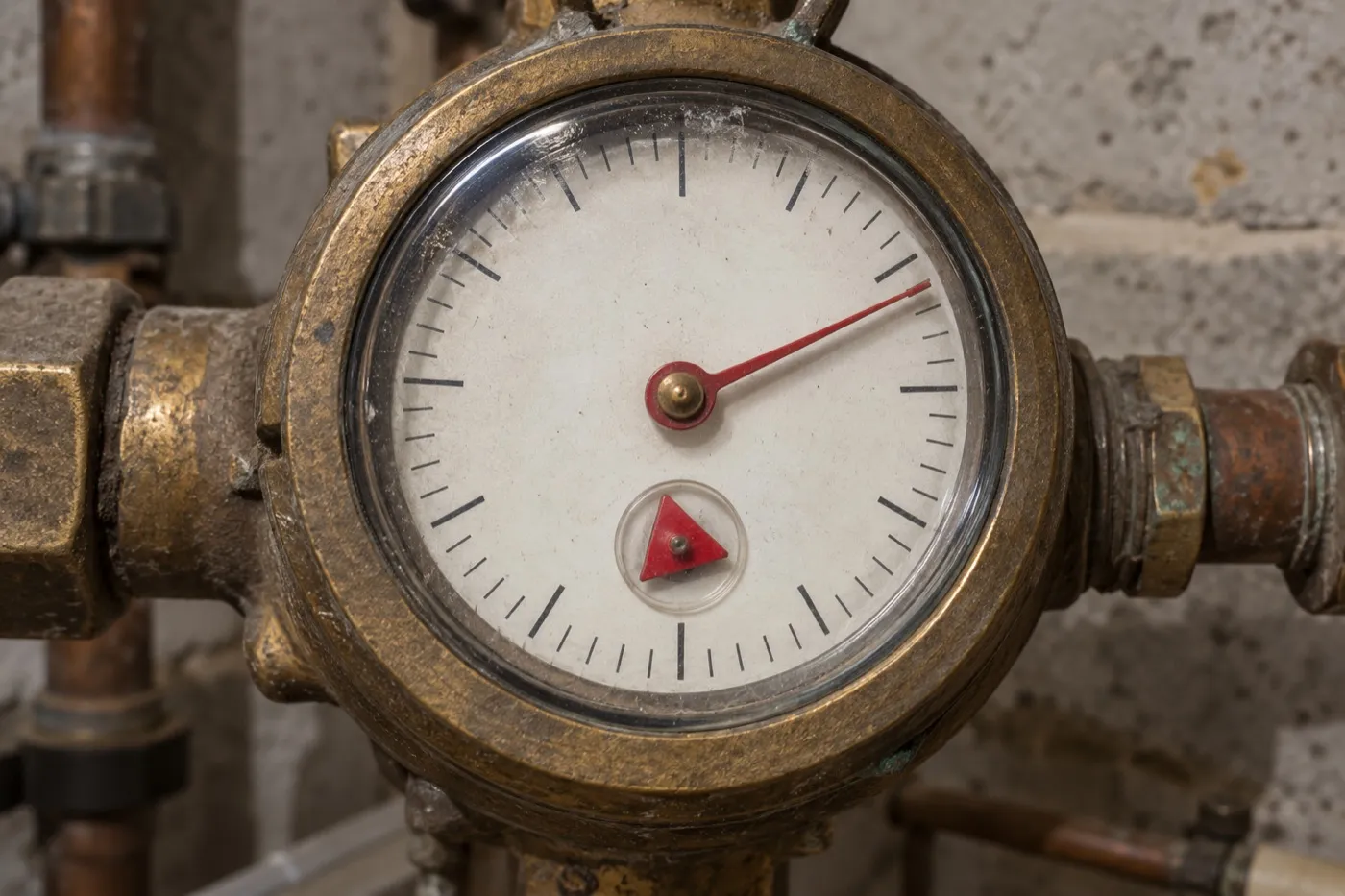
Close-up of a residential water meter dial under glass with a small red leak indicator

Turn off every faucet, the dishwasher, the washer and the ice maker. Look at the water meter. If the dial or the small leak indicator is still moving, water is leaking somewhere, maybe a running toilet or a pipe inside a wall. Our leak detection team can find it.

Step 6: Find the sewer cleanout
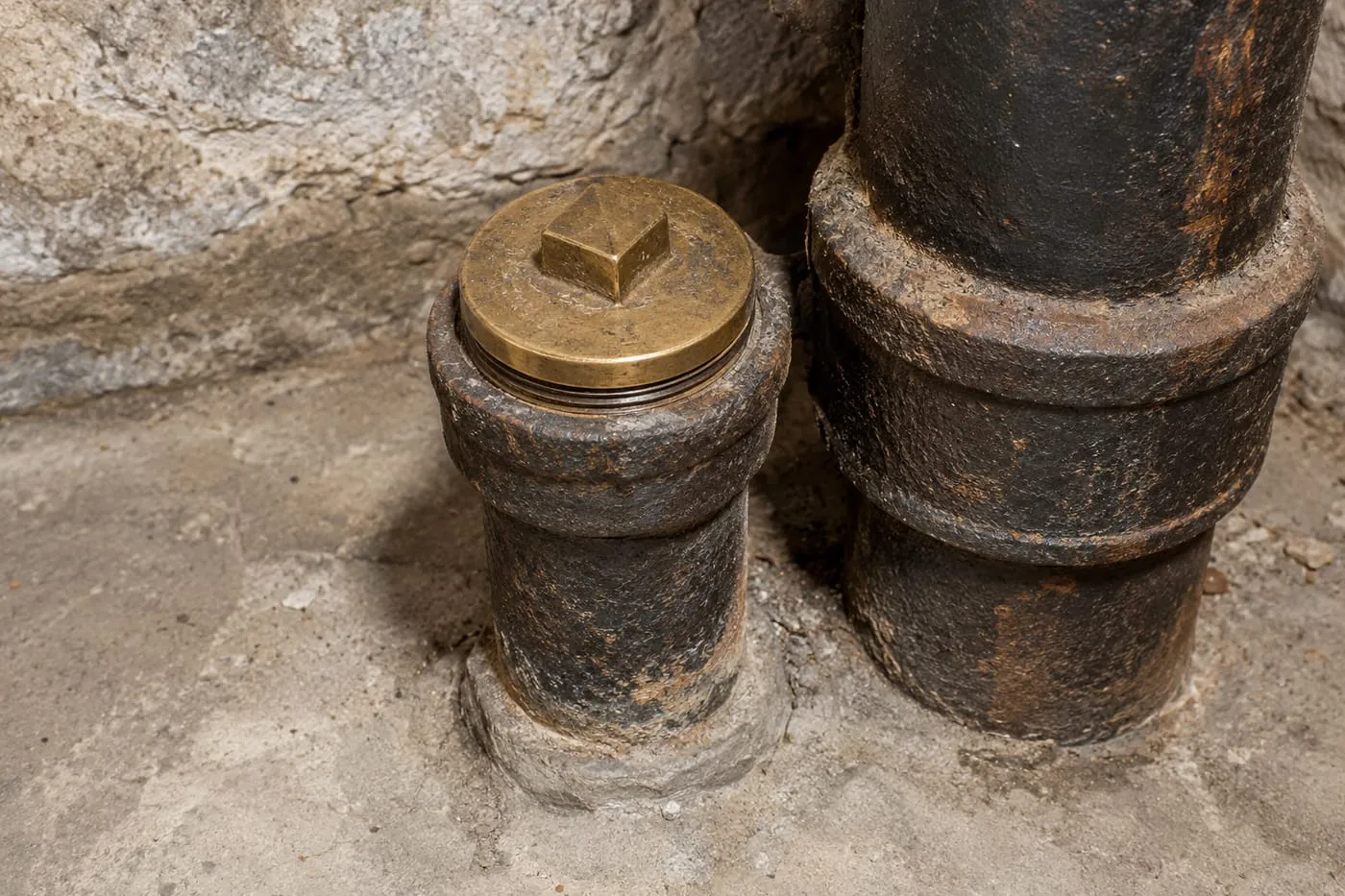
Cast iron sewer cleanout with a brass plug at the base of a basement wall

Look for a capped pipe near the main drain stack in the basement floor or wall, or outside near the foundation. Keep it clear of boxes and storage. If the main line ever backs up, it's how a plumber gets in, so leave the cap on.

Step 7: Run every faucet, shower and toilet
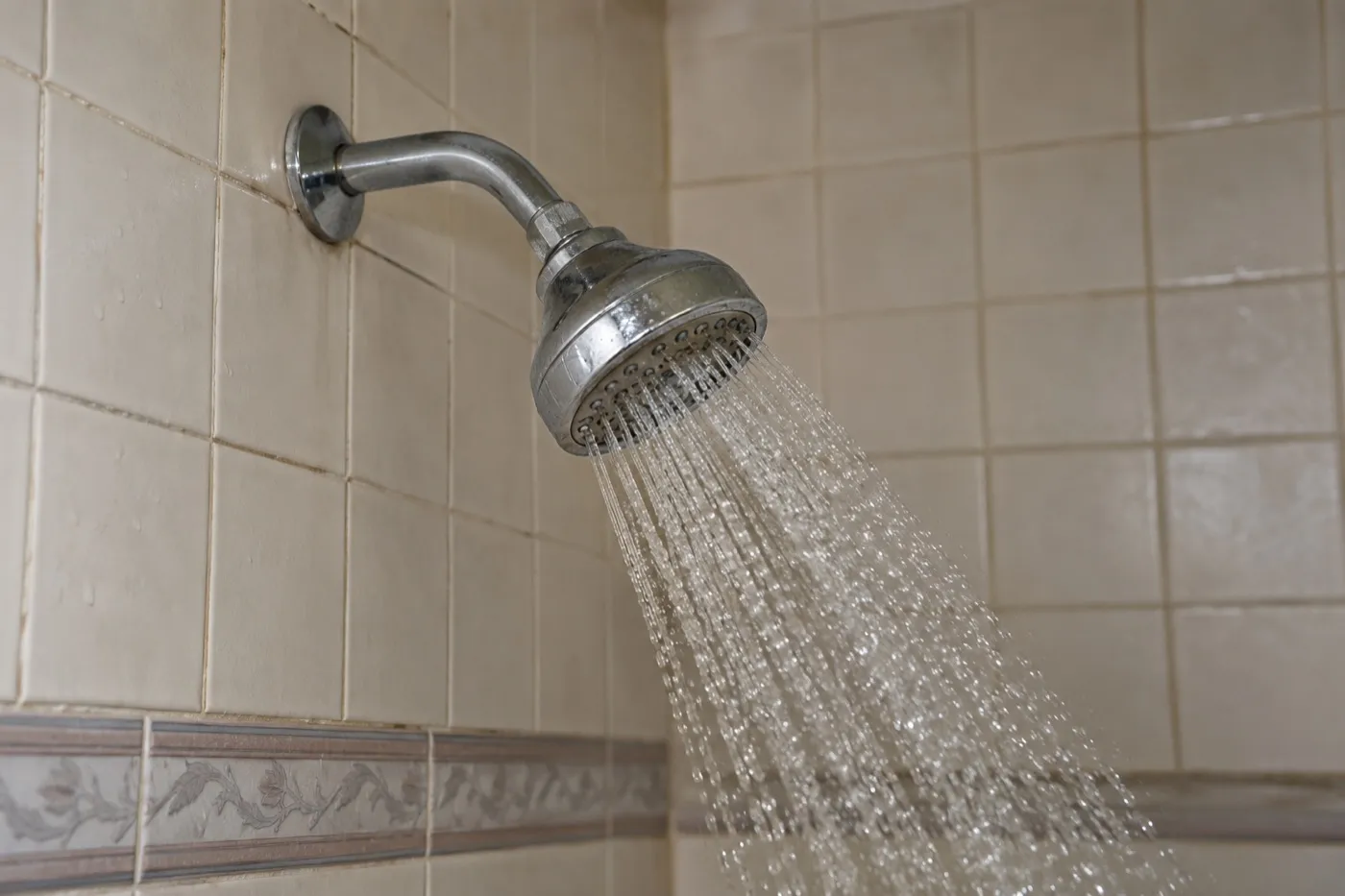
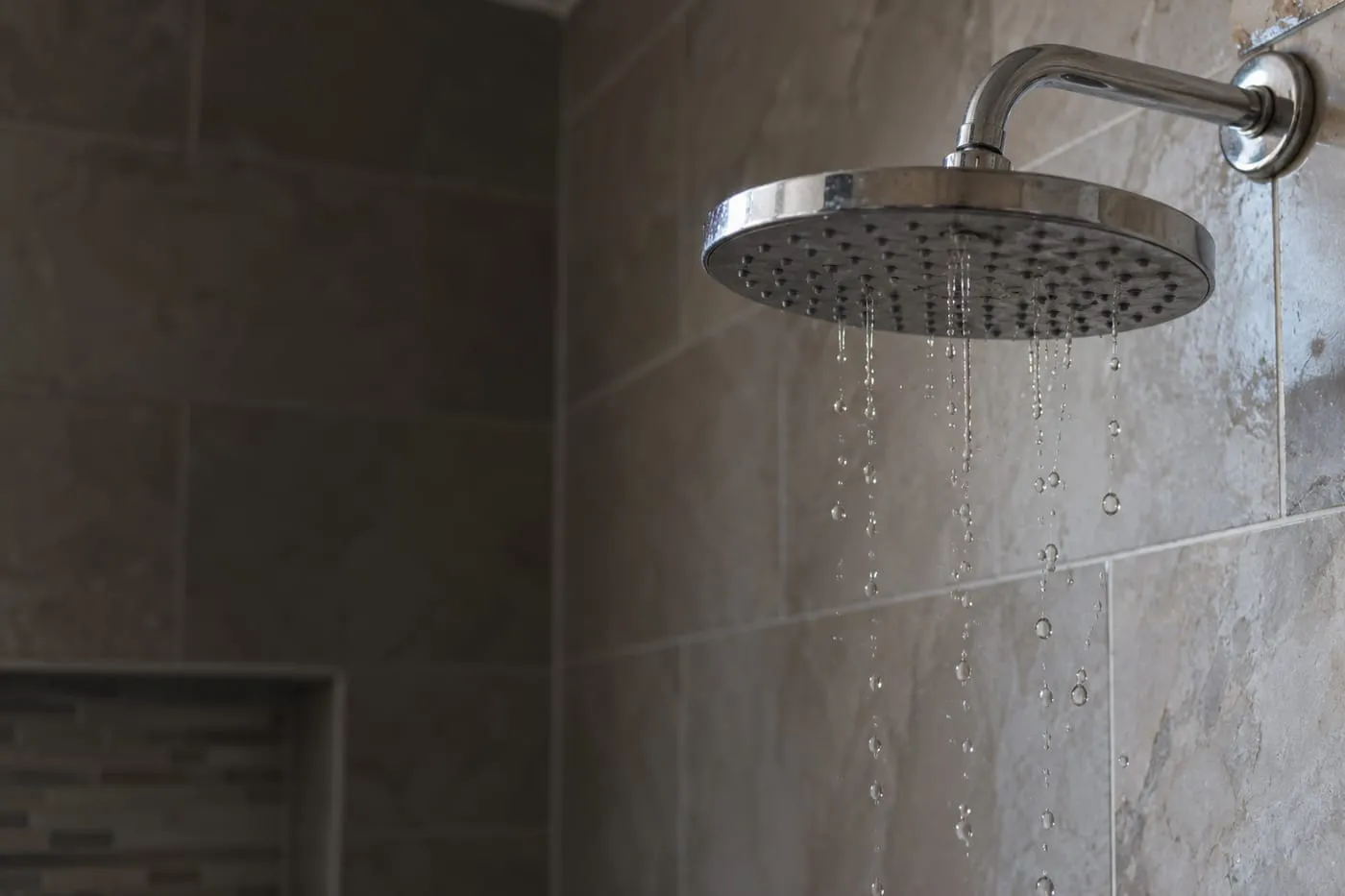
Shower head running in a tiled bathroom

Turn on each fixture and watch the pressure and how fast it drains. Flush every toilet and listen for one that keeps running. A slow drain everywhere, or gurgling when a toilet flushes, can point to a main line problem. See low water pressure if the flow seems weak.

Step 8: Learn what your pipes are made of
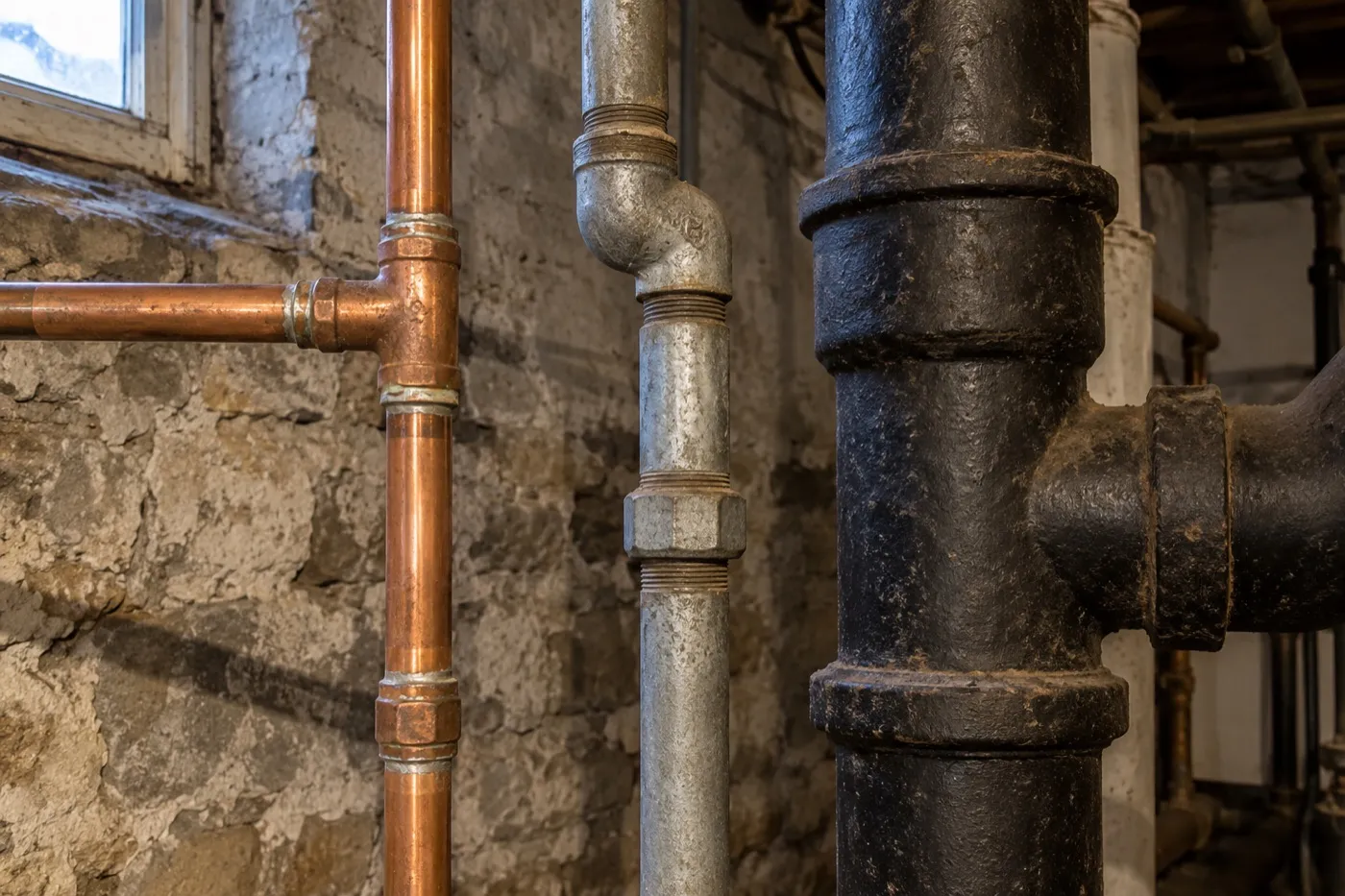
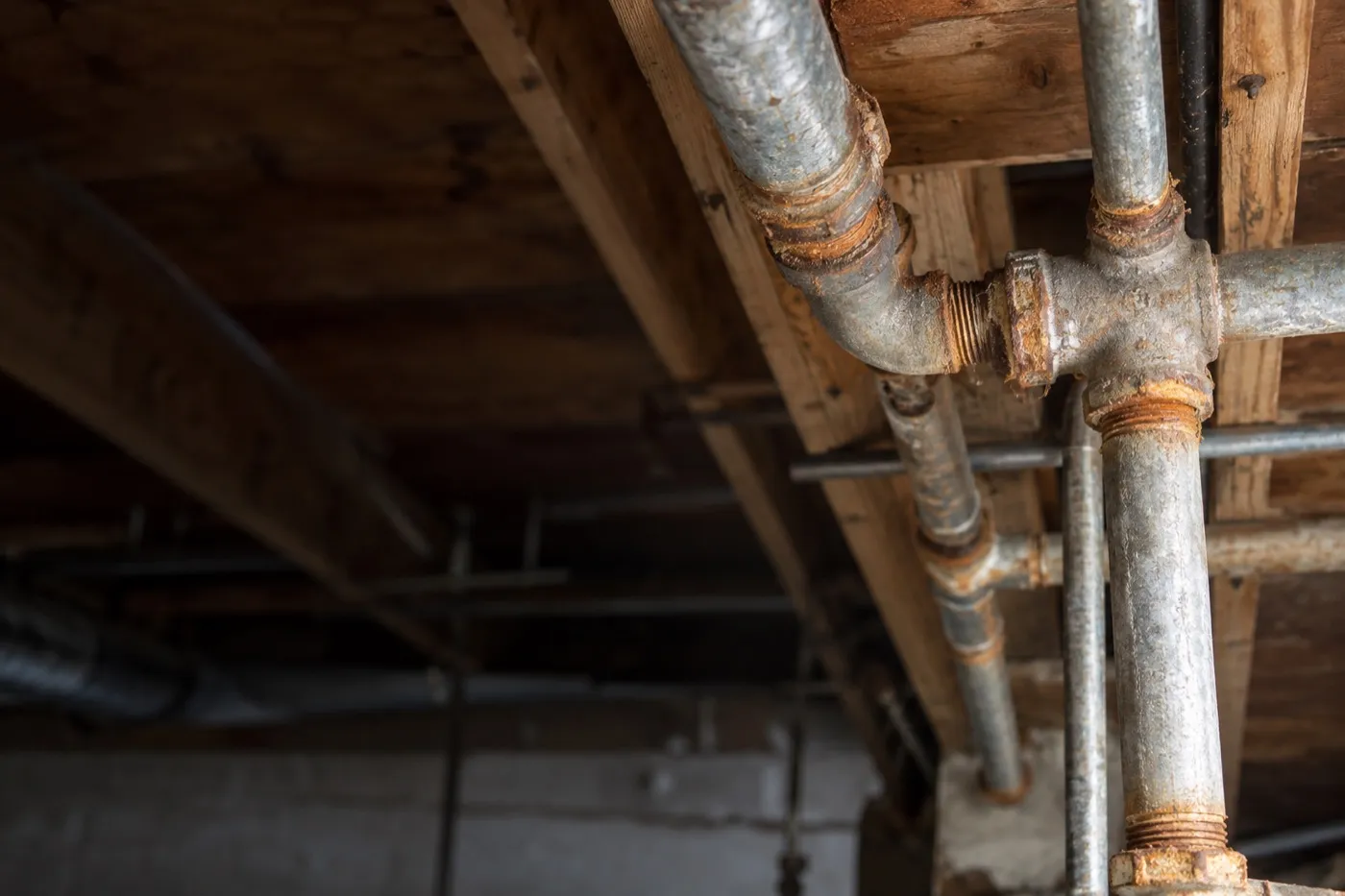
Copper, galvanized and cast iron pipes along a basement wall

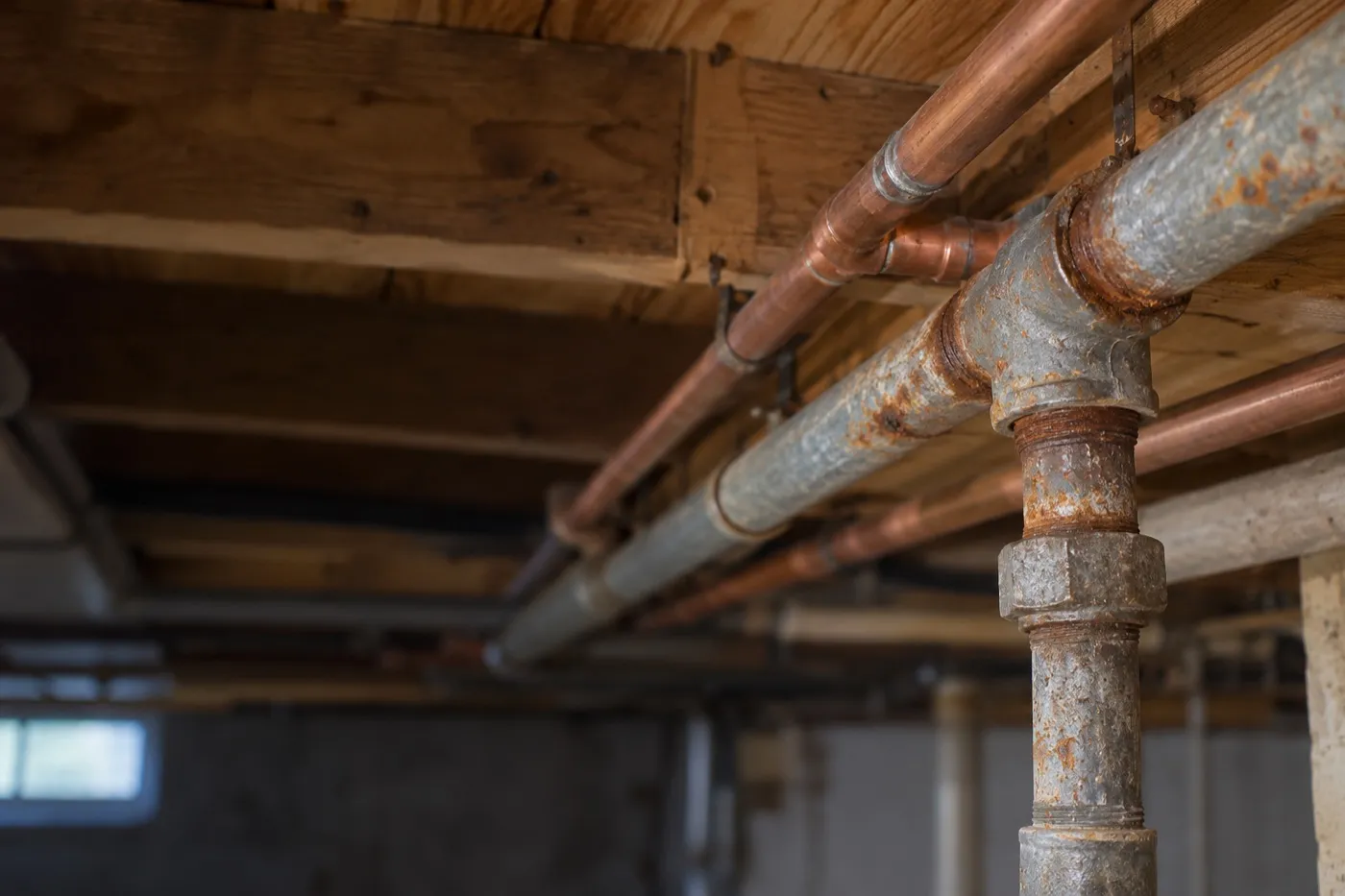
Look at the exposed pipes in the basement. Copper, PEX and CPVC are common in newer work. Galvanized steel and cast iron show up in older Central Jersey homes, and how long any pipe lasts varies. Read how long common pipe materials last and the 4 signs your home needs repiping.

Step 9: Book a plumbing inspection

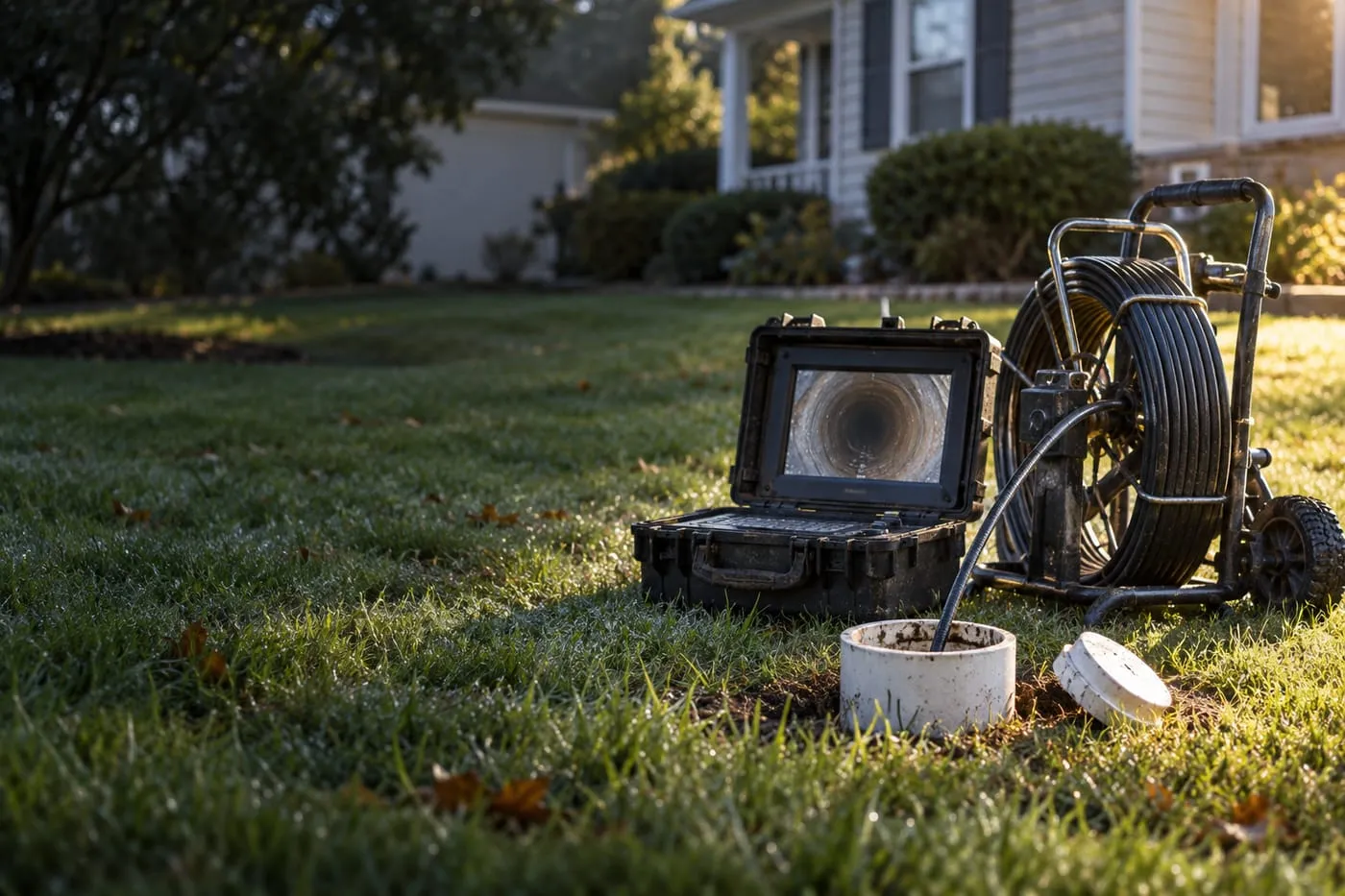
For an older home, or if anything above looked off, book a plumbing inspection. We check every fixture, the water heater, visible lines, shut-off valves and water pressure, and add a sewer camera inspection when it's called for. You get a clear list of what needs attention now and what can wait.

Still house hunting?

Get the plumbing checked before you close. Our post on why you need a plumbing inspection when buying a house explains what a general home inspection misses. Call 908-873-6686 or request service online.

Keep this guideFor the next time something leaks

Save it for an emergency

Keep these steps and our number one tap away.

Add our number

Get tips and reminders

New guides and seasonal reminders. A few emails a year.

Stop and call us if

  • The main shut-off valve won't turn or doesn't fully stop the water.
  • The water meter moves when every faucet and appliance is off.
  • The water heater is leaking, rusty or getting older.
  • Drains are slow or gurgle, or you smell sewer gas in the basement.

Call 908-873-6686.

Need a licensed plumber?Written upfront flat-rate pricing options. You choose. We respond immediately to calls and online inquiries. Same-day appointments may be available, subject to technician availability and scheduling.
Mike Holt
About the author

Michael Holt

Owner and operator of Plumbing Doctor, NJ Master Plumber (Lic. #36BI01345600) and U.S. Marine Corps veteran.

More about Mike
FAQ

Questions we get about this

Don't see your question? Call us and ask.

Call 908-873-6686
What should I check first in a new house?

Find the main water shut-off valve and make sure it turns. If a pipe bursts in your first month, that valve is what keeps the damage small. Then check the water heater's age and look for leaks under every sink.

How do I find out how old my water heater is?

Look at the rating plate on the side of the tank. Some show the manufacture date. Others put it in the serial number, usually as a letter for the month and digits for the year. The manufacturer's website or a quick call to us can decode it.

How long does a water heater last?

It varies with the model, water quality and maintenance, so there's no fixed number. If yours is showing rust or getting older, have a plumber look at it so you can plan ahead.

What is a sewer cleanout?

A capped pipe that gives a plumber direct access to the main sewer line. It's usually in the basement floor or near the foundation wall, sometimes outside near the house. Knowing where it is makes a main line clog faster and cheaper to clear.

Do I need a plumbing inspection if the house already had a home inspection?

Often, yes. A general home inspection looks at visible plumbing but doesn't run a camera through the sewer line. A cracked or root-filled sewer line is one of the most expensive surprises in an older home.

Leaking pipe right now?

Shut off the water first if you can reach the valve safely, then call us, day or night.

908-873-6686

Outside regular hours and on holidays, emergency service requires a $250 upfront emergency fee. When paid, the standard $49 service fee is waived. During regular hours there is no emergency fee. Additional repairs are quoted before work begins. We respond immediately upon contact; dispatch and arrival depend on availability and location.

Do this now

  1. Shut the main valve. Usually where the water line enters, near the meter.
  2. Stay clear of electricity. Don't enter standing water or touch electrical controls near the leak.
  3. Open a low faucet to drain the pipes and take pressure off the leak.
Selected Google reviews

What neighbors say

Excellent4.9 from 174 reviews on Google
Richard F.Google review
★★★★★

Had backup and they came out in half hour on a Sunday and got the blockage resolved. They cleaned up after themselves. Very very professional people.

Lisa L.Google review
★★★★★

Honest, reliable and they do a great job. I highly recommend plumbing doctor services.

Felicia T.Google review
★★★★★

Mike is awesome, knowledgeable, thorough and friendly! Overall great and expedient experience!

John G.Google review
★★★★★

Excellent service and very knowledgeable. I definitely recommend them.

JoeGoogle review
★★★★★

Very knowledgeable, attention to detail, extremely neat and organized. We highly recommend Plumbing Doctor.

Naomi H.Google review
★★★★★

Mike works quickly and is transparent with pricing. He's trustworthy, reliable and brings his own shoe covers.

Hazim A.Google review
★★★★★

They tell me what is worth doing or not doing, and won't try to upcharge me. The work is always great. They are my go-to!

Kevin C.Google review
★★★★★

Found my outdoor cleanout that was covered up for years and no other company could find! … They use drop cloths and clean up when they are done.

Read all 174 reviews on Google · Leave us a review

We respond immediatelySame-day appointments may be available

What's going on?

Tap one. It takes about a minute, and we get your request right away.

Problem
How soon?

Enter a 5-digit ZIP code, or leave it empty.

Where can we reach you?

Please enter your name.

Enter a 10-digit phone number.

Best way to reach you

That email doesn't look right.

Leaking pipe? Call 908-873-6686