Call 908-873-6686Veteran-owned · NJ Master Plumber Lic. #36BI01345600
Plumbing Doctor van, protecting your health and sanitation4.9 174 reviews
on Google
4.9 121 reviews
on Thumbtack
Call 24/7908-873-6686Request service
Plumbing Tips

Plumbing how-to guides

Plain guidance from a NJ Master Plumber, including when to stop and call a professional.

4.9 stars, 174 Google reviews · NJ Master Plumber Lic. #36BI01345600

Types of Plumbing Pipes: Copper, PEX, PVC, Cast Iron and More

By Mike Holt, NJ Master Plumber · January 17, 2025 · 3 min read · Updated November 1, 2026

Quick answer

Homes use two groups of pipe. Water supply lines are usually copper, PEX or CPVC, with galvanized steel or polybutylene in some older homes. Drain, waste and vent lines are usually PVC, ABS or cast iron. Material suitability depends on application, listing, manufacturer instructions and NJ code. Service life varies, and galvanized steel and polybutylene are the two most likely to need attention.

Save this guide so it's one tap away in an emergency.

Add our number

Want us to take a look? We find the cause and give you written upfront flat-rate pricing options before any work starts.

Every house has two separate pipe systems. Supply pipes bring clean water in under pressure. Drain, waste and vent pipes carry used water out by gravity. Each system uses different materials, and older Central New Jersey homes often have a mix from different decades.

What are the types of plumbing pipes?

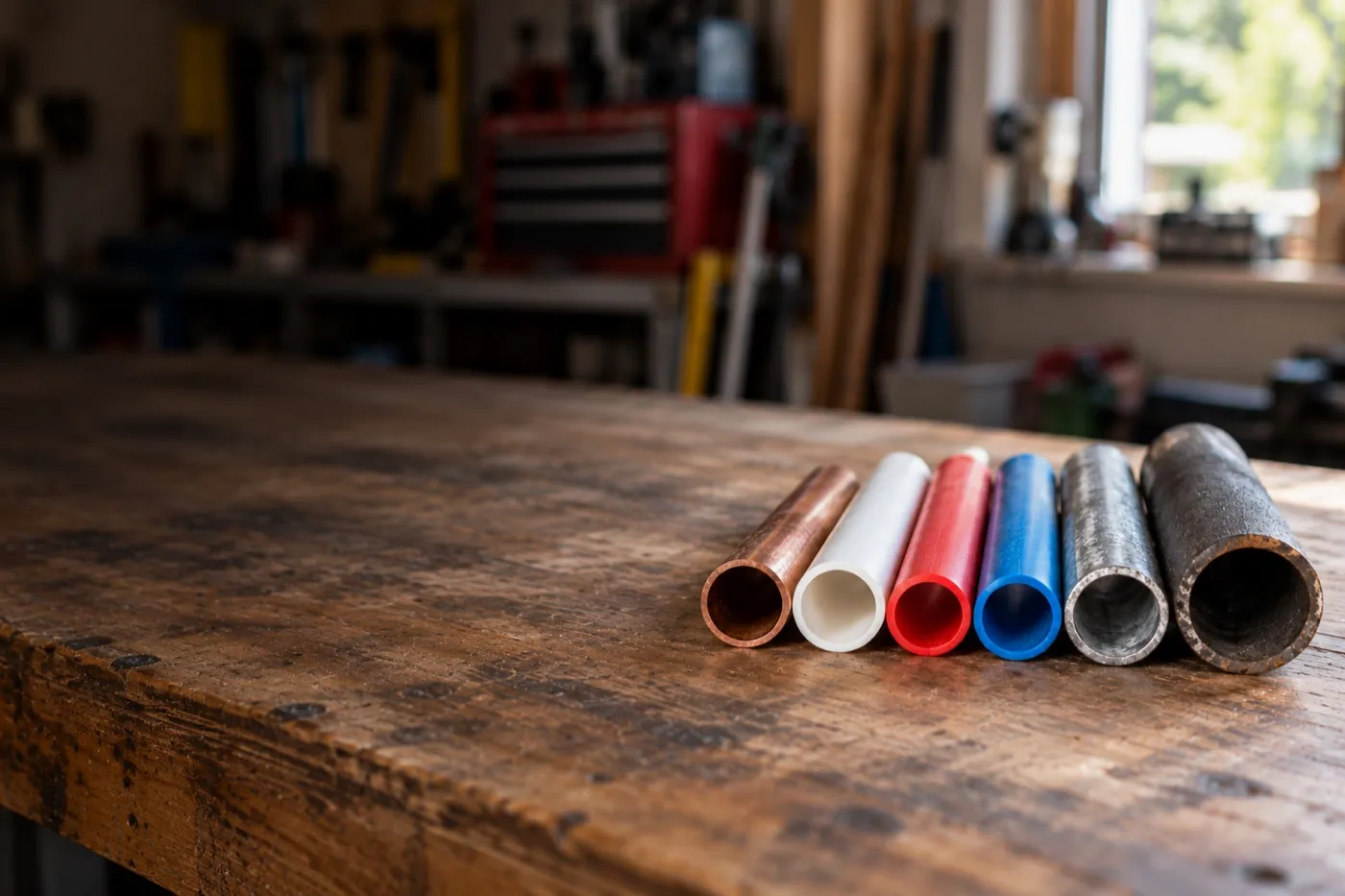
PipeLooks likeGenerally used forLifespan (varies)Notes
CopperOrange-brown metal, green with ageWater supplyDecadesHandles heat; hard water and acidic water can cause pinhole leaks
PEXFlexible plastic, red, blue or whiteWater supplyDecadesFewer fittings, easy to run through walls; keep out of sunlight
CPVCRigid cream or tan plasticWater supply, hot and coldDecadesCan get brittle with age
PVCRigid white plasticDrains, vents, outdoor cold waterDecadesNot for hot water supply lines
ABSRigid black plasticDrains and ventsDecadesCommon in newer homes
Cast ironHeavy black or dark gray metalDrains and sewer linesDecades, sometimes manyQuiet, but can rust through and crack with age
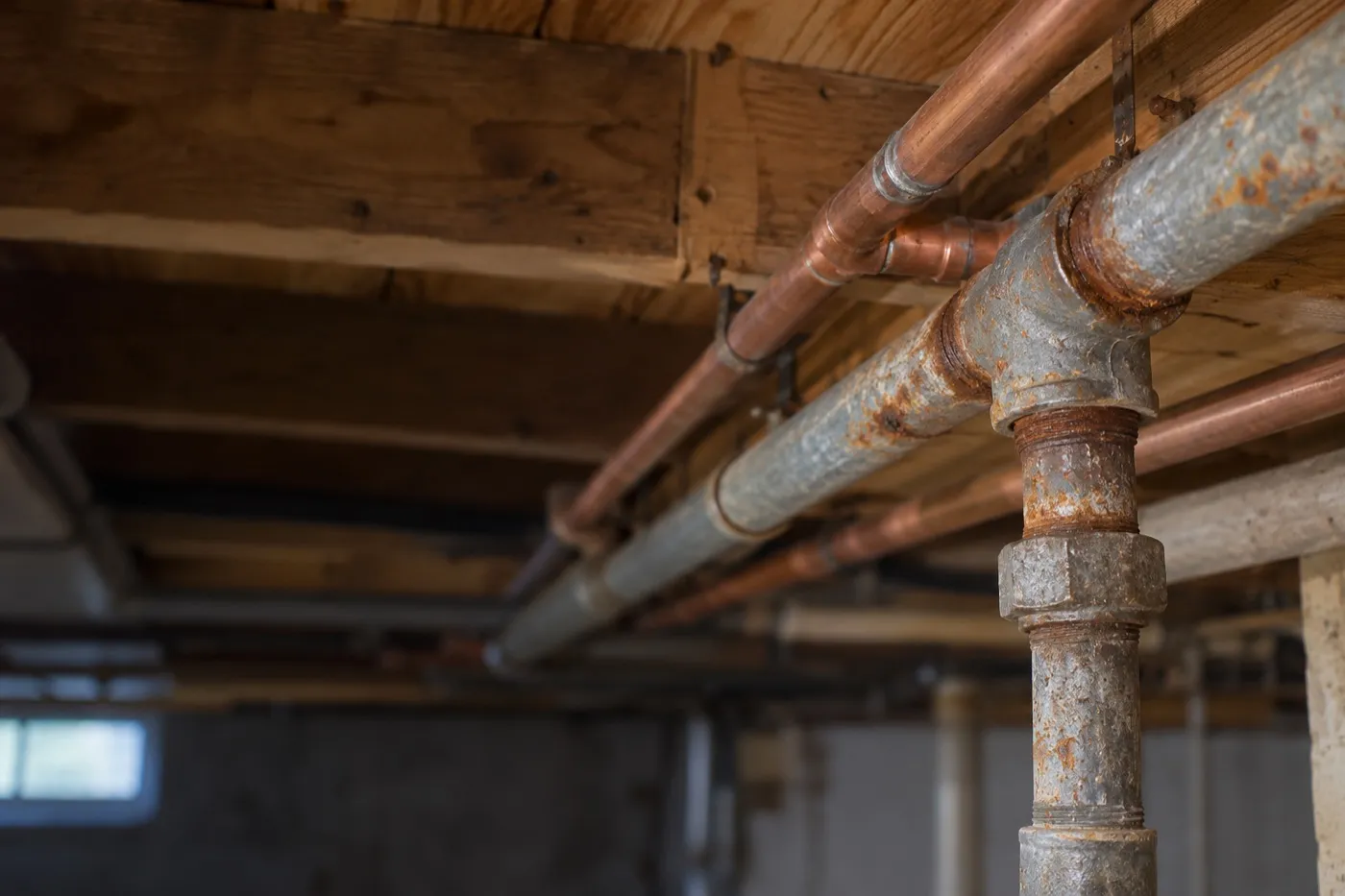
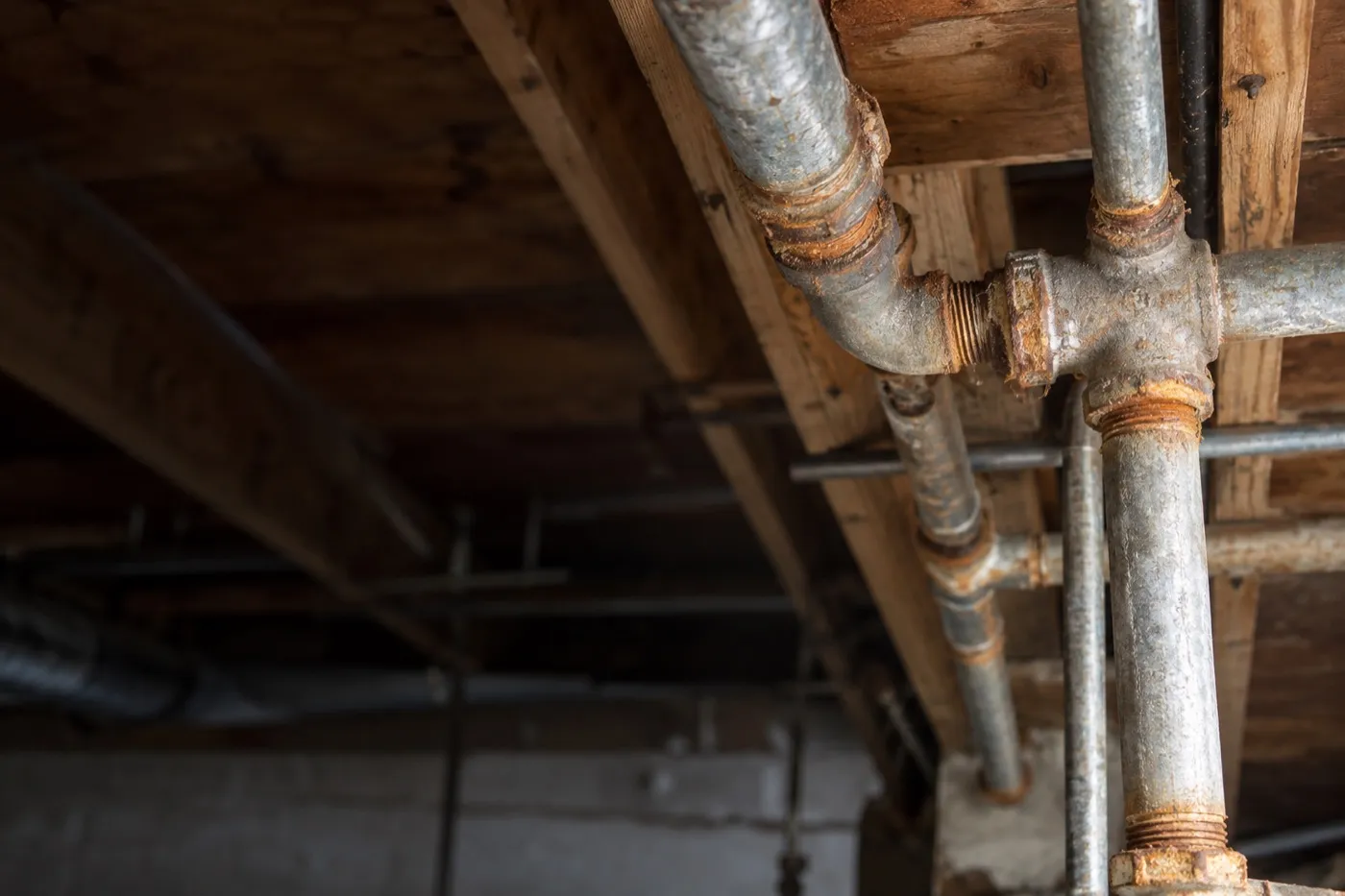
Galvanized steelGray metal with threaded jointsWater supply in older homesOften shorter than other metalsRusts from inside; lowers pressure
PolybutyleneFlexible gray plasticWater supply, about 1978 to 1995UnpredictableKnown for failing at the fittings

Material suitability depends on application, listing, manufacturer instructions and NJ code. For more on how long each one may last and what shortens it, see how long do pipes last.

Which pipes are used for water supply?

Copper has been the standard for decades. It's durable and handles heat, but very hard or acidic water can wear it from the inside and cause pinhole leaks. PEX is common in new work because it bends around corners with fewer joints. CPVC shows up in some homes from the 1980s and 1990s.

Galvanized steel and polybutylene are the two to watch for. Have them looked at if your home still has them.

Which pipes are used for drains and sewer lines?
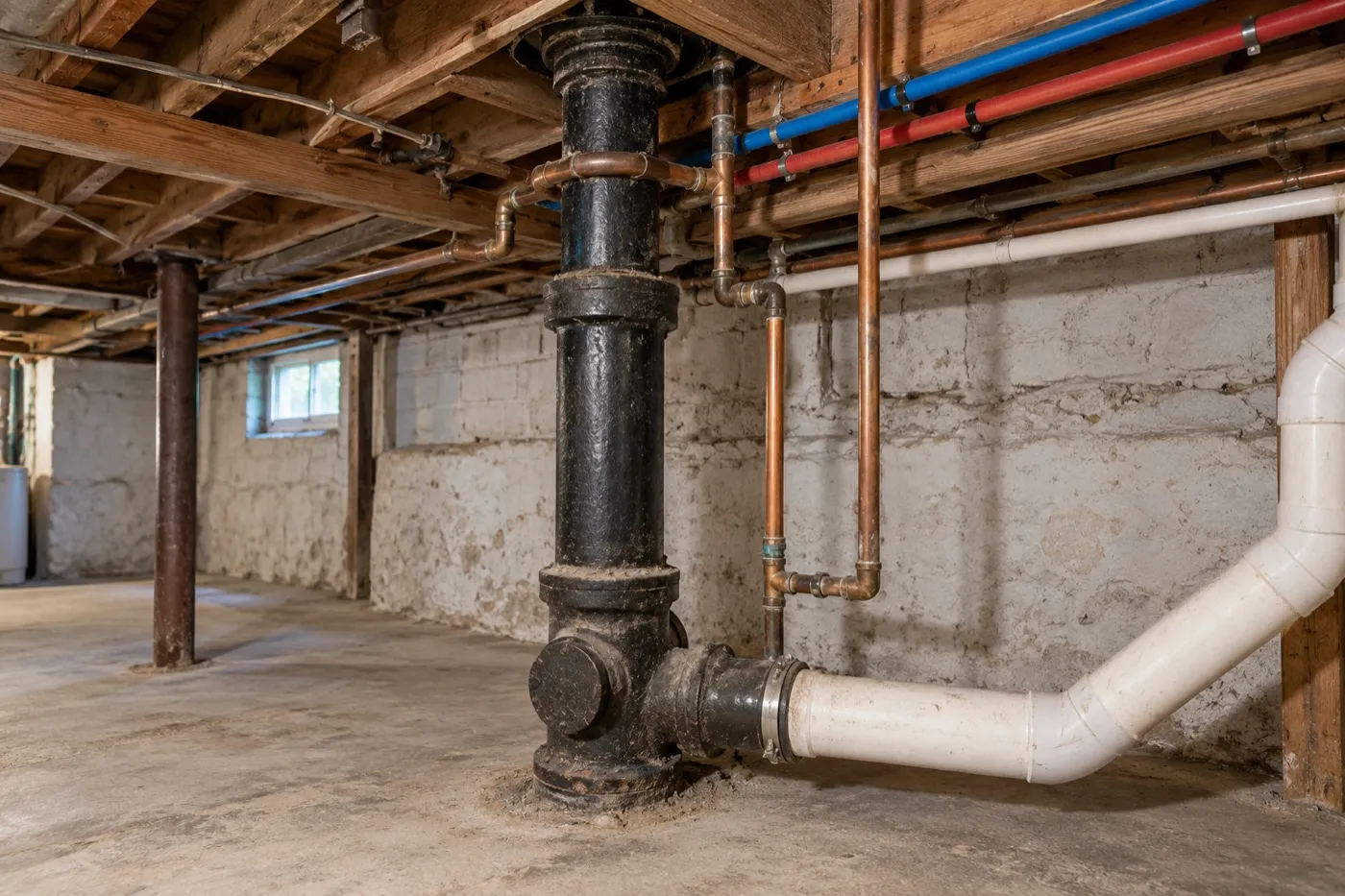
Basement with a black cast iron drain stack, copper water lines and newer PEX lines along the joists, and a white PVC drain line near the floor

Older homes usually have cast iron drain stacks and sometimes clay sewer pipe outside. Cast iron is heavy and quiet, but after decades it can rust through along the bottom of the pipe or crack at the joints. Newer homes and most repairs use PVC or ABS plastic, which doesn't rust and is lighter to work with. Old drain lines that keep clogging are worth a sewer camera inspection to see what shape they're in.

How can you tell what pipes you have?

  • Start where the water main comes into the house, usually through the basement wall near the meter.
  • Scratch the surface lightly with a coin. Copper shows a shiny penny color. Galvanized steel shows silver-gray.
  • Try a magnet. It sticks to galvanized steel and cast iron, not to copper, brass or plastic.
  • Look at the joints. Threaded joints usually mean galvanized steel. Soldered joints mean copper. Crimped rings or clamps mean PEX.
  • Check for printing on plastic pipe. PEX, CPVC and PVC usually have the type stamped along the side.

Which pipes should you replace?

Galvanized steel and polybutylene are the first to ask about, ideally before a leak forces the issue. Copper and cast iron with repeated leaks or heavy corrosion are next. If you're remodeling, it's a good time to look at old pipe while the walls are open. Read the signs your house needs repiping for what to look for.

Not sure what you have?

Our team can look at the pipe in your home and tell you honestly what we see. Contact us to confirm whether we handle your scope and materials. See our repiping and pipes and plumbing pages, or call 908-873-6686.

Keep this guideFor the next time something leaks

Save it for an emergency

Keep these steps and our number one tap away.

Add our number

Get tips and reminders

New guides and seasonal reminders. A few emails a year.

Stop and call us if

  • You find gray galvanized steel or gray plastic polybutylene supply pipe.
  • Leaks keep showing up in different places.
  • Copper pipe has green crust or pinhole leaks, or cast iron drain pipe is cracked or rusting through.
  • You're remodeling and the walls will be open.

Call 908-873-6686.

Need a licensed plumber?Written upfront flat-rate pricing options. You choose. We respond immediately to calls and online inquiries. Same-day appointments may be available, subject to technician availability and scheduling.
Mike Holt
About the author

Michael Holt

Owner and operator of Plumbing Doctor, NJ Master Plumber (Lic. #36BI01345600) and U.S. Marine Corps veteran.

More about Mike
FAQ

Questions we get about this

Don't see your question? Call us and ask.

Call 908-873-6686
What is the best type of pipe for water lines?

There's no single best pipe. Material suitability depends on application, listing, manufacturer instructions and NJ code. PEX is flexible and needs fewer fittings. Copper is rigid and handles heat well. Contact us to confirm whether we handle your scope and materials.

How can I tell what kind of pipes I have?

Look where the main water line enters the house, usually in the basement. Copper is orange-brown or green with age, PEX is flexible plastic in red, blue or white, and galvanized steel is gray with threaded joints. A magnet sticks to galvanized steel and cast iron but not to copper or plastic.

Should galvanized pipes be replaced?

Often, when you can plan it, but have it checked first. Galvanized steel rusts from the inside, which narrows the pipe, lowers water pressure and can turn the water brown. How long it lasts varies, and in many older homes it's been in place a long time.

What is the difference between PVC and CPVC?

Both are rigid plastic. PVC is usually white and generally used for drains, vents and cold water outside. CPVC is a cream or tan color and is made to handle hot water, so it's used for some supply lines. They use different fittings and glue, and what's allowed depends on the application, the listing and NJ code.

Is polybutylene pipe bad?

It has a poor track record. Gray polybutylene supply pipe, installed in many homes from the late 1970s to the mid-1990s, can fail at the fittings without warning. If you have it, have it looked at, and check whether your homeowners insurance treats it differently.

Leaking pipe right now?

Shut off the water first if you can reach the valve safely, then call us, day or night.

908-873-6686

Outside regular hours and on holidays, emergency service requires a $250 upfront emergency fee. When paid, the standard $49 service fee is waived. During regular hours there is no emergency fee. Additional repairs are quoted before work begins. We respond immediately upon contact; dispatch and arrival depend on availability and location.

Do this now

  1. Shut the main valve. Usually where the water line enters, near the meter.
  2. Stay clear of electricity. Don't enter standing water or touch electrical controls near the leak.
  3. Open a low faucet to drain the pipes and take pressure off the leak.
Selected Google reviews

What neighbors say

Excellent4.9 from 174 reviews on Google
Richard F.Google review
★★★★★

Had backup and they came out in half hour on a Sunday and got the blockage resolved. They cleaned up after themselves. Very very professional people.

Lisa L.Google review
★★★★★

Honest, reliable and they do a great job. I highly recommend plumbing doctor services.

Felicia T.Google review
★★★★★

Mike is awesome, knowledgeable, thorough and friendly! Overall great and expedient experience!

John G.Google review
★★★★★

Excellent service and very knowledgeable. I definitely recommend them.

JoeGoogle review
★★★★★

Very knowledgeable, attention to detail, extremely neat and organized. We highly recommend Plumbing Doctor.

Naomi H.Google review
★★★★★

Mike works quickly and is transparent with pricing. He's trustworthy, reliable and brings his own shoe covers.

Hazim A.Google review
★★★★★

They tell me what is worth doing or not doing, and won't try to upcharge me. The work is always great. They are my go-to!

Kevin C.Google review
★★★★★

Found my outdoor cleanout that was covered up for years and no other company could find! … They use drop cloths and clean up when they are done.

Read all 174 reviews on Google · Leave us a review

We respond immediatelySame-day appointments may be available

What's going on?

Tap one. It takes about a minute, and we get your request right away.

Problem
How soon?

Enter a 5-digit ZIP code, or leave it empty.

Where can we reach you?

Please enter your name.

Enter a 10-digit phone number.

Best way to reach you

That email doesn't look right.

Leaking pipe? Call 908-873-6686