Is Hard Water Bad for Your Pipes? What It Does to Plumbing and How to Fix It
By Mike Holt, NJ Master Plumber · March 6, 2024 · 3 min read · Updated November 1, 2026
Quick answer
Hard water isn't a health risk, but it is hard on plumbing. The calcium and magnesium in it leave scale that clogs shower heads and aerators, wears out faucet and toilet valves, narrows older pipes and builds up as sediment in your water heater. A water softener stops the buildup, and having a plumber flush the water heater helps in the meantime.
Want us to take a look? We find the cause and give you written upfront flat-rate pricing options before any work starts.
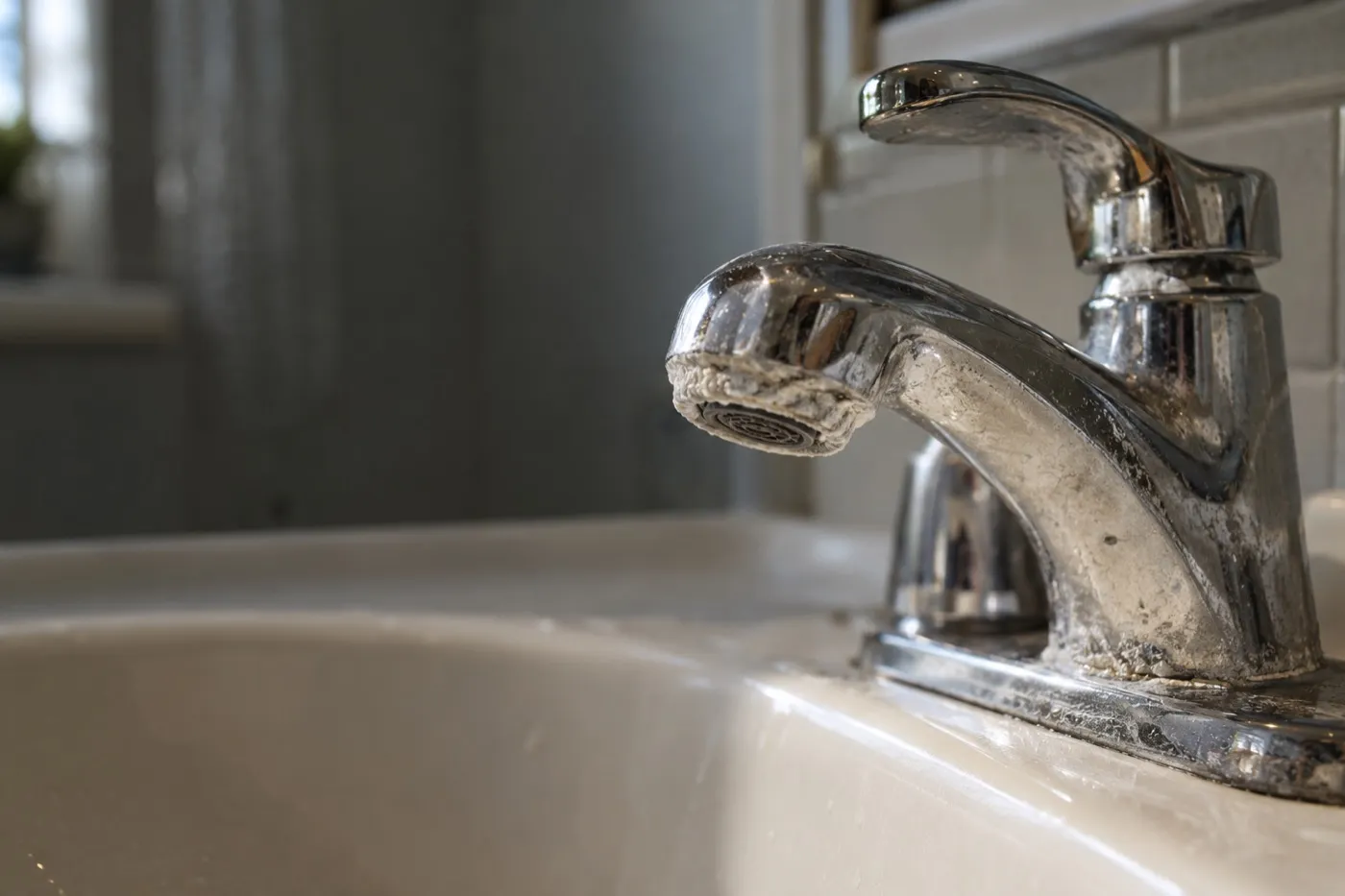
Water picks up calcium and magnesium as it moves through rock and soil. The more of those minerals it carries, the harder it is. Hard water is safe to drink, but every time it's heated or evaporates it leaves some of those minerals behind as scale, and that scale ends up in your pipes, fixtures and appliances.
What does hard water do to your plumbing?
| Where | What hard water does | What you notice |
|---|---|---|
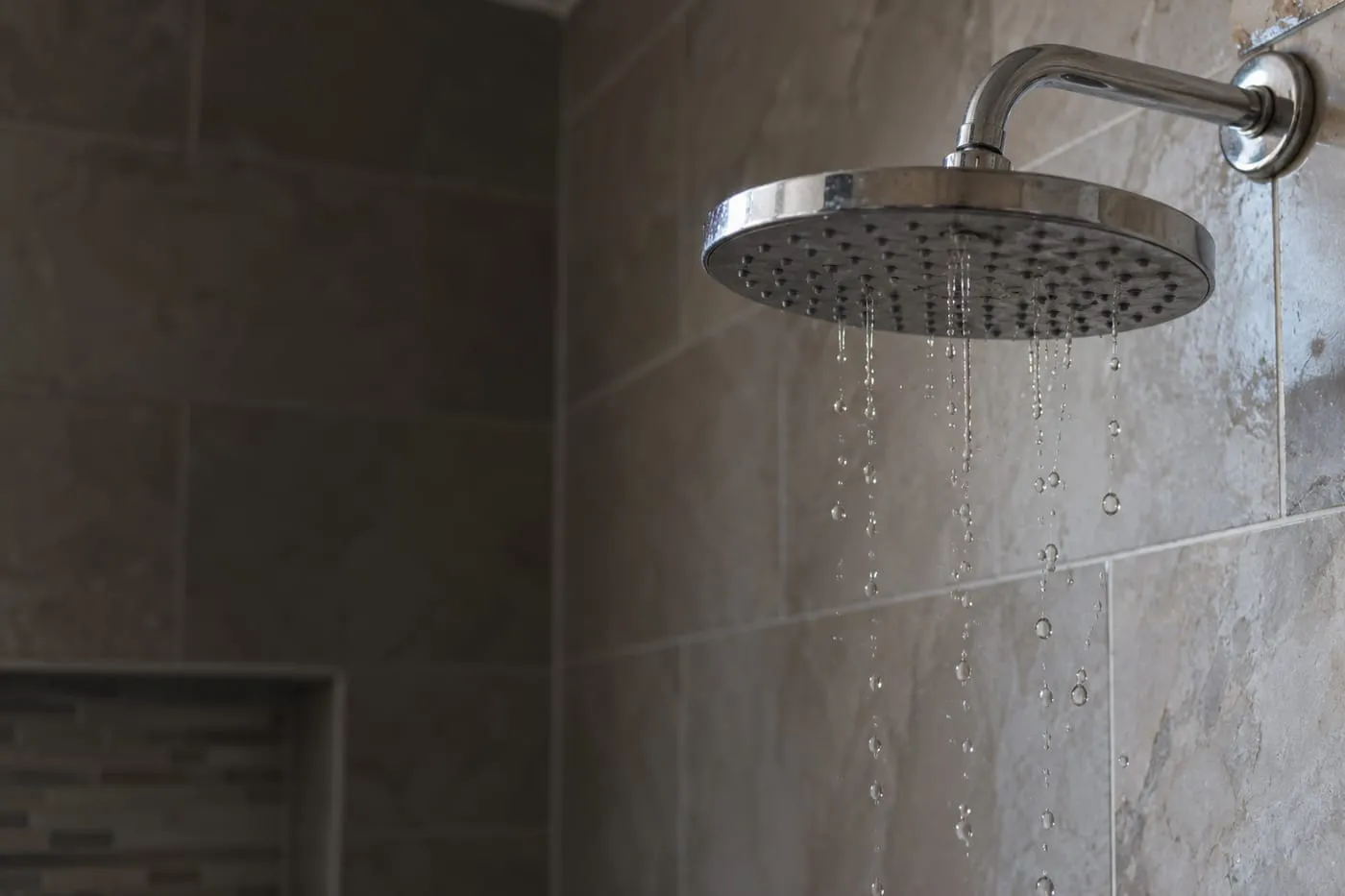
| Shower heads and faucet aerators | Scale blocks the small holes | Weak, uneven spray |
| Faucet cartridges and toilet fill valves | Scale wears seals and sticks parts | Drips, running toilet |
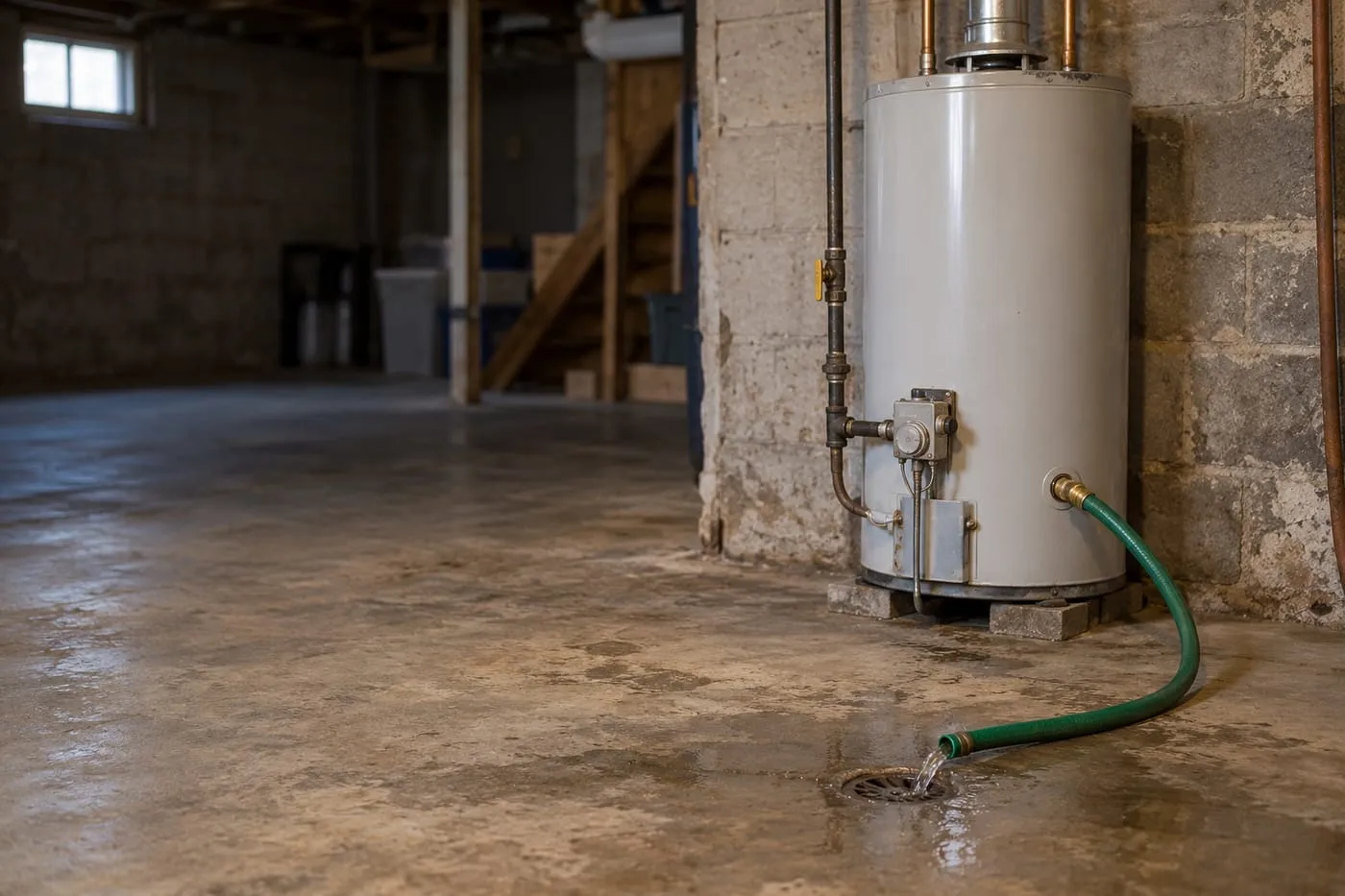
| Water heater | Minerals settle as sediment in the tank | Popping noises, less hot water, shorter life |
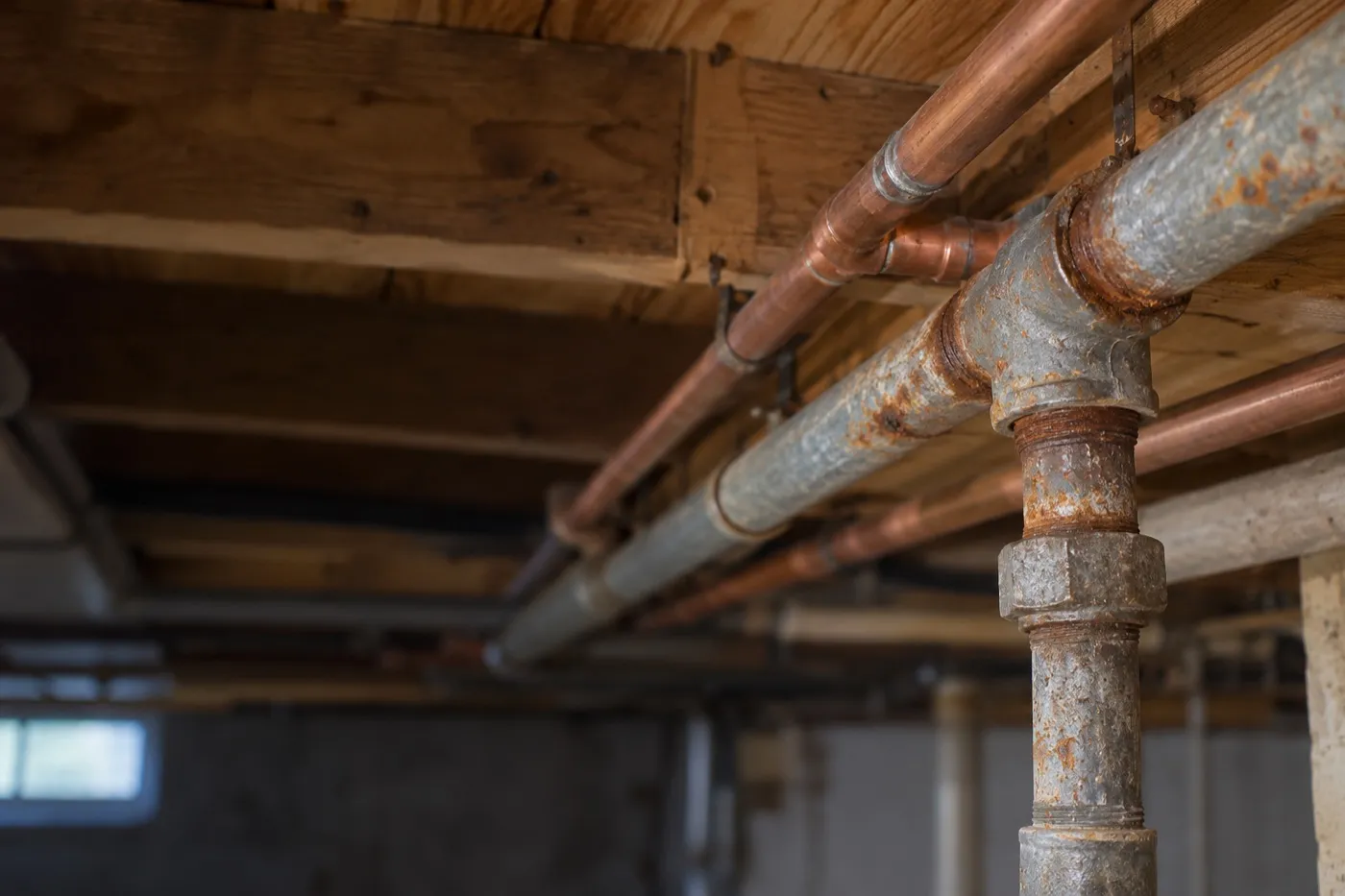
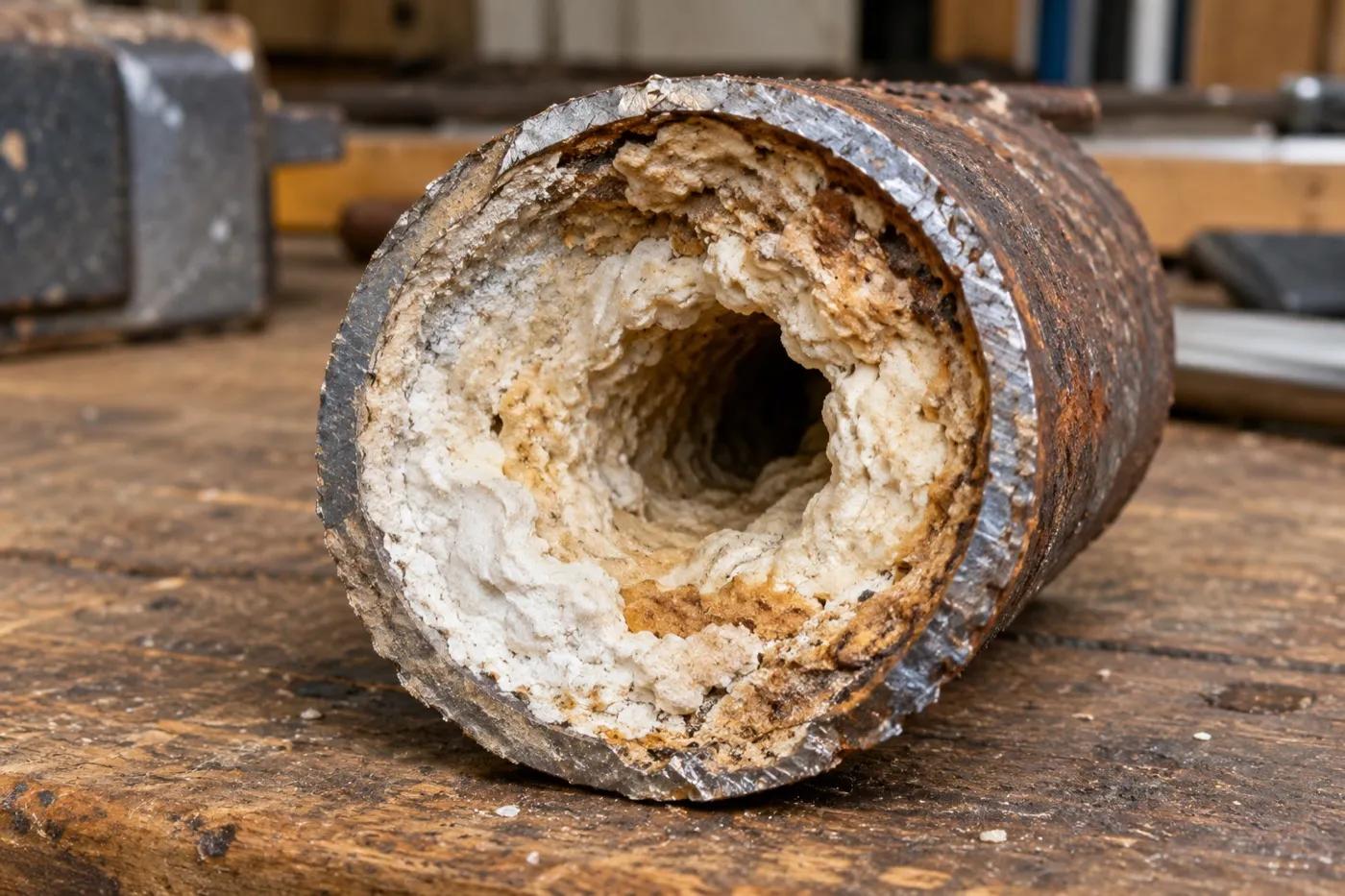
| Older galvanized pipes | Scale and rust narrow the pipe | Low pressure throughout the house |
| Dishwasher and washing machine | Scale on valves and heating elements | Spots on dishes, shorter appliance life |
| Glass and tile | Mineral film | White spots and crust |
Hard water doesn't usually eat through pipes by itself. The damage comes from buildup: it narrows openings, wears out moving parts and forces your water heater to heat through a layer of sediment.
How can you tell if you have hard water?
- White or chalky crust on faucets, shower heads and around drains.
- Spots on glasses and dishes after washing.
- Soap and shampoo that don't lather well, and a film on skin or shower doors.
- A water heater that pops or rumbles while it heats.
- Shower heads that lose pressure within months of cleaning.
For a number, use a hardness test strip, or look up your water utility's annual water quality report. Water in Central New Jersey varies by town and by source. If you're on a private well, have the water tested, since well water can be much harder than town water.
What can you do about hard water?
Small steps help:
- Soak shower heads and aerators in white vinegar to dissolve scale.
- Have a plumber flush your water heater. Our water heater flushing guide explains what's involved.
- Replace worn faucet cartridges and toilet fill valves when they start to drip or run.
A water softener solves the problem at the source. It removes calcium and magnesium as water enters the house, so scale stops forming in the pipes, fixtures and water heater. If your concern is taste, chlorine or something specific in the water, a filter may be the better fit, and some homes need both.
Should a plumber install a water softener?
A softener goes on your main water line, so it needs a proper connection, a bypass valve for servicing and a drain for the backwash water. A plumber also sizes it to your household and your water's hardness. Too small and it can't keep up, and too big wastes salt and water.
We install and service water softeners and filtration systems across Central New Jersey. We look at your water and what you're seeing, then recommend what fits. If low pressure is the main problem, our low water pressure guide covers the other common causes.
When should you call a plumber?
Call if your water heater is noisy or losing hot water, pressure has dropped throughout the house, or you want a softener installed. Plumbing Doctor is a veteran-owned company in Somerset, NJ, led by NJ Master Plumber Mike Holt (Lic. #36BI01345600). Written upfront flat-rate pricing options. You choose. Call 908-873-6686.
Get tips and reminders
New guides and seasonal reminders. A few emails a year.
Stop and call us if
- Your water heater pops, rumbles or runs out of hot water sooner than it used to.
- Water pressure has dropped throughout the house.
- Faucets drip or toilets run even after you've replaced the washers or flapper.
- You want a water softener or filter installed and sized for your home.
Call 908-873-6686.

Michael Holt
Owner and operator of Plumbing Doctor, NJ Master Plumber (Lic. #36BI01345600) and U.S. Marine Corps veteran.
More about Mike