Call 908-873-6686Veteran-owned · NJ Master Plumber Lic. #36BI01345600
Plumbing Doctor van, protecting your health and sanitation4.9 174 reviews
on Google
4.9 121 reviews
on Thumbtack
Call 24/7908-873-6686Request service
Water Heaters

Plumbing how-to guides

Plain guidance from a NJ Master Plumber, including when to stop and call a professional.

4.9 stars, 174 Google reviews · NJ Master Plumber Lic. #36BI01345600

How Long Does a Water Heater Last? How to Tell When Yours Is Done

By Mike Holt, NJ Master Plumber · November 1, 2026 · 3 min read · Updated November 1, 2026

Quick answer

Many tank water heaters last somewhere around 8 to 12 years, and a tankless heater can last longer with regular service, but there's no fixed number. Water quality, maintenance and installation all change it. Check the age on the rating plate, and start planning if a tank over 10 years old is leaking, rusting or running out of hot water.

Difficulty
Look only
Time
About 15 minutes
You need
Flashlight, clear glass

Save this guide so it's one tap away in an emergency.

Add our number

Rather not risk it? A licensed plumber can handle this for you, with written upfront flat-rate pricing options before any work starts.

Many water heaters give some warning before they fail. They rust, rumble and run short of hot water for months first. Knowing your heater's age and what to look for lets you plan ahead instead of dealing with it after it floods the basement.

How long do water heaters last?

Water heater typeRough life, which variesWhat shortens it
Gas tankAround 8 to 12 yearsHard water, sediment, a used-up anode rod
Electric tankAround 8 to 12 yearsSediment around the lower element, hard water
Tankless (on-demand)Can be longer than a tankScale buildup when it isn't descaled

Central Jersey water carries minerals that settle at the bottom of a tank as sediment. That makes the heater work harder and can wear it out sooner, so treat these ranges as a rough guide.

How to check your water heater's age and condition

Step 1: Find the age on the rating plate
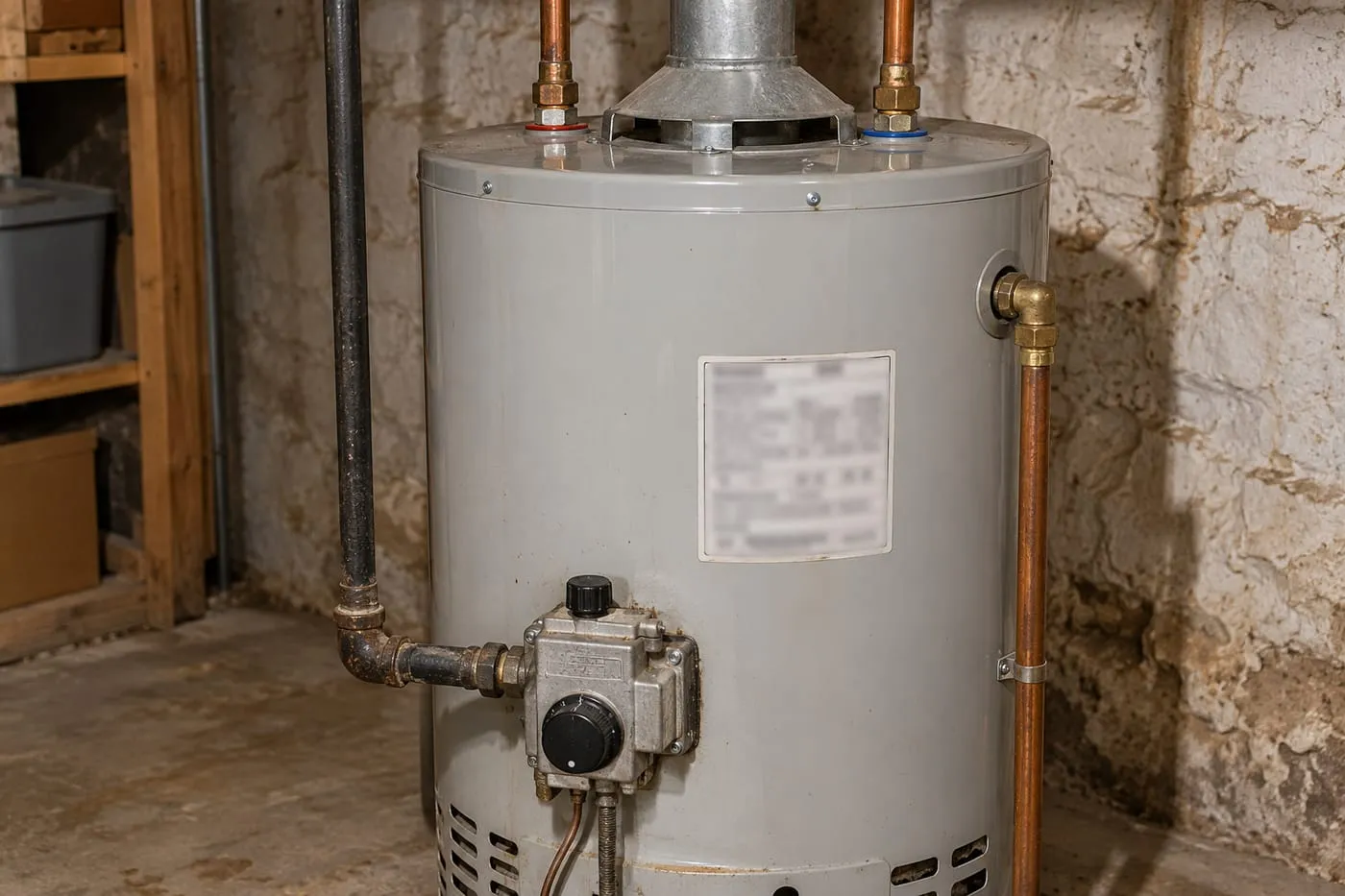
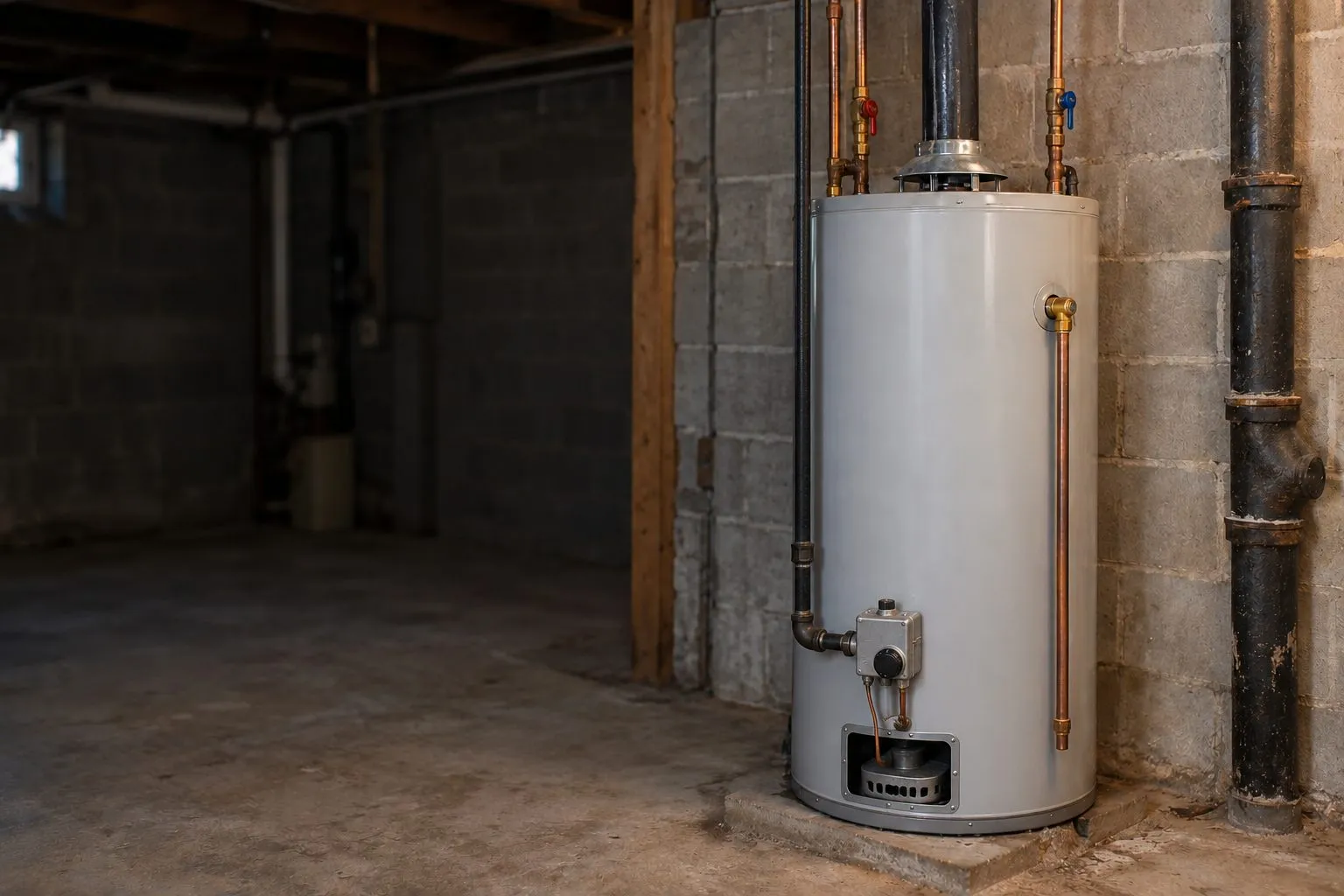
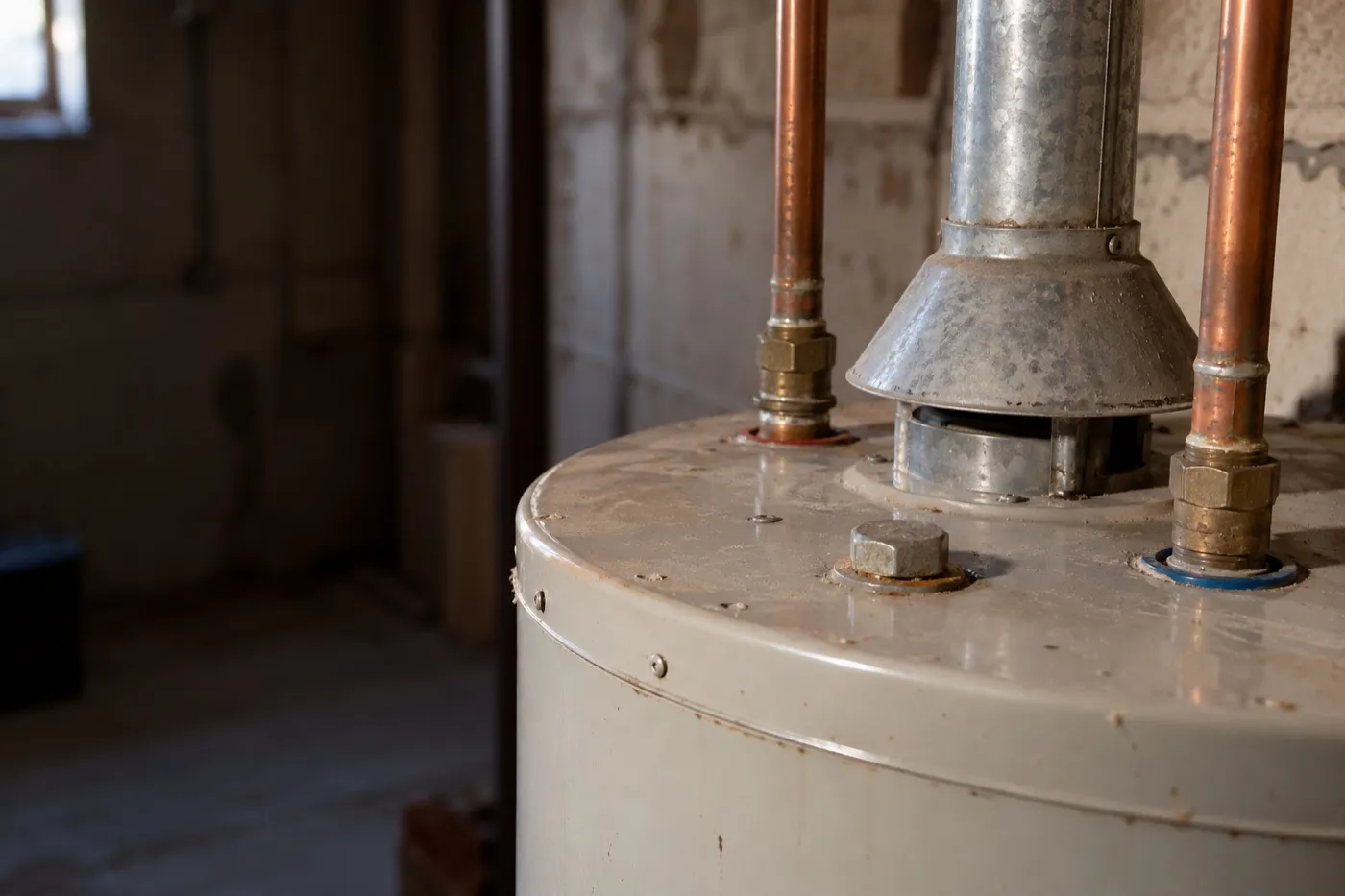
Side of a gas water heater showing the rating plate, gas valve and water pipes

The rating plate is the label on the side of the tank. Look for a manufacture date. If there isn't one, write down the serial number; many brands hide the month and year in it. Search the brand name with "serial number date" to decode it, or ask us when we're there.

Step 2: Look at the bottom and the fittings
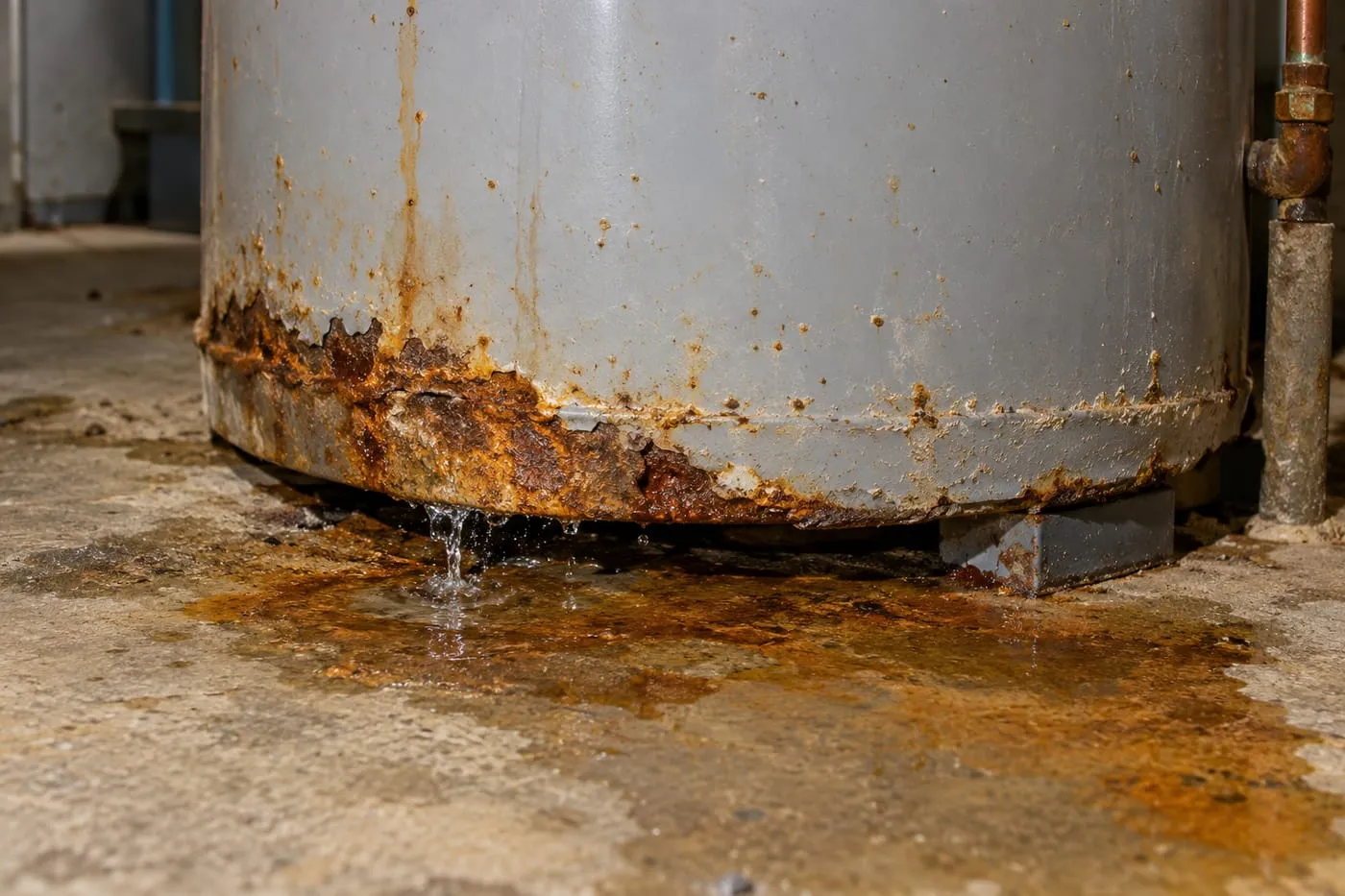
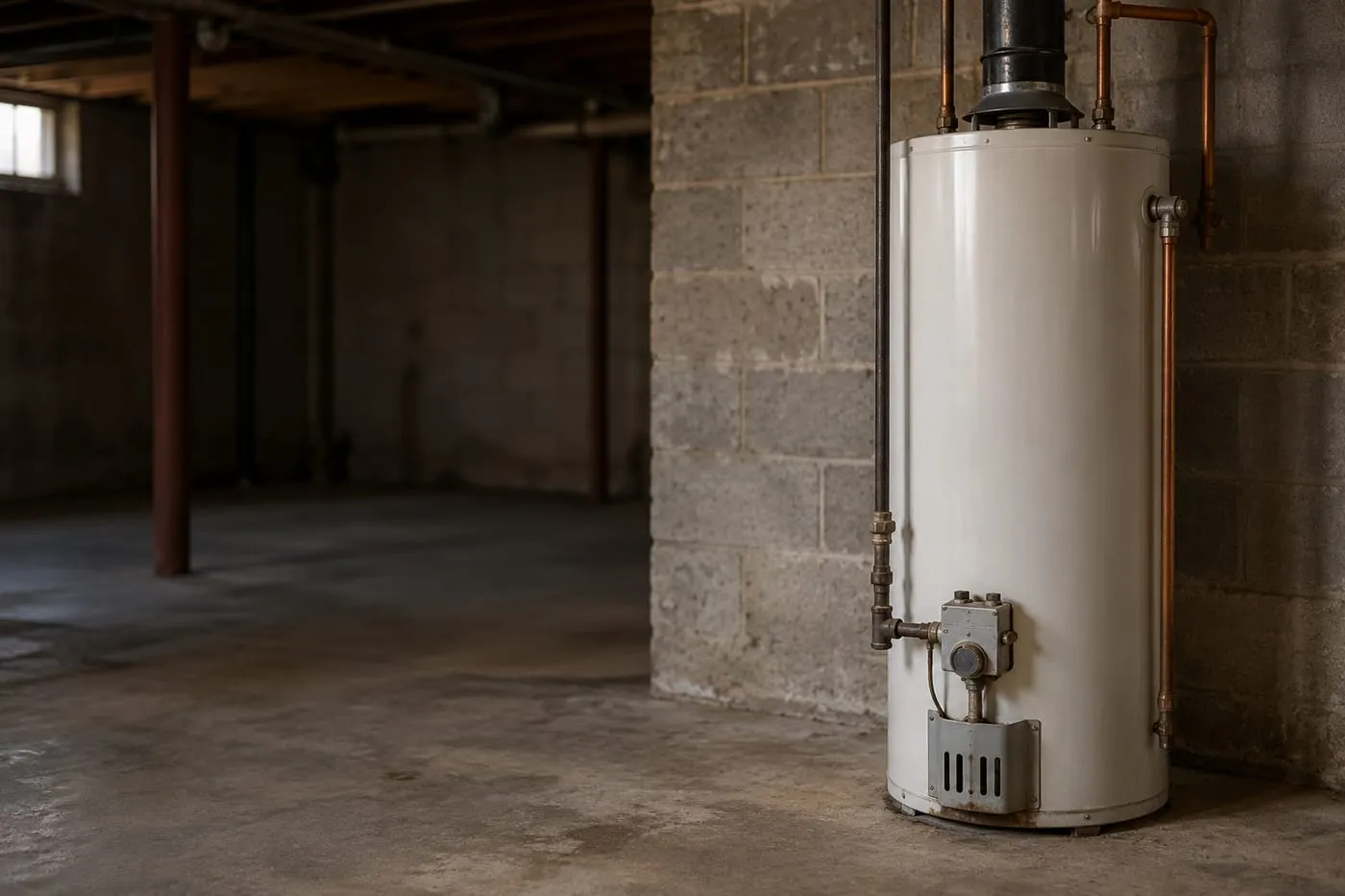
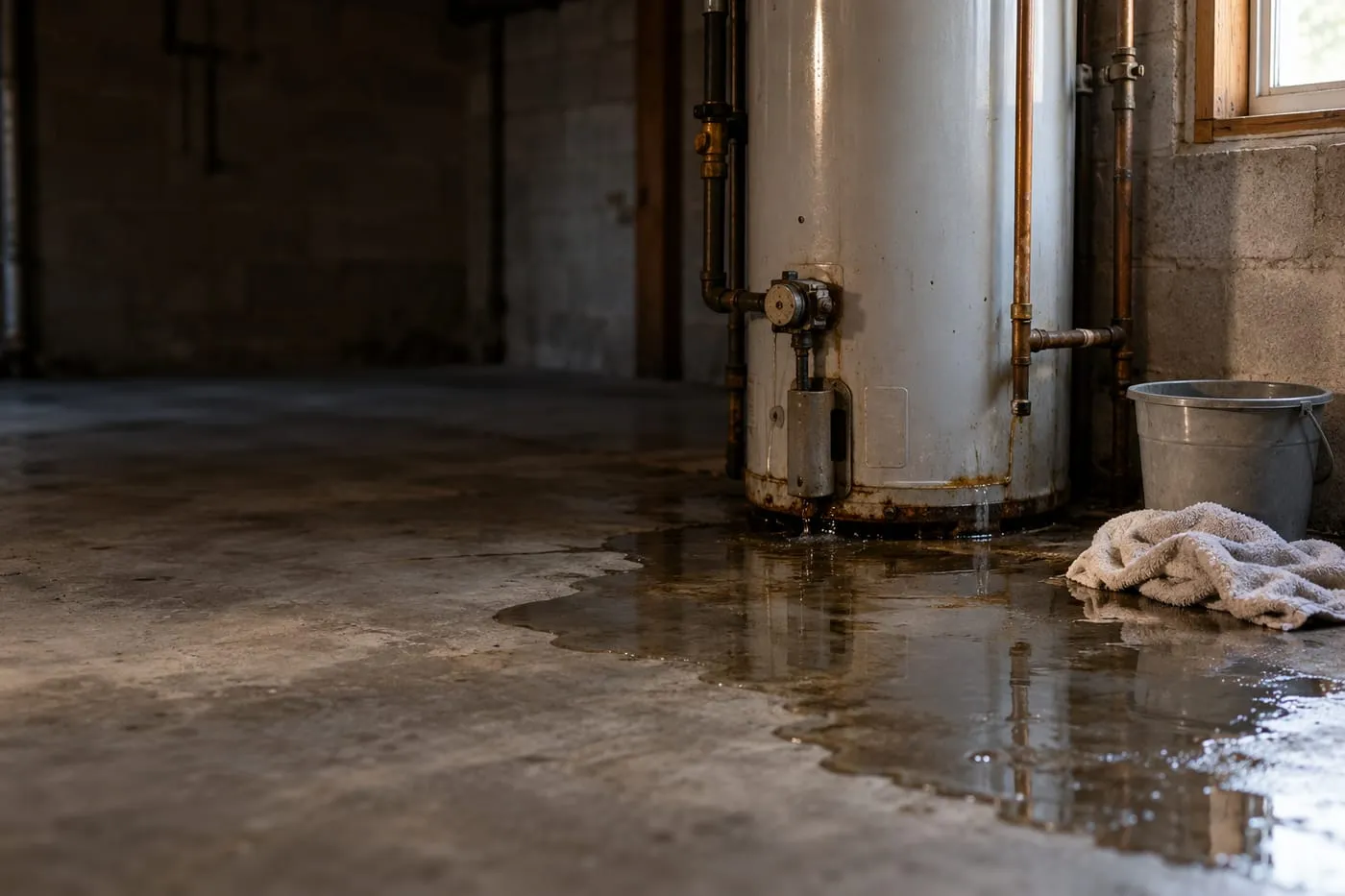
Rusted bottom edge of an old water heater with water seeping onto the floor

Shine a flashlight around the base of the tank and the pipe connections on top. Rust stains, flaking metal or dampness at the bottom of the tank mean it's rusting through. Corrosion at a fitting on top is often fixable; rust on the tank itself isn't.

Step 3: Check the hot water in a glass
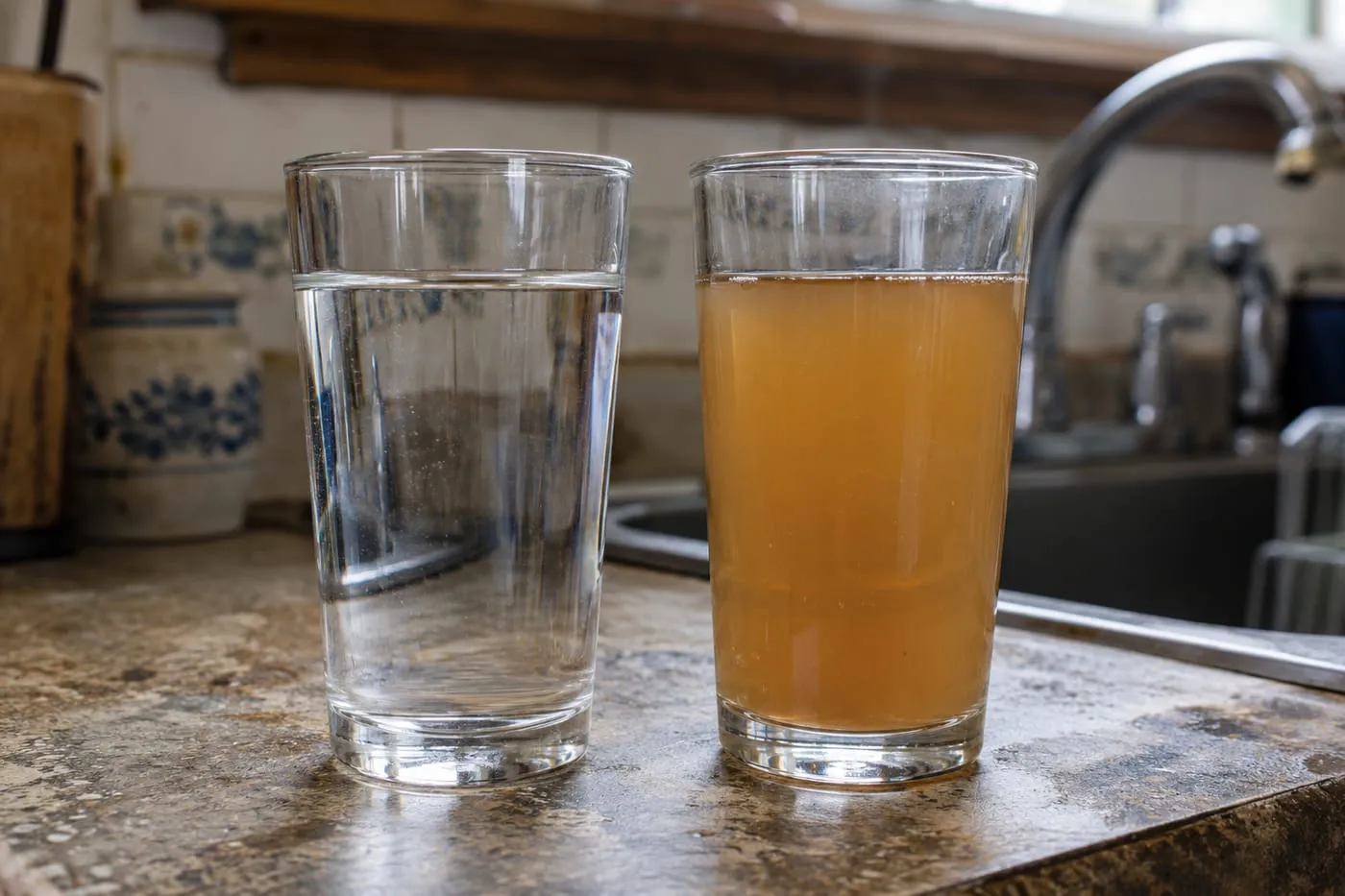
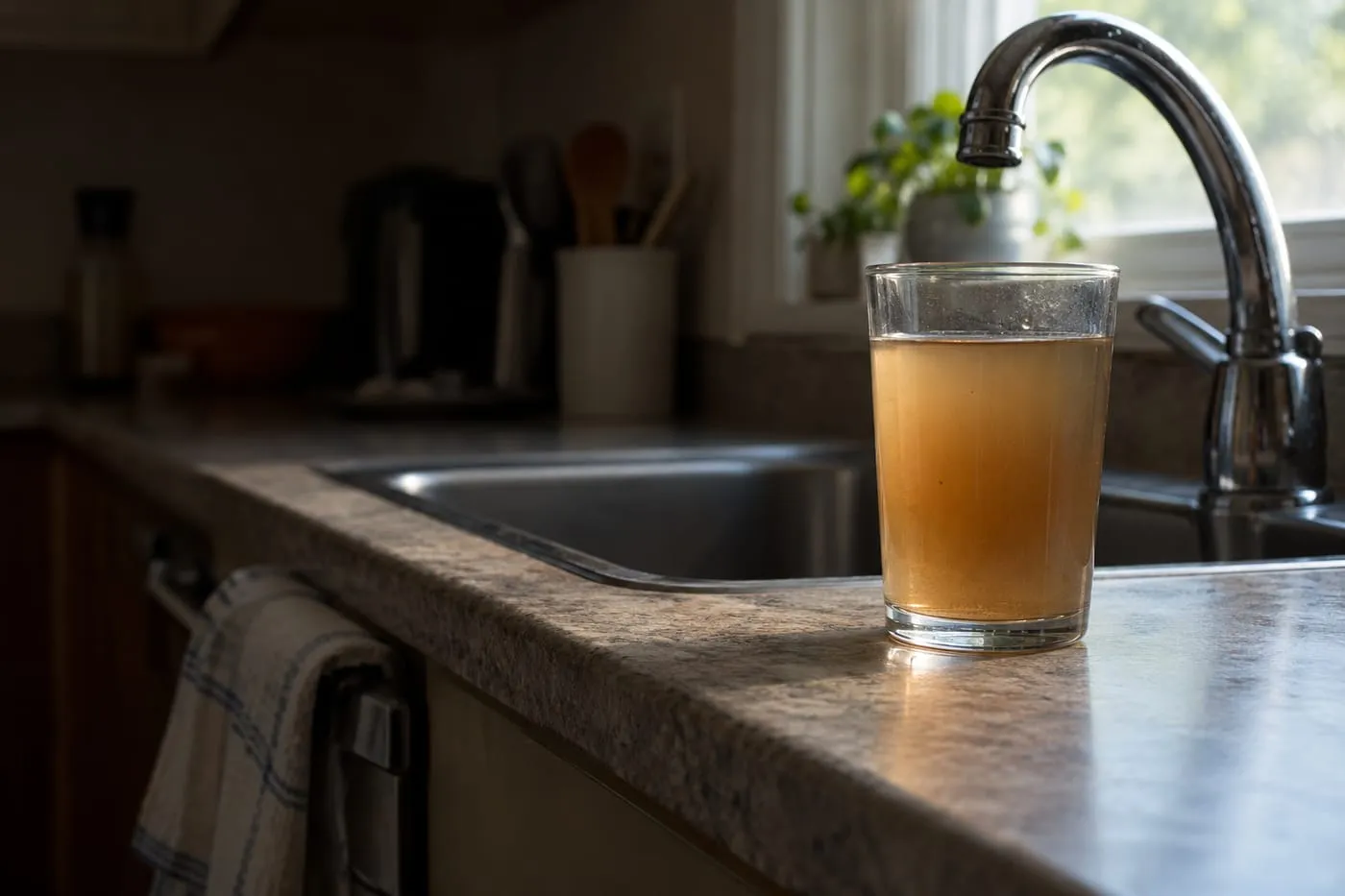
Two glasses of water on a counter, one clear and one rust-colored

Fill one glass from the hot tap and one from the cold. If only the hot water looks rusty or brown, the inside of the tank is likely rusting, often because the anode rod is used up. If both are brown, the cause is in the pipes or the water supply. See our guide to brown water.

Step 4: Listen while it heats

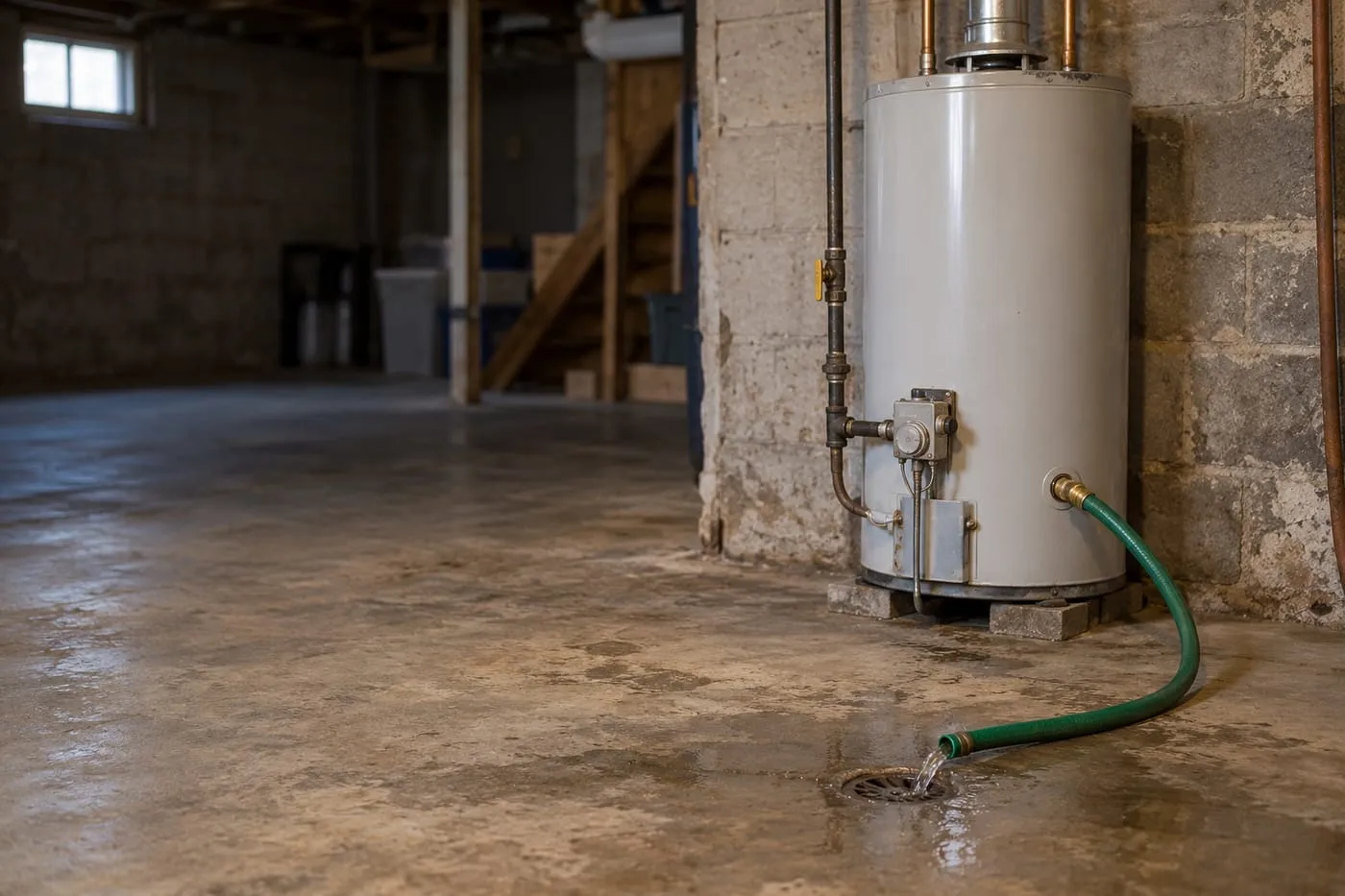
Popping or rumbling while the heater runs is often water boiling under a layer of sediment. Don't open the drain valve to look. Old valves can fail to close, and the water can scald. Our flushing guide explains the risks, and we can check it on a service visit.

Signs your water heater is near the end

  • It's more than 10 years old
  • Water pools under the tank, or the bottom is rusty and damp
  • Hot water comes out rusty, brown or with grit
  • You run out of hot water faster than you used to
  • Loud rumbling or popping when it heats
  • It needs repairs more and more often

Repair or replace?

A heater with one failed part, such as a thermostat, heating element, gas valve or igniter, can often be repaired. Replacement makes sense when the tank itself leaks, or when the heater is more than about 10 years old and keeps breaking down. At that point another repair rarely pays off. We test the heater first and tell you honestly which way to go. Written upfront flat-rate pricing options. You choose. Our water heater replacement cost guide explains what affects the price.

How to make your water heater last longer

  • Ask about periodic flushing to clear sediment, done by the manufacturer's instructions.
  • Have the anode rod checked every few years. See our anode rod guide.
  • Avoid running the tank hotter than you need, within scald protection and your manual. Here's how the temperature setting works.
  • Ask a plumber whether your system needs an expansion tank so pressure doesn't strain the tank.
  • Have your house water pressure tested if you suspect it's high.

Plumbing Doctor is a veteran-owned NJ Master Plumber in Somerset, serving Central New Jersey. We repair and replace gas and electric tank water heaters up to 50 gallons. On tankless units we do diagnostics, repairs and maintenance only, with no tankless installation or replacement. Call 908-873-6686 if yours is showing its age.

Keep this guideFor the next time something leaks

Save it for an emergency

Keep these steps and our number one tap away.

Add our number

Get tips and reminders

New guides and seasonal reminders. A few emails a year.

Stop and call us if

  • Water is pooling under the tank or the bottom of the tank is rusty and wet.
  • Only the hot water comes out rusty or brown.
  • The heater is over 10 years old and needs a repair.
  • You run out of hot water much faster than you used to.
  • The tank rumbles or pops loudly every time it heats.

Call 908-873-6686.

Need a licensed plumber?Written upfront flat-rate pricing options. You choose. We respond immediately to calls and online inquiries. Same-day appointments may be available, subject to technician availability and scheduling.
Mike Holt
About the author

Michael Holt

Owner and operator of Plumbing Doctor, NJ Master Plumber (Lic. #36BI01345600) and U.S. Marine Corps veteran.

More about Mike
FAQ

Questions we get about this

Don't see your question? Call us and ask.

Call 908-873-6686
How long does a gas water heater last?

Many gas tank water heaters last somewhere around 8 to 12 years, but it varies. Hard water, high temperature settings and skipped maintenance can push it toward the short end. A heater with regular professional maintenance has a better chance of reaching the long end of that range.

How long does a tankless water heater last?

It varies. Tankless heaters can last longer than tank heaters because they don't hold water in a steel tank that can rust through. They need regular descaling, especially with hard water, and parts like the igniter or flow sensor can wear out along the way. Neglected units with heavy scale can fail sooner. We maintain, diagnose and repair tankless units, but we don't install or replace them.

How do I tell how old my water heater is?

Look at the rating plate, the label on the side of the tank. Some list the manufacture date. Others encode it in the serial number, often with a letter for the month and two digits for the year, though each brand uses its own pattern. The manufacturer's website or a plumber can decode it.

Should I replace my water heater before it fails?

If it's over 10 years old and showing rust, leaks, rumbling or falling hot water, planning ahead is usually smarter than waiting. A tank that fails can flood a basement, and then you're making the decision in a hurry. We install tank water heaters up to 50 gallons.

Can a leaking water heater be repaired?

It depends on where the water comes from. A leak at a pipe fitting, drain valve or relief valve can often be fixed. If the tank itself is leaking, it has rusted through and can't be patched, so the heater has to be replaced. Our water heater leaking guide shows how to tell the difference.

Leaking pipe right now?

Shut off the water first if you can reach the valve safely, then call us, day or night.

908-873-6686

Outside regular hours and on holidays, emergency service requires a $250 upfront emergency fee. When paid, the standard $49 service fee is waived. During regular hours there is no emergency fee. Additional repairs are quoted before work begins. We respond immediately upon contact; dispatch and arrival depend on availability and location.

Do this now

  1. Shut the main valve. Usually where the water line enters, near the meter.
  2. Stay clear of electricity. Don't enter standing water or touch electrical controls near the leak.
  3. Open a low faucet to drain the pipes and take pressure off the leak.
Selected Google reviews

What neighbors say

Excellent4.9 from 174 reviews on Google
Richard F.Google review
★★★★★

Had backup and they came out in half hour on a Sunday and got the blockage resolved. They cleaned up after themselves. Very very professional people.

Lisa L.Google review
★★★★★

Honest, reliable and they do a great job. I highly recommend plumbing doctor services.

Felicia T.Google review
★★★★★

Mike is awesome, knowledgeable, thorough and friendly! Overall great and expedient experience!

John G.Google review
★★★★★

Excellent service and very knowledgeable. I definitely recommend them.

JoeGoogle review
★★★★★

Very knowledgeable, attention to detail, extremely neat and organized. We highly recommend Plumbing Doctor.

Naomi H.Google review
★★★★★

Mike works quickly and is transparent with pricing. He's trustworthy, reliable and brings his own shoe covers.

Hazim A.Google review
★★★★★

They tell me what is worth doing or not doing, and won't try to upcharge me. The work is always great. They are my go-to!

Kevin C.Google review
★★★★★

Found my outdoor cleanout that was covered up for years and no other company could find! … They use drop cloths and clean up when they are done.

Read all 174 reviews on Google · Leave us a review

We respond immediatelySame-day appointments may be available

What's going on?

Tap one. It takes about a minute, and we get your request right away.

Problem
How soon?

Enter a 5-digit ZIP code, or leave it empty.

Where can we reach you?

Please enter your name.

Enter a 10-digit phone number.

Best way to reach you

That email doesn't look right.

Leaking pipe? Call 908-873-6686