Water Heater Leaking? What to Do Right Now and How to Find the Leak
By Mike Holt, NJ Master Plumber · October 31, 2026 · 6 min read · Updated November 1, 2026
Quick answer
If your water heater is leaking, stay out of standing water and don't touch electrical controls near the leak. If you can reach it from a dry floor, close the cold water valve above the tank, then call us. If you smell gas, leave immediately and call 911 and the utility from outdoors. Leaks at fittings or valves can often be repaired. A leaking tank needs replacing.
- Difficulty
- Observation and shutoff only. Repairs need a professional
- Time
- 15 to 20 minutes
- You need
- Flashlight, dry towels or paper towels
Rather not risk it? A licensed plumber can handle this for you, with written upfront flat-rate pricing options before any work starts.
Water spreading or near electrical? Do not enter standing water or touch electrical controls. If you can reach it from a dry spot, close the cold water valve above the heater or the main shut-off, then call us. 908-873-6686
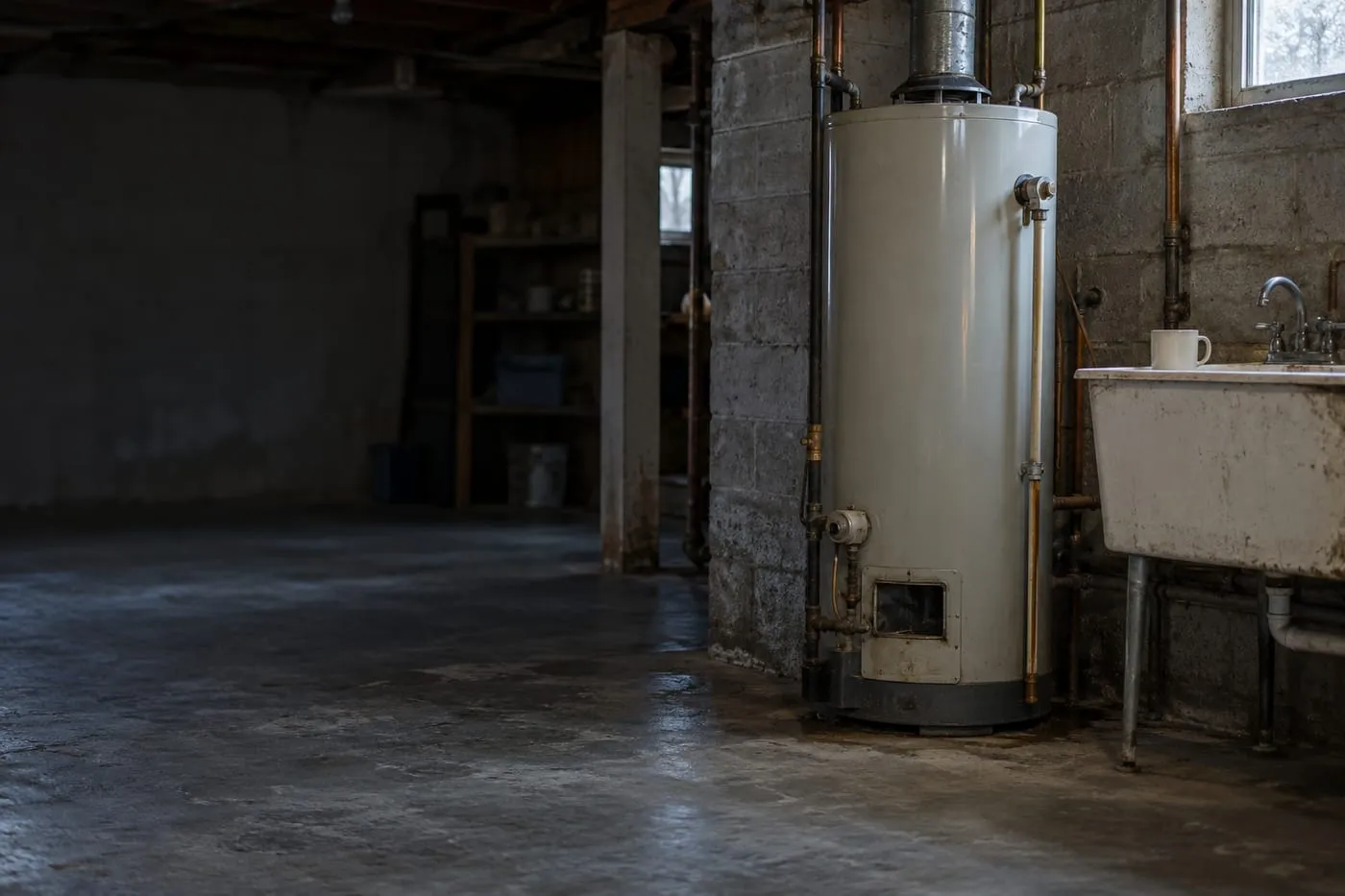
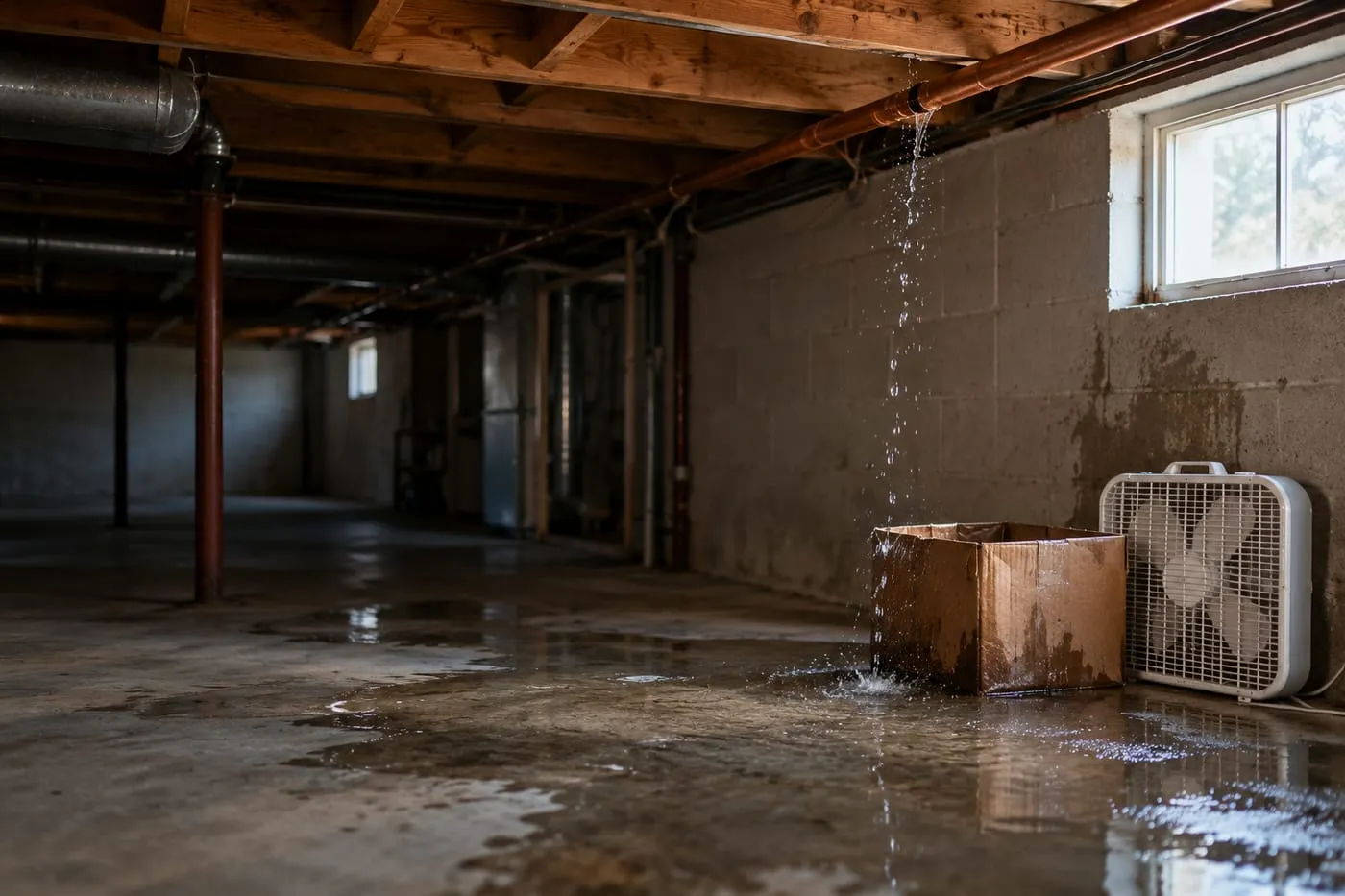
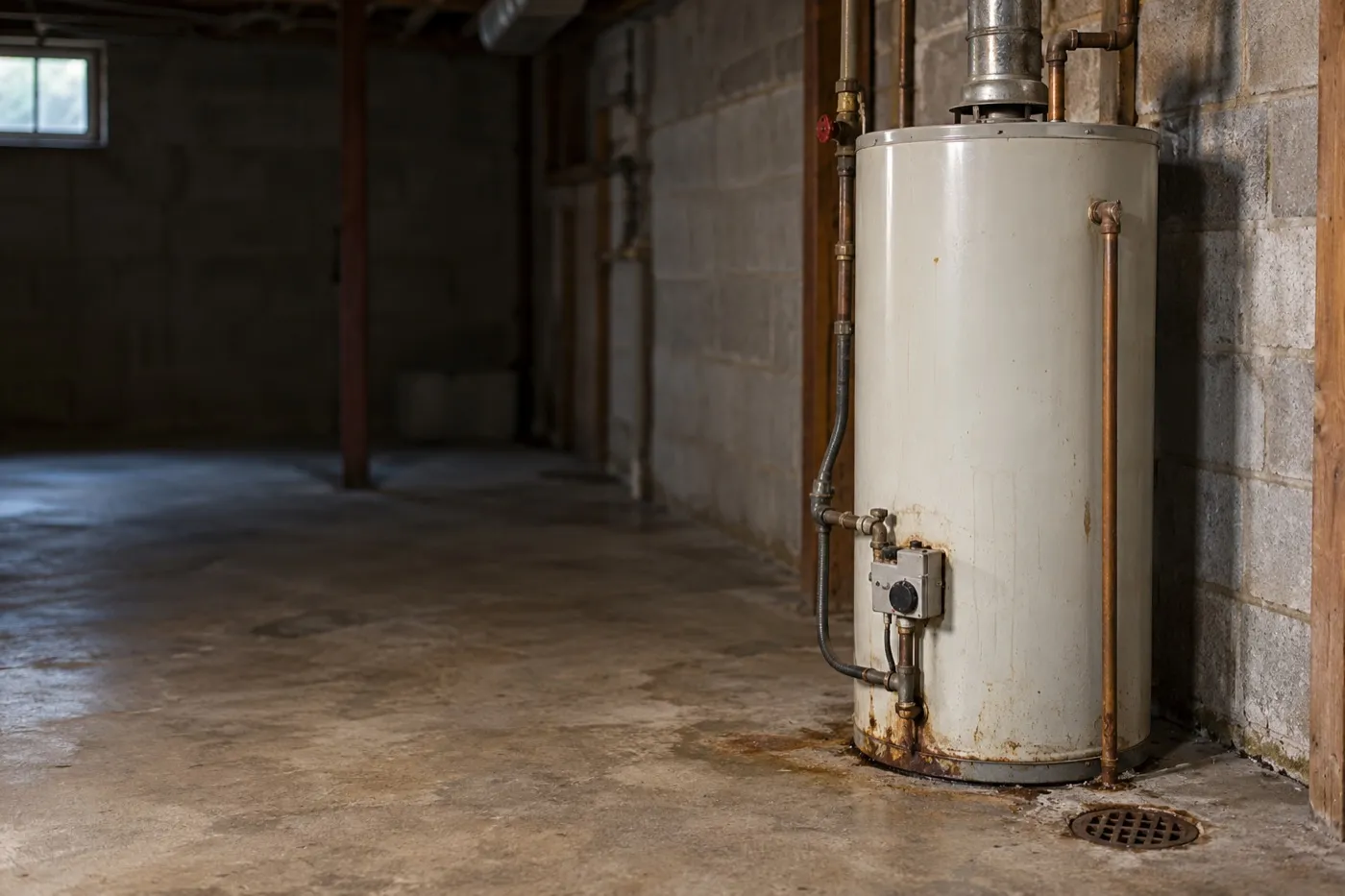
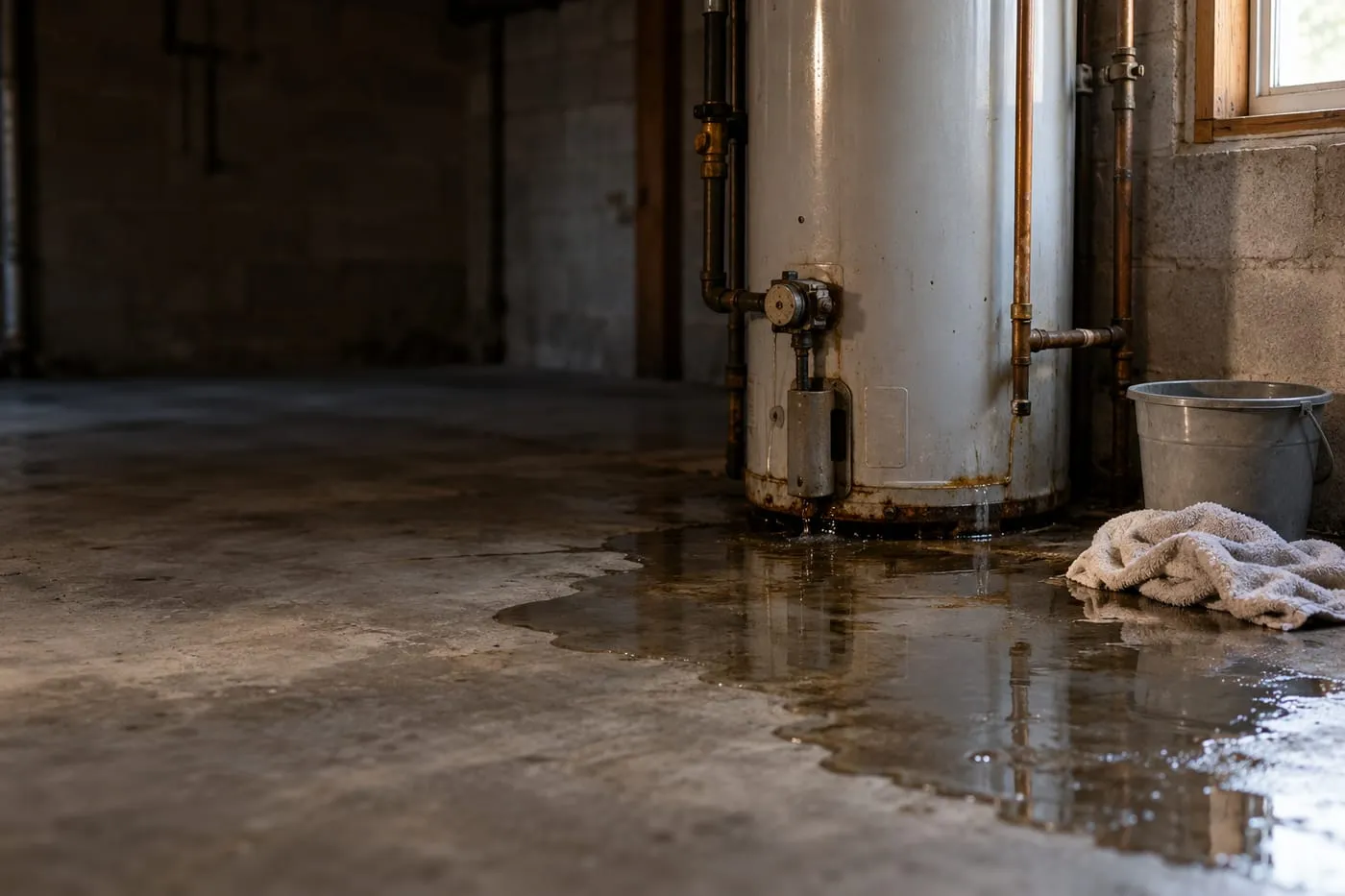
A puddle under the water heater is easy to mop up and forget, but it's the one plumbing warning you shouldn't ignore. A 40 or 50 gallon tank that fails can empty itself into your basement. Many leaks come from a fitting or valve that can be fixed. Here's how to stay safe first, then how to tell us what kind of leak you have.
First, make it safe
Step 1: Keep away from water near electricity
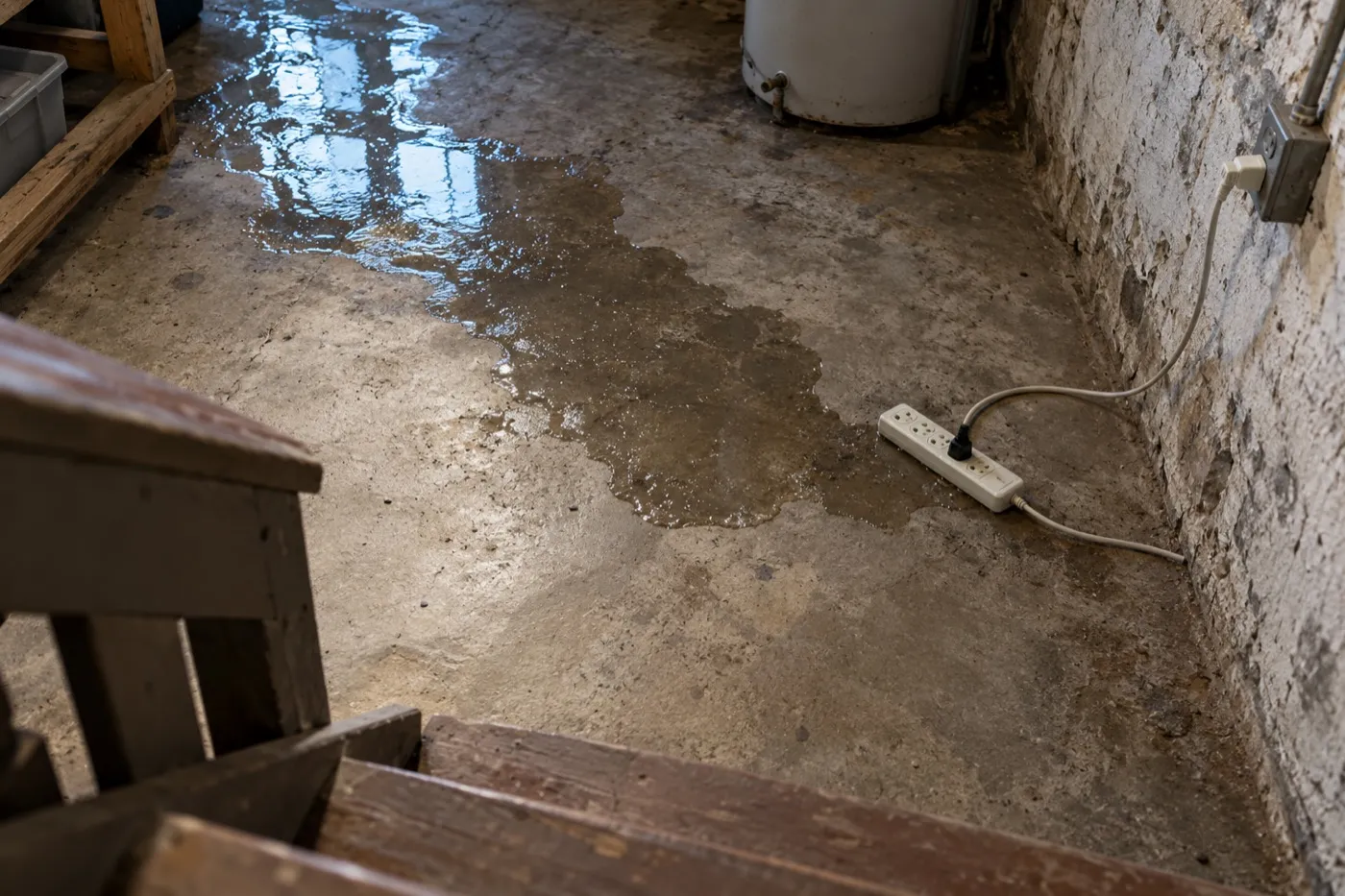
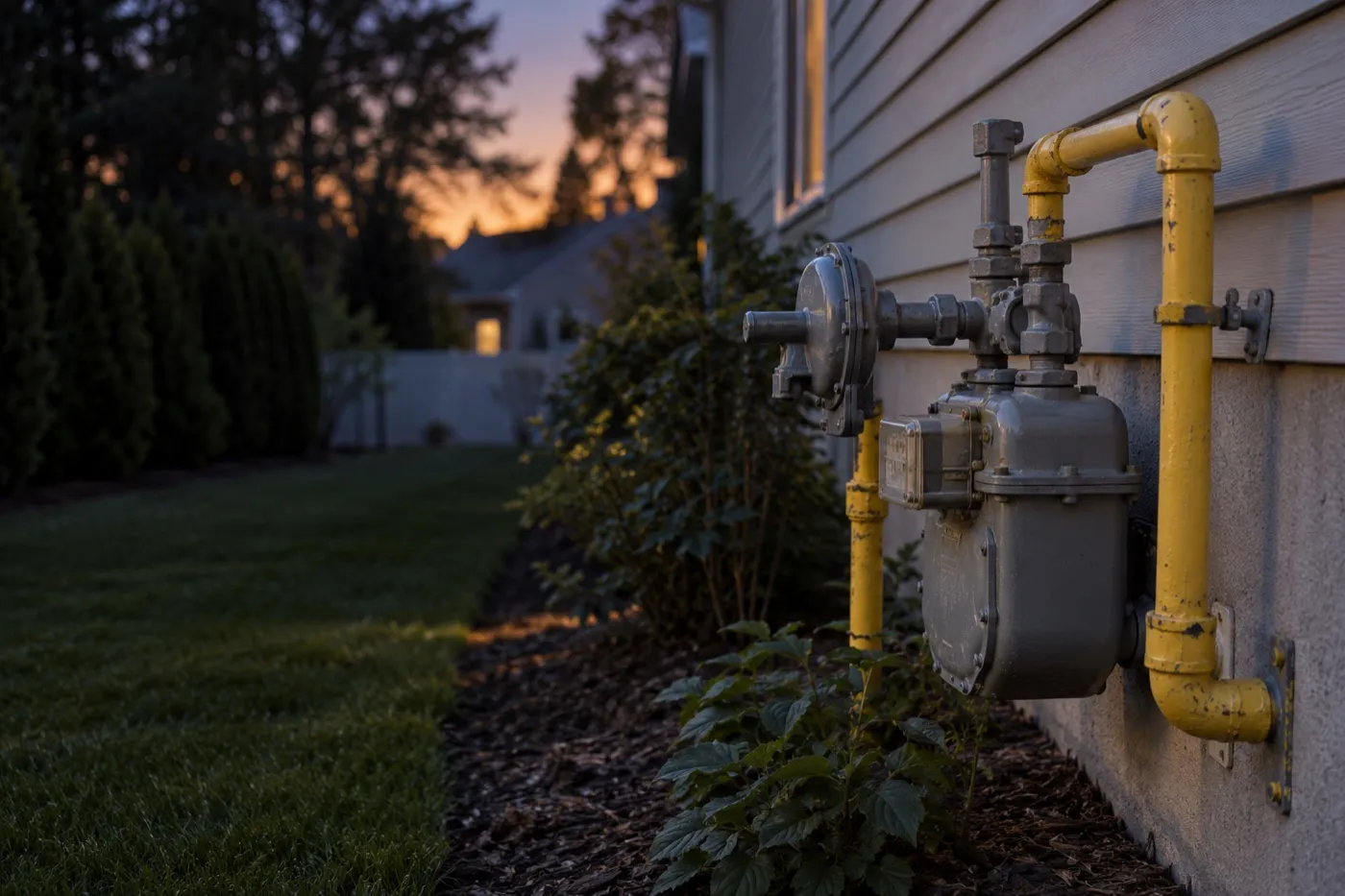
Do not enter standing water or touch electrical controls near a leak. If the water has spread near outlets, extension cords, a power strip or the electrical panel, close the main water shut-off if you can reach it from a dry spot, and call us. If you smell gas, leave immediately and call 911 and your gas utility from outdoors.
Step 2: Turn off the heat only if it's safe
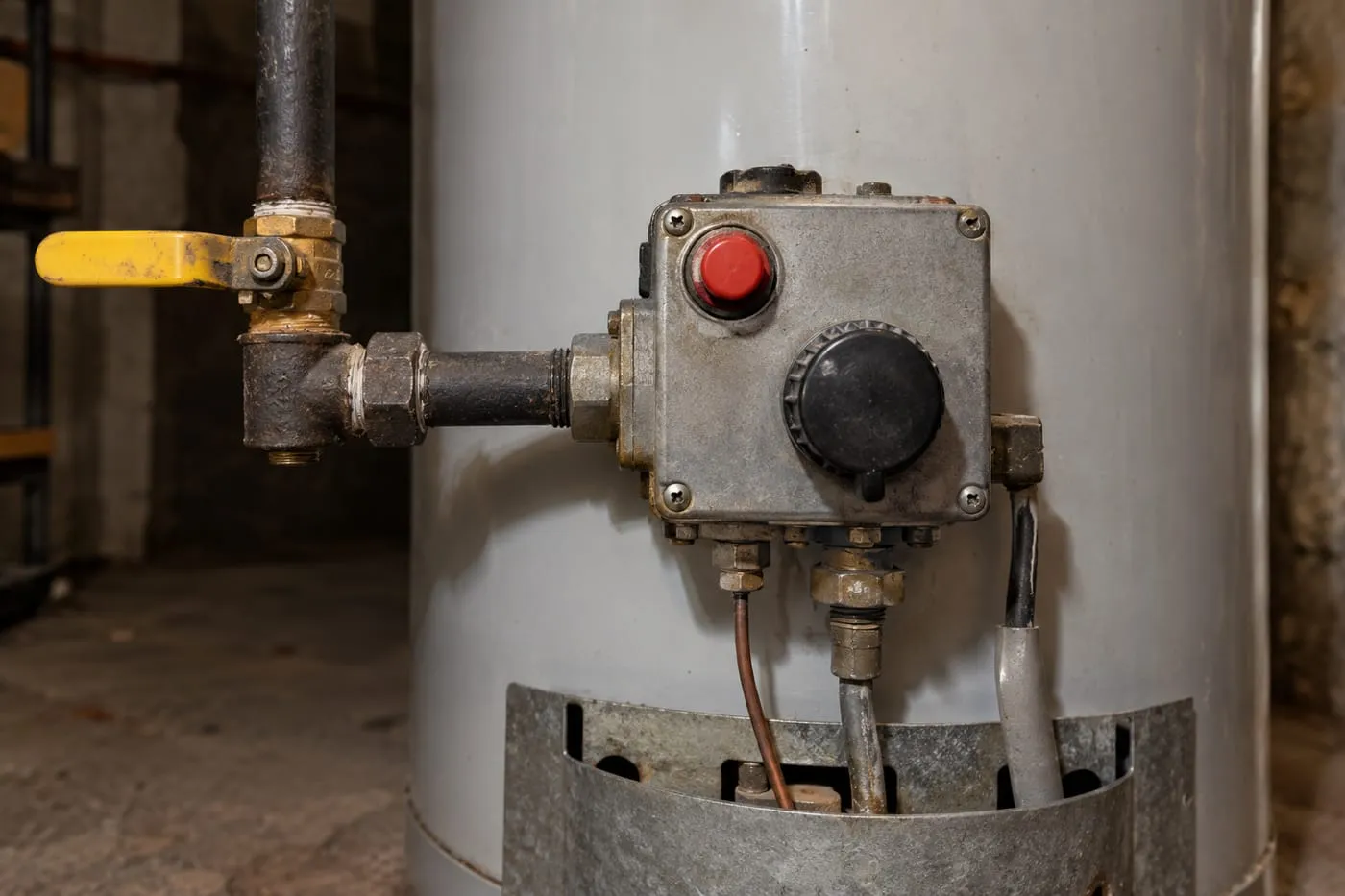
This step is only for a dry floor and no gas smell. For an electric heater, switch off its double breaker if the panel is away from the water. For a gas heater, set the control to Off as its label directs, and don't try to relight it.
The water inside stays hot for hours, so keep kids and pets away and don't open the drain valve to empty it yourself.
Step 3: Close the cold water supply
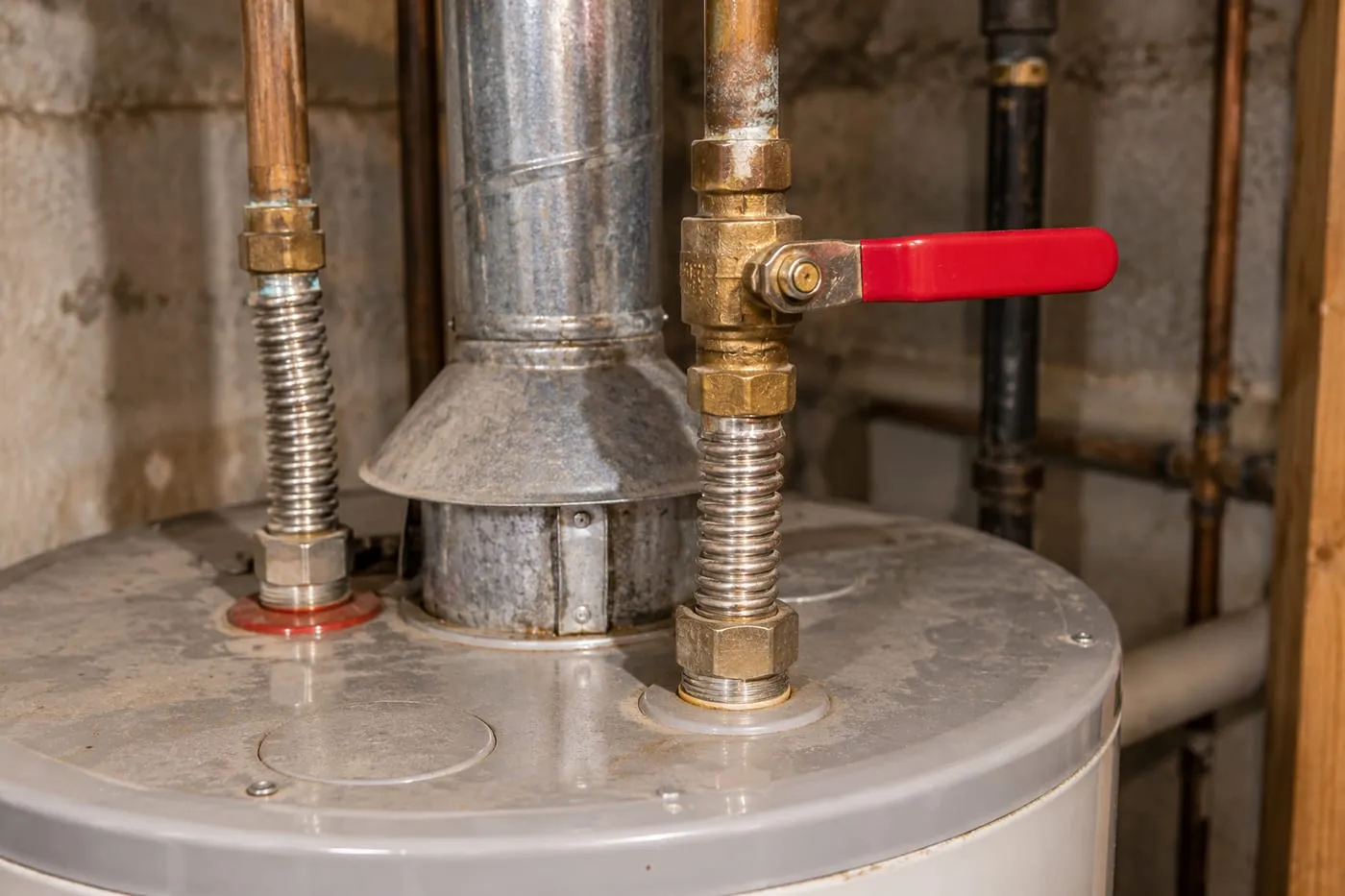
Find the cold water pipe that goes into the top of the tank and close its valve if you can reach it from a dry spot: a lever turns a quarter turn so it sits across the pipe, a round handle turns clockwise until it stops. This stops the tank from refilling. If the valve won't close or leaks when you turn it, don't force it. Use the main shut-off instead and call us.
Then, find where the water is coming from
Do this only from a dry spot, and only by looking. Water runs down the outside of the tank and collects at the bottom, so a leak that looks like it's coming from the bottom often starts higher up. Check from the top down with a flashlight. Don't remove any covers.
Step 4: Check the fittings on top
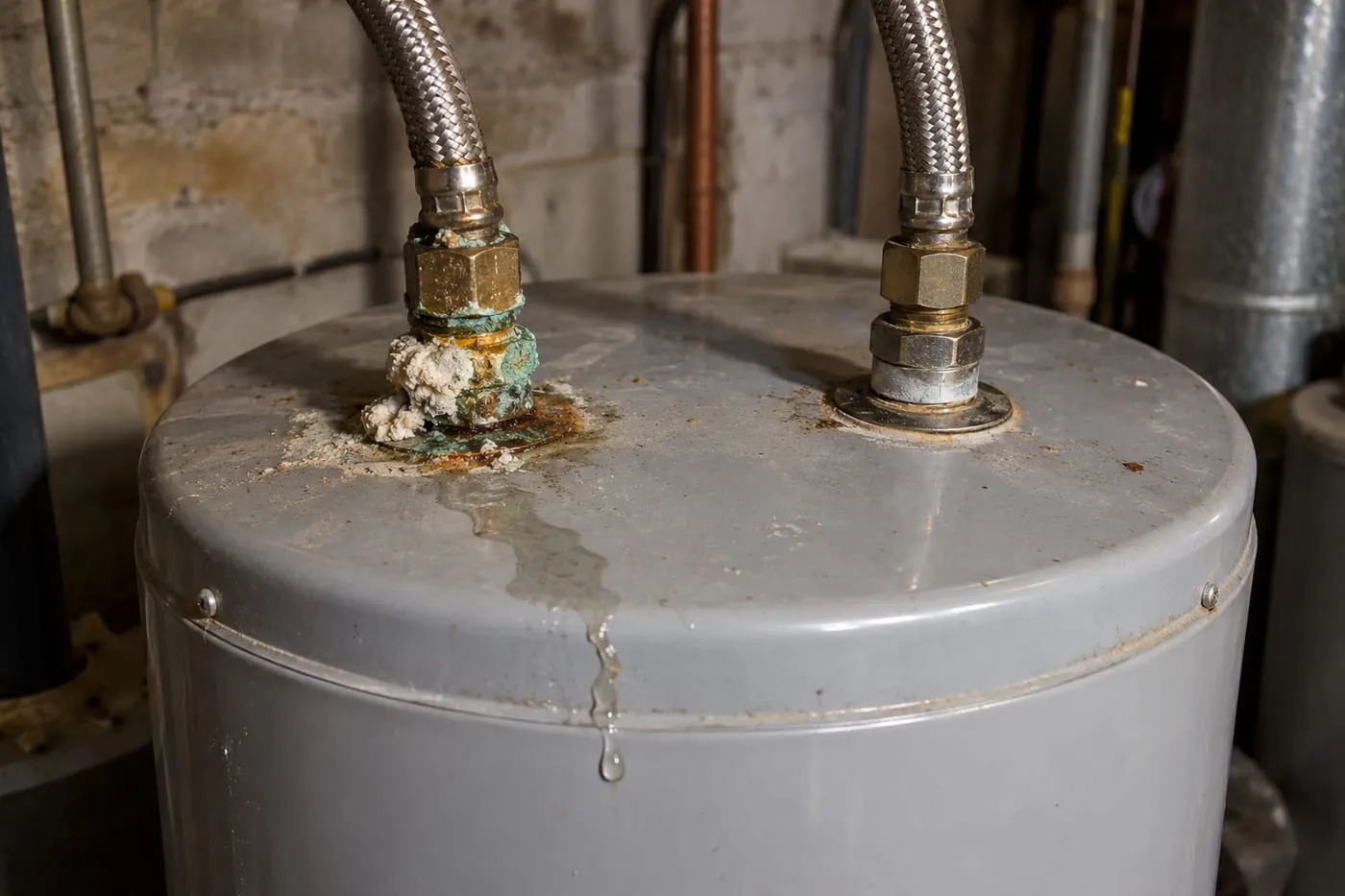
Look at where the hot and cold pipes or flexible supply lines connect to the top of the tank. White or green crust, rust or wet streaks running down the side point to a slow leak at a fitting.
What it means: this is often a repair for a plumber. A corroded fitting or a worn flexible connector can usually be replaced without replacing the heater. Don't put a wrench on old fittings; they can snap.
Step 5: Check the relief valve and its pipe
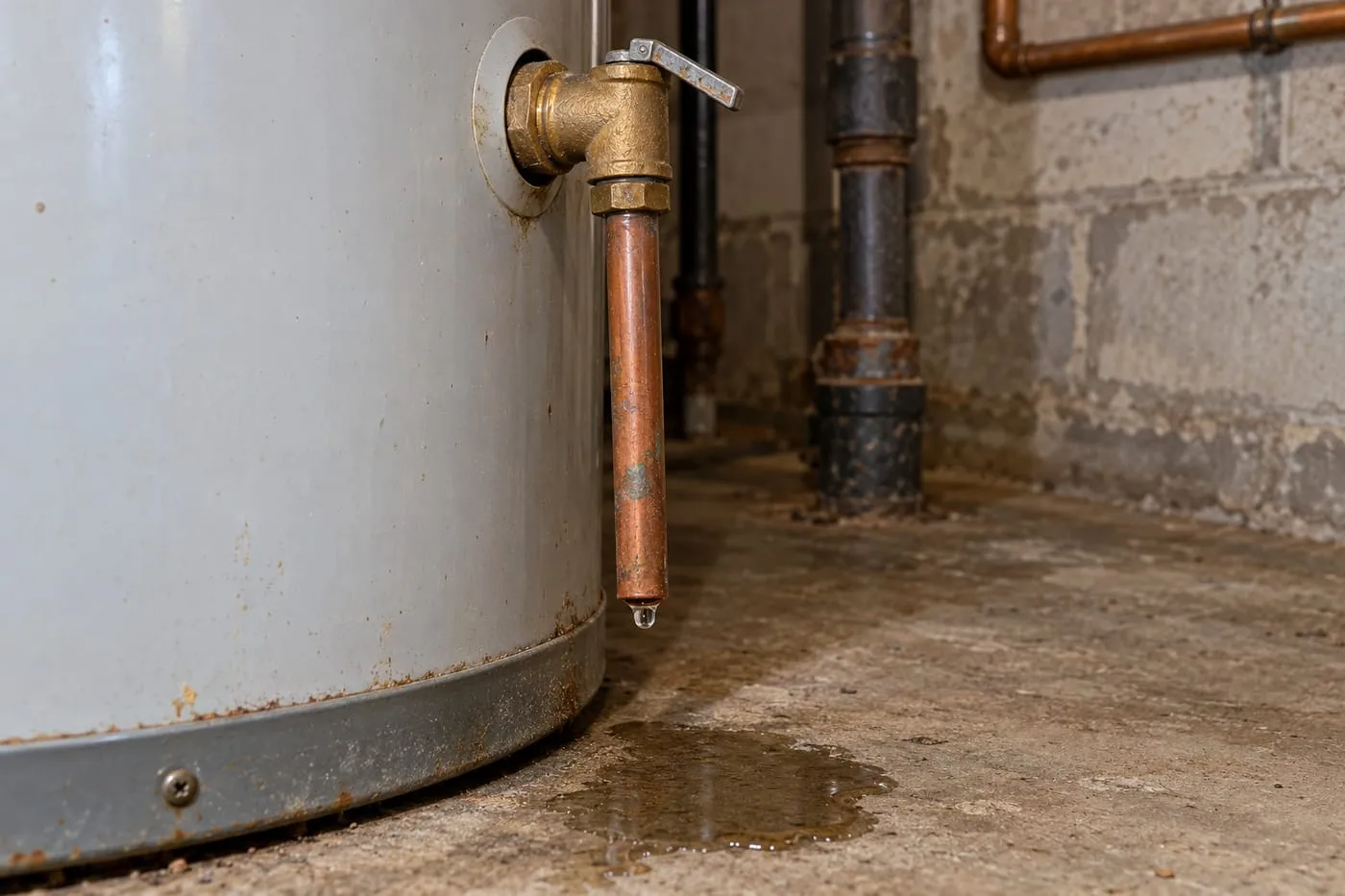
The temperature and pressure relief valve is the brass valve on the side or top of the tank, with a pipe running down toward the floor. Water dripping from the end of that pipe means the valve opened or is wearing out.
Why it matters: this valve is a safety device that keeps the tank from building too much pressure. It may drip because the water is set too hot, the house water pressure is too high, or there's no working expansion tank. Never cap the pipe, plug it or remove the valve. Leave it to a plumber.
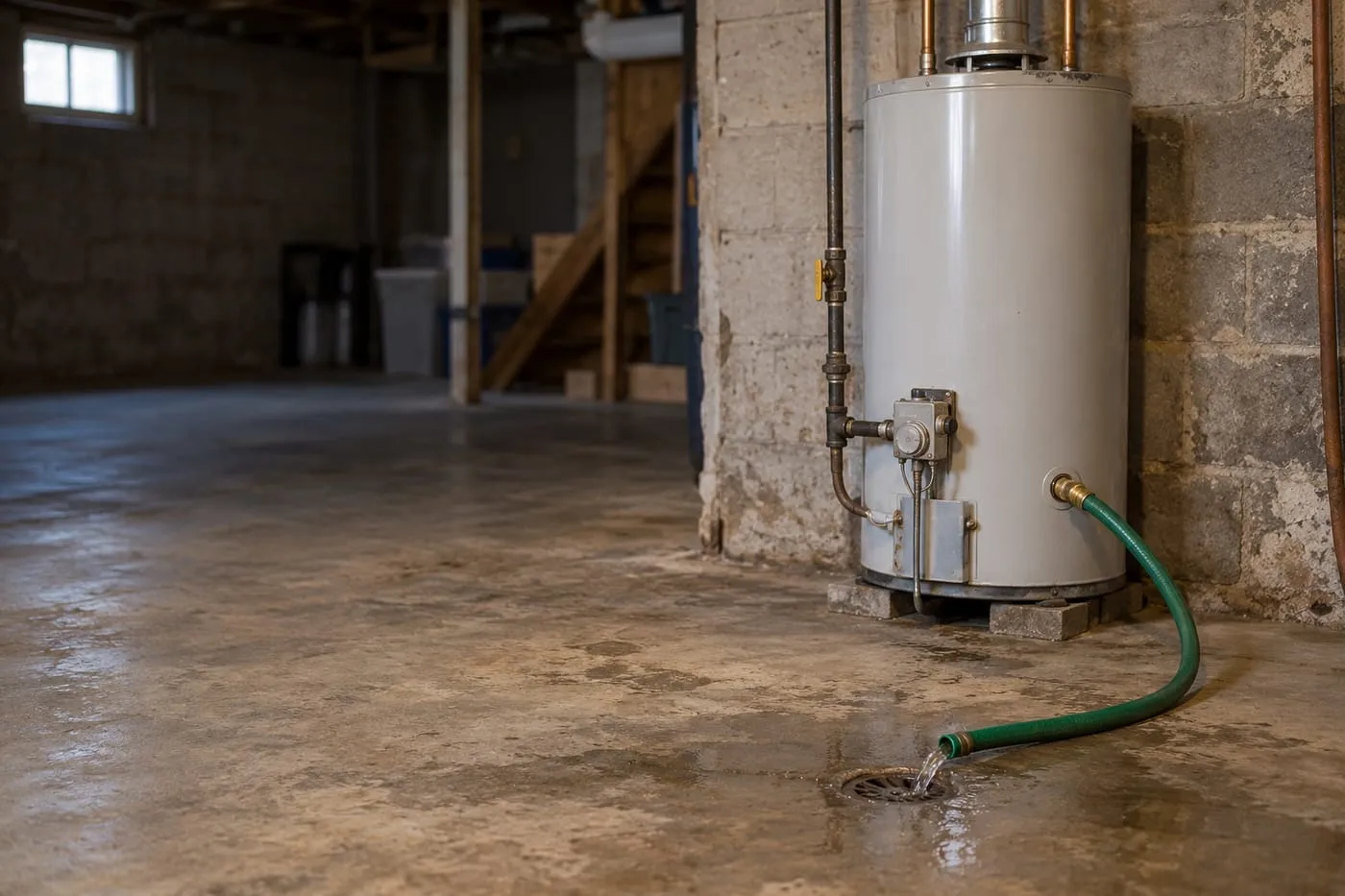
Step 6: Check the drain valve near the bottom
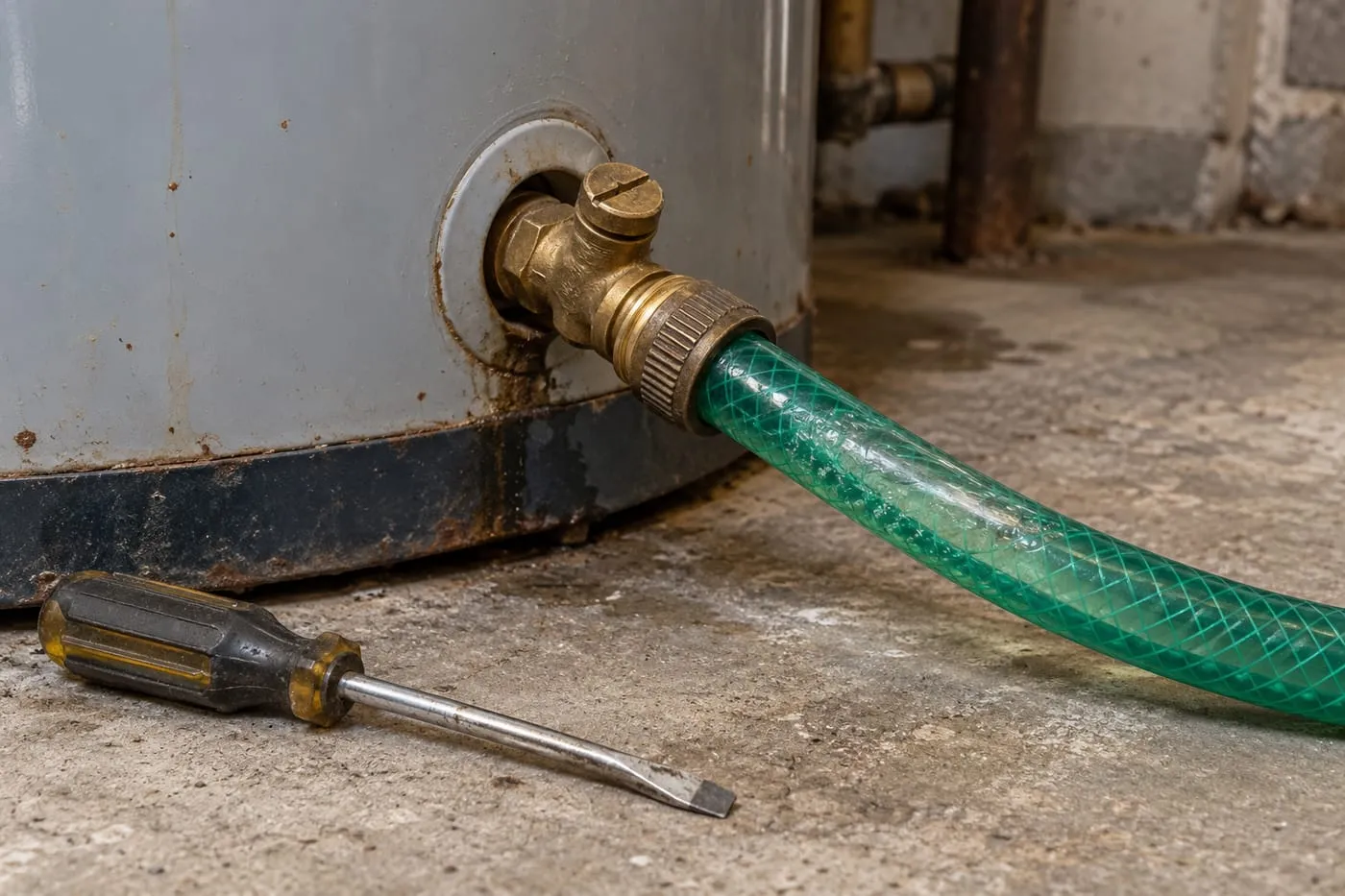
The drain valve looks like a small outdoor faucet near the bottom of the tank. A drip from its spout or around its stem means it's worn or not fully closed, often after someone flushed the tank.
What to do: put a bucket under a slow drip if you can reach it from a dry floor, and call us. Don't turn or force the valve; old ones can crack.
Step 7: Rule out condensation
A gas water heater can sweat when it fills with cold water, especially in winter, and the drips land in the burner area or under the tank. It looks like a leak but stops once the water is hot.
How to tell: you may not be able to from the outside. If water keeps coming, or you've shut the heater off, treat it as a leak and call us. Don't restart the heater to test it.
Step 8: Check the tank itself
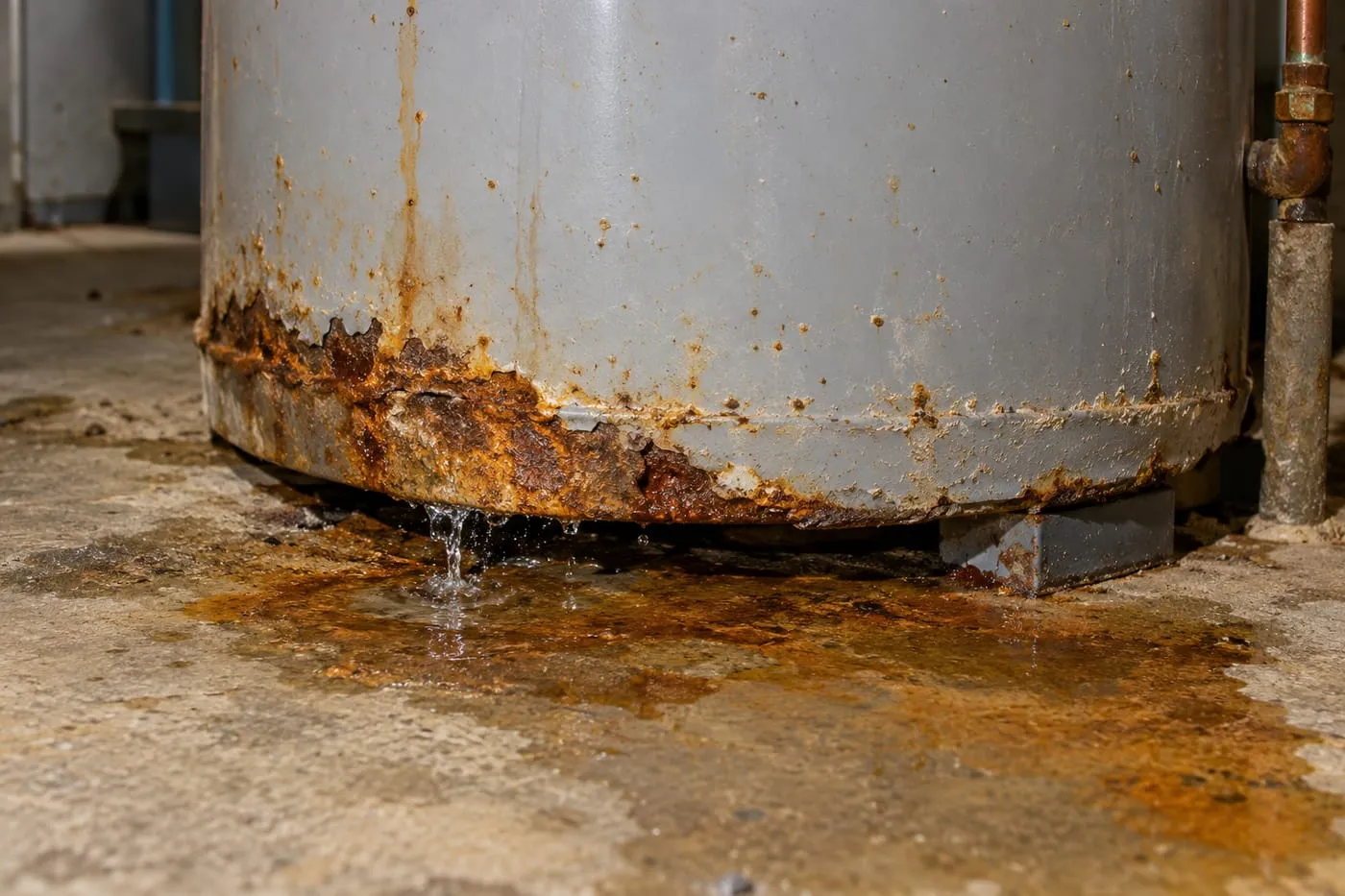
If every fitting and valve is dry but water keeps appearing under the heater, look at the bottom edge and any seams with a flashlight. Rust, bubbling paint, and water seeping from under the tank mean the steel tank has rusted through from the inside.
What it means: a leaking tank can't be repaired, and it only gets worse. Keep the cold supply off if you could reach it safely, move valuables away if the floor is dry, and call to have it looked at before it fails all at once.
Can a leaking water heater be fixed?
It depends on where the water comes from. Tanks rust through from the inside eventually, often somewhere around 8 to 12 years, though that varies. Once water comes through the tank wall, replacement is the only fix.
| Where it's leaking | Likely cause | Usual fix |
|---|---|---|
| Fittings on top | Corroded or loose connection | Replace the fitting or connector |
| Relief valve or its pipe | Worn valve, water too hot or pressure too high | Replace the valve, fix the pressure cause |
| Drain valve | Worn or not fully closed | Replace the drain valve |
| Under the gas burner, only when cold | Condensation | Nothing, it stops once the tank heats |
| Bottom or side of the tank | Tank rusted through | Replace the water heater |
How do you prevent water heater leaks?
Ask about periodic maintenance to deal with the sediment that wears out the bottom of the tank; see how to flush a water heater. Look under and around the heater every few months for rust, damp spots or crust on the fittings. Catching a small drip early often turns a flood into a simple repair.
When should you call a plumber?
Call right away if the tank is leaking, the relief valve is spraying, or water is near anything electrical. We repair and replace gas and electric tank water heaters up to 50 gallons. On tankless units we do diagnostics, repairs and maintenance only, with no tankless installation or replacement. See water heater repair and replacement and emergency plumbing. Outside regular hours, emergency service requires a $250 upfront emergency fee. When paid, the standard $49 service fee is waived. During regular hours there is no emergency fee. Additional repairs are quoted before work begins. We respond immediately upon contact; dispatch and arrival depend on availability and location. If the leak also left you without hot water, read no hot water: what to check.
Get tips and reminders
New guides and seasonal reminders. A few emails a year.
Stop and call us if
- Water is coming from the tank body or the bottom of the tank.
- The relief valve or its discharge pipe keeps dripping or spraying.
- You can't close the cold water valve, or it leaks when you turn it.
- Water is near the electrical panel, outlets or the gas burner.
- You smell gas anywhere near the water heater.
Call 908-873-6686.

Michael Holt
Owner and operator of Plumbing Doctor, NJ Master Plumber (Lic. #36BI01345600) and U.S. Marine Corps veteran.
More about Mike