Call 908-873-6686Veteran-owned · NJ Master Plumber Lic. #36BI01345600
Plumbing Doctor van, protecting your health and sanitation4.9 174 reviews
on Google
4.9 121 reviews
on Thumbtack
Call 24/7908-873-6686Request service
Water Heaters

Plumbing how-to guides

Plain guidance from a NJ Master Plumber, including when to stop and call a professional.

4.9 stars, 174 Google reviews · NJ Master Plumber Lic. #36BI01345600

Water Heater Expansion Tank: What It Does and When to Call

By Mike Holt, NJ Master Plumber · November 1, 2026 · 3 min read · Updated November 1, 2026

Quick answer

A water heater expansion tank is a small tank on the cold water pipe that gives heated water room to expand. Without thermal expansion control, pressure spikes in a closed system can make the relief valve drip and strain the heater, pipes and fixtures. You can look for rust, drips and a wet relief valve pipe. A qualified plumber should do any testing, adjusting or replacing.

Difficulty
Look only. Testing and replacement need a plumber
Time
About 5 minutes to look
You need
Flashlight

Save this guide so it's one tap away in an emergency.

Add our number

Rather not risk it? A licensed plumber can handle this for you, with written upfront flat-rate pricing options before any work starts.

Relief valve spraying or tank leaking? If you can reach it from a dry floor, close the cold water valve on top of the heater, then call us. Keep clear of hot water. Don't step into standing water or touch electrical controls. 908-873-6686

Water gets bigger when it's heated. In an older home that extra water could push back toward the street, but many homes now have a valve that stops that. Then the pressure has nowhere to go except into your pipes, fixtures and the water heater itself. An expansion tank gives it somewhere to go.

What does a water heater expansion tank do?

Inside the tank is a rubber bladder with air on one side and water on the other. When the heater warms a fresh tank of water, the extra volume pushes into the expansion tank and squeezes the air. When you open a faucet, the air pushes that water back out. Pressure in the house stays steady instead of spiking every time the burner or elements run.

Without that cushion, the temperature and pressure relief valve on the heater opens to release the pressure. That's why a dripping relief valve is often the first sign of a missing or failed expansion tank.

What you can check by looking

A visual check is all a homeowner should do here. Your plumbing is under pressure, so don't open, loosen or adjust anything.

Step 1: Find the tank
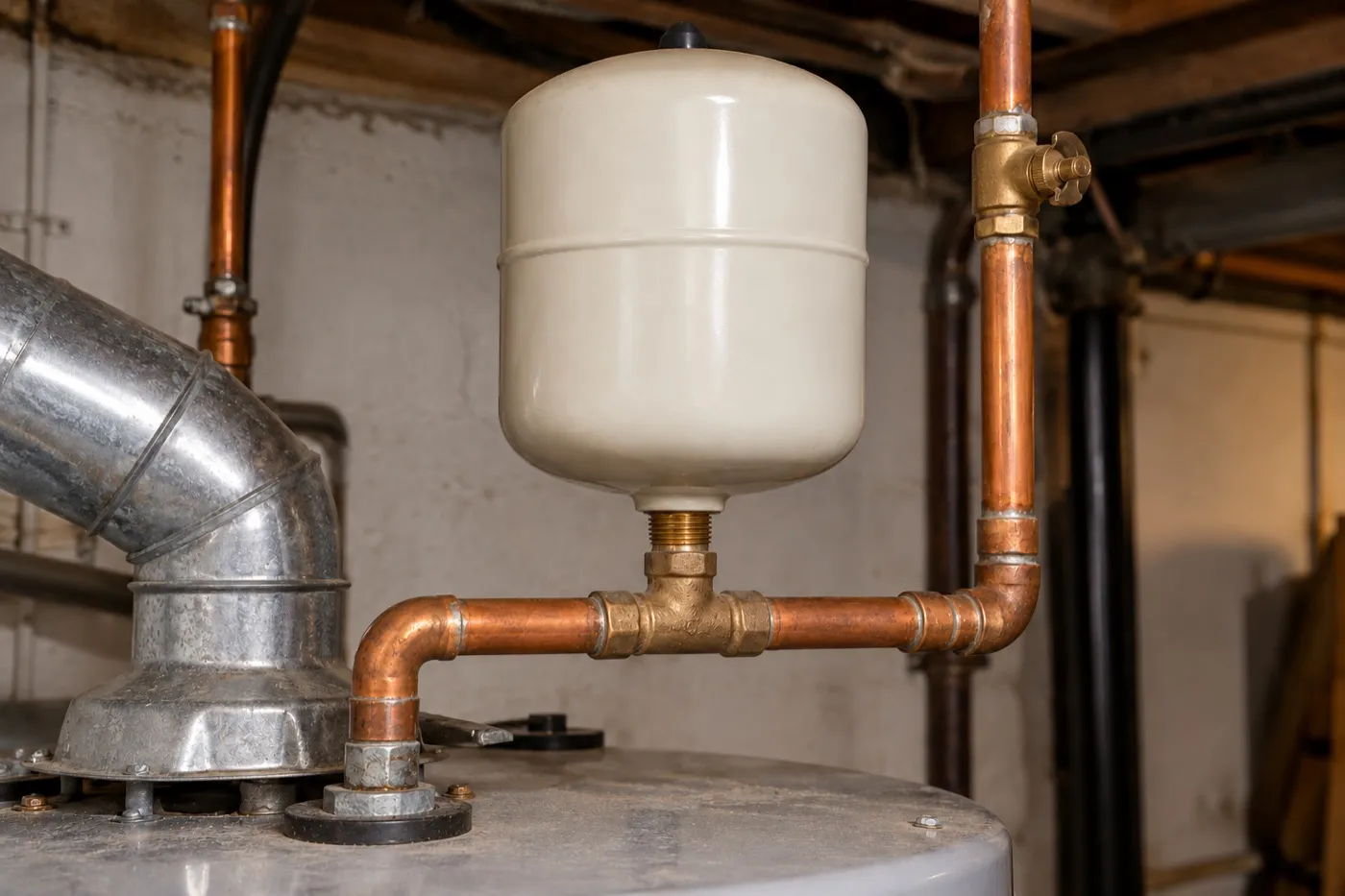
Small round white expansion tank on a tee in the copper cold water line above a water heater

Look on the cold water pipe at the top of the water heater for a small round tank, usually white or blue. If there's no tank, make a note of that for your plumber.

Step 2: Look for rust and drips
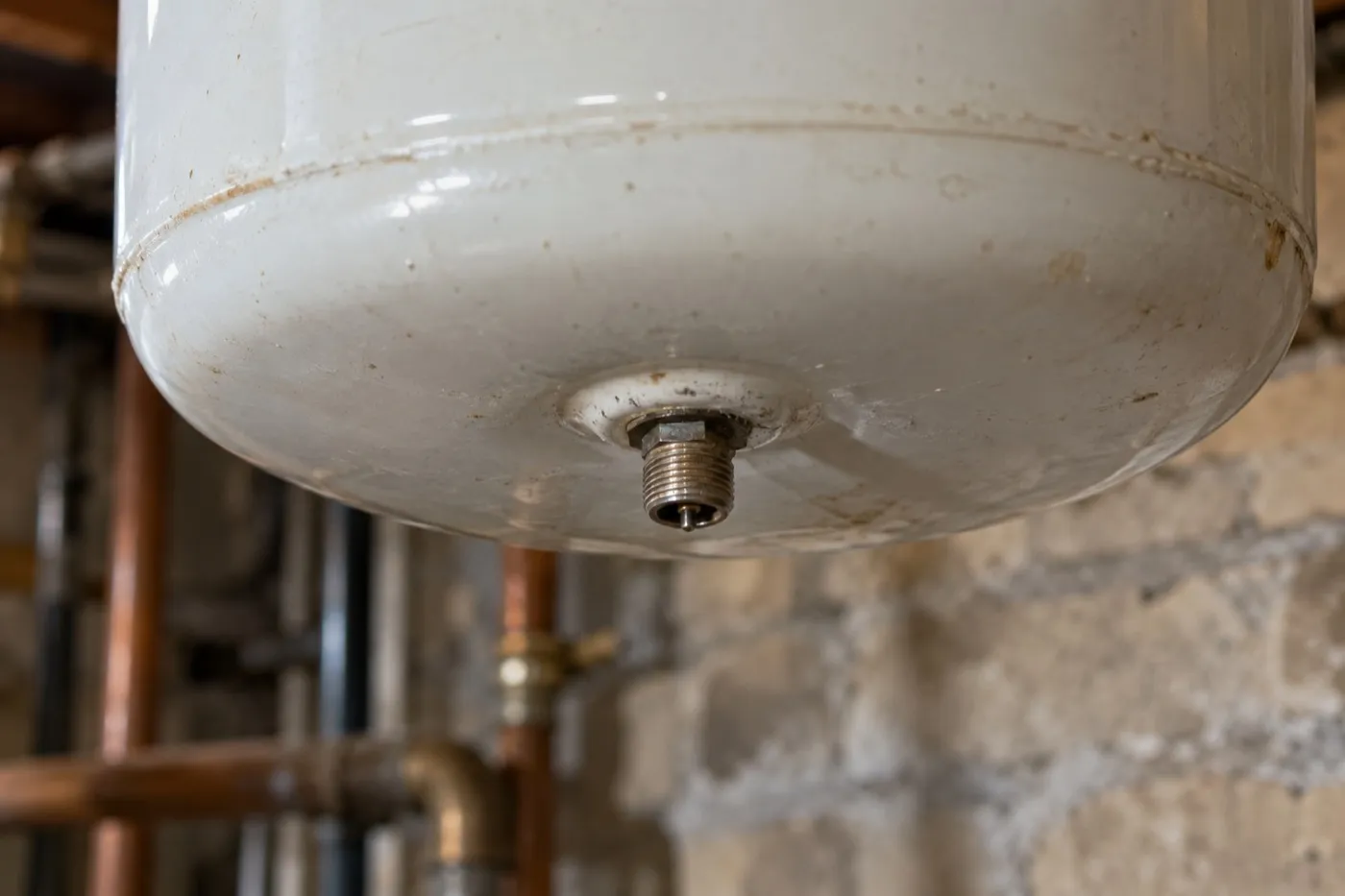
Metal tire-style air valve on the bottom of a white expansion tank with its cap off

Shine a flashlight on the tank and the fitting where it meets the pipe. Rust, sweating or a drip all need a plumber. Leave the air valve alone. Testing it is part of a professional check.

Step 3: Watch the relief valve pipe
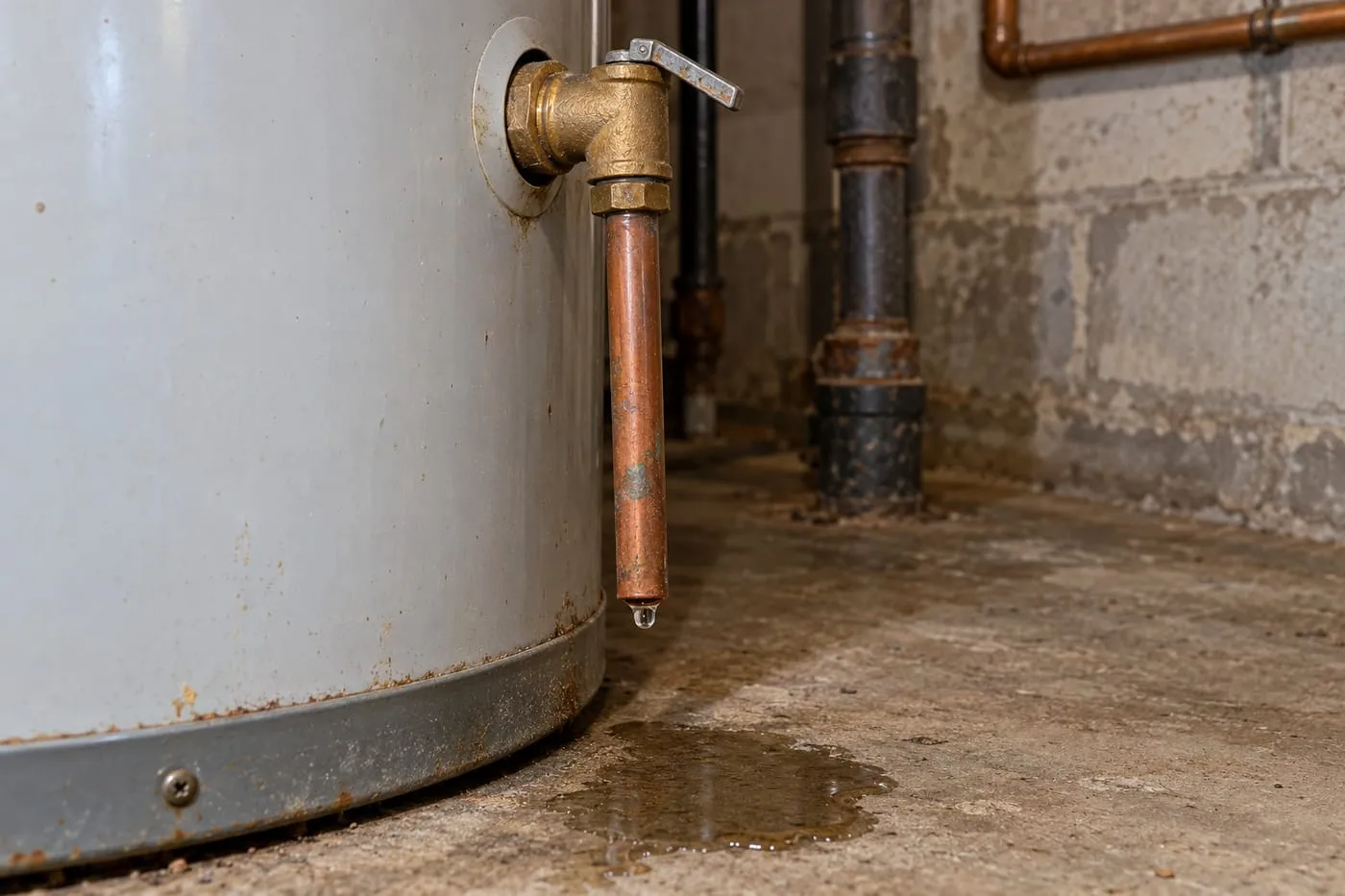
Brass relief valve on the side of a water heater with a drop hanging from its discharge pipe

Look at the pipe that runs down from the relief valve on the side or top of the heater. A drip right after the heater runs points to pressure building with nowhere to go. Never cap or plug that pipe. It's a safety device, and finding the cause is a job for a plumber.

Step 4: Note any valves at the meter
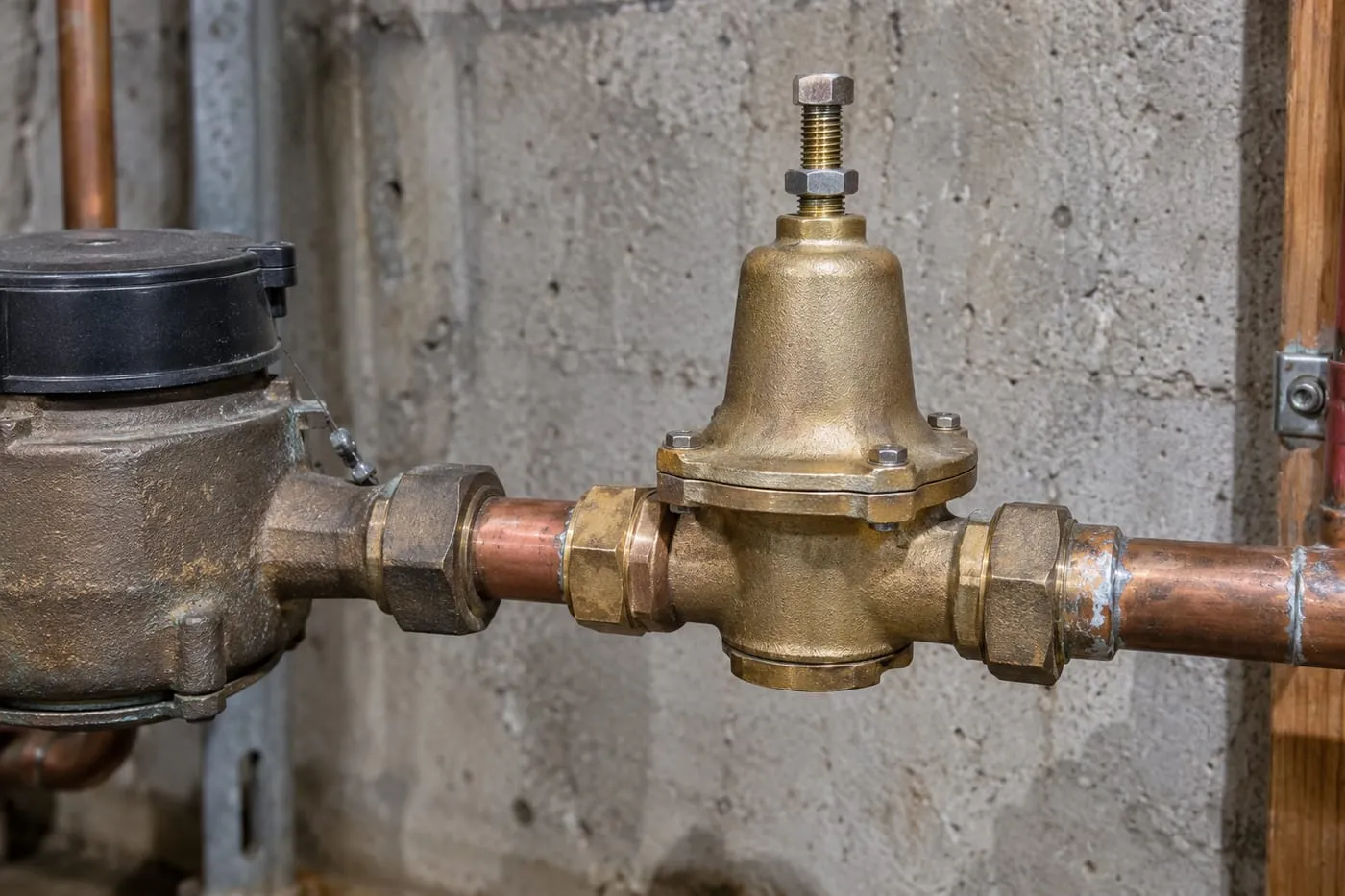
Bell-shaped brass pressure reducing valve on the main water line after the water meter

If you can see a pressure reducing valve, check valve or backflow preventer on the main water line, tell your plumber. It helps show whether your system is closed. Your plumber can also test your house water pressure.

Do you need an expansion tank?

A qualified plumber should determine whether a thermal expansion control device is needed and size, pre-charge, install and test it according to code and the system design. These are the things that usually prompt the question:

  • A pressure reducing valve on the main water line, common where street pressure runs high
  • A check valve or backflow preventer at the water meter
  • A water heater installed or replaced recently, when the town's inspection called for one

When we replace a water heater, we check for a closed system and whether your system needs expansion control.

Can you replace an expansion tank yourself?

We advise against it. Swapping the tank means opening a pressurized system tied to the heater's safety valve, sizing the new tank and setting its charge to suit the system. Leave it to a plumber. We check the expansion tank, relief valve and pressure on every water heater visit.

Signs your expansion tank may have failed

  • The relief valve drips or the discharge pipe is wet
  • Pressure jumps at the faucet right after the heater runs, then drops
  • Rust, sweating or a drip where the tank screws into the pipe

Plumbing Doctor is a veteran-owned NJ Master Plumber in Somerset, serving Central New Jersey. If your relief valve keeps dripping, call 908-873-6686 and we'll find the cause.

Keep this guideFor the next time something leaks

Save it for an emergency

Keep these steps and our number one tap away.

Add our number

Get tips and reminders

New guides and seasonal reminders. A few emails a year.

Stop and call us if

  • The relief valve on the water heater drips again and again.
  • The expansion tank is rusty or leaking at its fitting.
  • Pressure jumps at the faucet right after the heater runs.
  • You've been told your house water pressure is above 80 psi.
  • You're replacing the water heater and your home has a check valve, pressure reducing valve or backflow preventer.

Call 908-873-6686.

Need a licensed plumber?Written upfront flat-rate pricing options. You choose. We respond immediately to calls and online inquiries. Same-day appointments may be available, subject to technician availability and scheduling.
Mike Holt
About the author

Michael Holt

Owner and operator of Plumbing Doctor, NJ Master Plumber (Lic. #36BI01345600) and U.S. Marine Corps veteran.

More about Mike
FAQ

Questions we get about this

Don't see your question? Call us and ask.

Call 908-873-6686
Do I need an expansion tank on my water heater?

A qualified plumber should determine whether a thermal expansion control device is needed and size, pre-charge, install and test it according to code and the system design. It often comes up when plumbing is a closed system, meaning water can't flow back toward the street because of a check valve, a pressure reducing valve or a backflow preventer. Many New Jersey homes have one of those valves. We check this whenever we install a heater.

How do I know if my expansion tank is bad?

From the outside, look for rust, a drip at its fitting or a relief valve that keeps dripping. Whether the rubber bladder inside has failed takes a test, which is a plumber's job. Don't press the air valve or try to adjust the tank yourself.

What should the air pressure in an expansion tank be?

The air charge has to suit your home's water pressure and the system design. Tanks ship with a factory charge, and a plumber sets the right one before the tank goes in. A wrong charge makes the tank fill with water early and stop protecting the system.

How long does an expansion tank last?

It varies. The rubber bladder inside wears out, often sooner than the water heater itself, and hard water and high house pressure shorten its life. Have it checked when your water heater is serviced.

Where is the expansion tank installed?

On the cold water supply line to the water heater, between the heater and the cold shut-off valve. It's usually screwed into a tee just above the heater, often hanging straight down or standing straight up, and supported so its weight doesn't strain the pipe.

Leaking pipe right now?

Shut off the water first if you can reach the valve safely, then call us, day or night.

908-873-6686

Outside regular hours and on holidays, emergency service requires a $250 upfront emergency fee. When paid, the standard $49 service fee is waived. During regular hours there is no emergency fee. Additional repairs are quoted before work begins. We respond immediately upon contact; dispatch and arrival depend on availability and location.

Do this now

  1. Shut the main valve. Usually where the water line enters, near the meter.
  2. Stay clear of electricity. Don't enter standing water or touch electrical controls near the leak.
  3. Open a low faucet to drain the pipes and take pressure off the leak.
Selected Google reviews

What neighbors say

Excellent4.9 from 174 reviews on Google
Richard F.Google review
★★★★★

Had backup and they came out in half hour on a Sunday and got the blockage resolved. They cleaned up after themselves. Very very professional people.

Lisa L.Google review
★★★★★

Honest, reliable and they do a great job. I highly recommend plumbing doctor services.

Felicia T.Google review
★★★★★

Mike is awesome, knowledgeable, thorough and friendly! Overall great and expedient experience!

John G.Google review
★★★★★

Excellent service and very knowledgeable. I definitely recommend them.

JoeGoogle review
★★★★★

Very knowledgeable, attention to detail, extremely neat and organized. We highly recommend Plumbing Doctor.

Naomi H.Google review
★★★★★

Mike works quickly and is transparent with pricing. He's trustworthy, reliable and brings his own shoe covers.

Hazim A.Google review
★★★★★

They tell me what is worth doing or not doing, and won't try to upcharge me. The work is always great. They are my go-to!

Kevin C.Google review
★★★★★

Found my outdoor cleanout that was covered up for years and no other company could find! … They use drop cloths and clean up when they are done.

Read all 174 reviews on Google · Leave us a review

We respond immediatelySame-day appointments may be available

What's going on?

Tap one. It takes about a minute, and we get your request right away.

Problem
How soon?

Enter a 5-digit ZIP code, or leave it empty.

Where can we reach you?

Please enter your name.

Enter a 10-digit phone number.

Best way to reach you

That email doesn't look right.

Leaking pipe? Call 908-873-6686