No Hot Water? 6 Safe Things to Check Before You Call
By Mike Holt, NJ Master Plumber · October 31, 2026 · 4 min read · Updated November 1, 2026
Quick answer
When there's no hot water anywhere in the house, you can safely check accessible displays, breaker status and obvious leaks without removing any covers. Then call us with what you found. If you smell gas, leave immediately and call 911 and the gas utility from outdoors. If only one faucet is cold, the problem is usually that faucet.
- Difficulty
- Look only. Repairs need a professional
- Time
- 10 minutes
- You need
- Flashlight, the label on your water heater
Rather not risk it? A licensed plumber can handle this for you, with written upfront flat-rate pricing options before any work starts.
Smell gas? Don't touch the water heater or any switches. Leave immediately and call 911 and your gas utility from outdoors. 908-873-6686
A cold shower is one of the most common calls we get in Central New Jersey. There's a short list of things you can safely look at first, and what you find helps us when you call. None of it means removing a cover, working the gas controls or resetting anything.
Is it the whole house or one faucet?
Run the hot water at a kitchen sink and at a shower on another floor for a full minute each. If both stay cold, the water heater is the problem, so start with the steps for your type of heater below. If only one faucet or shower is cold, the heater is fine and the problem is in that fixture. Skip to step 5.
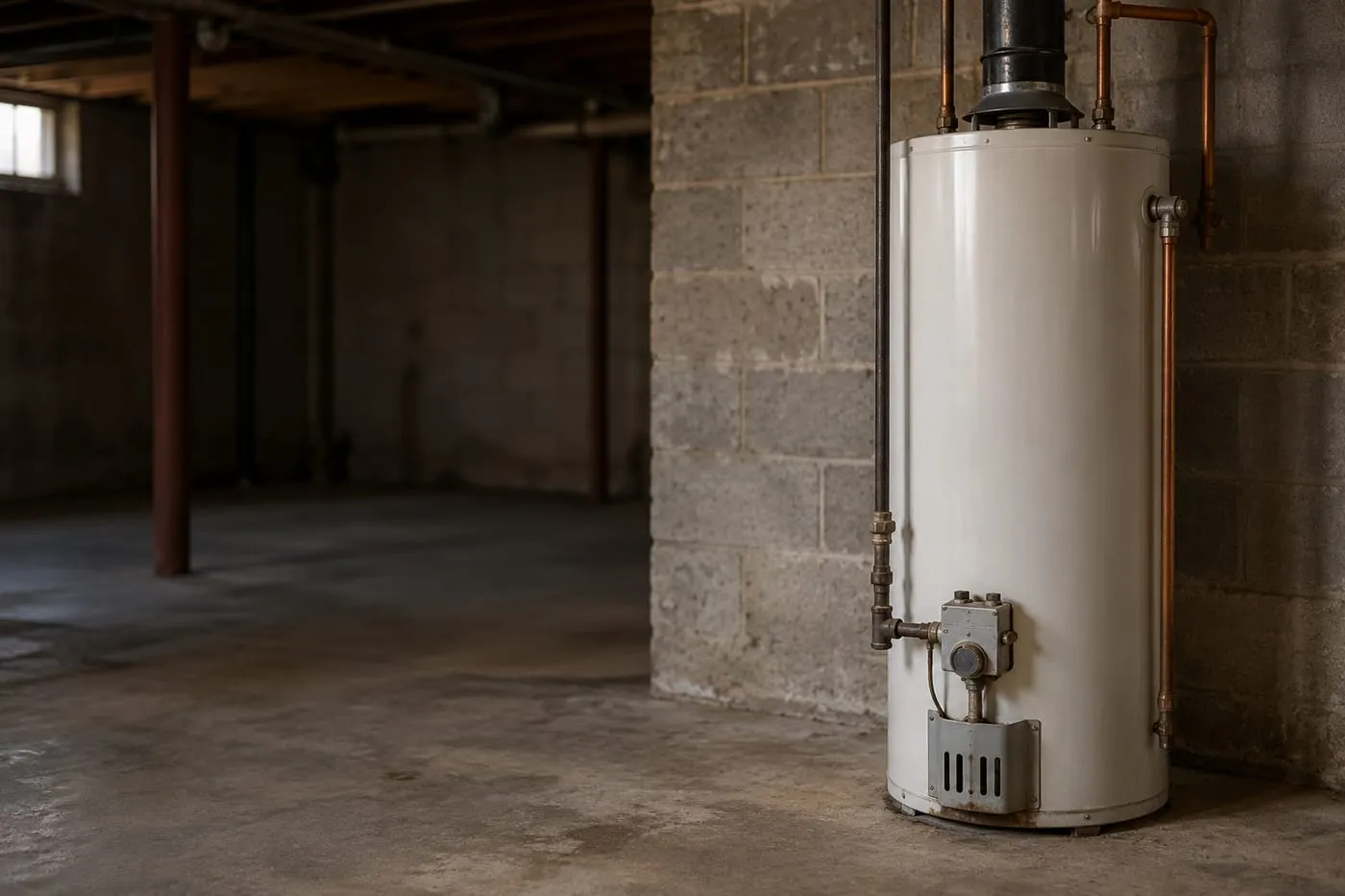
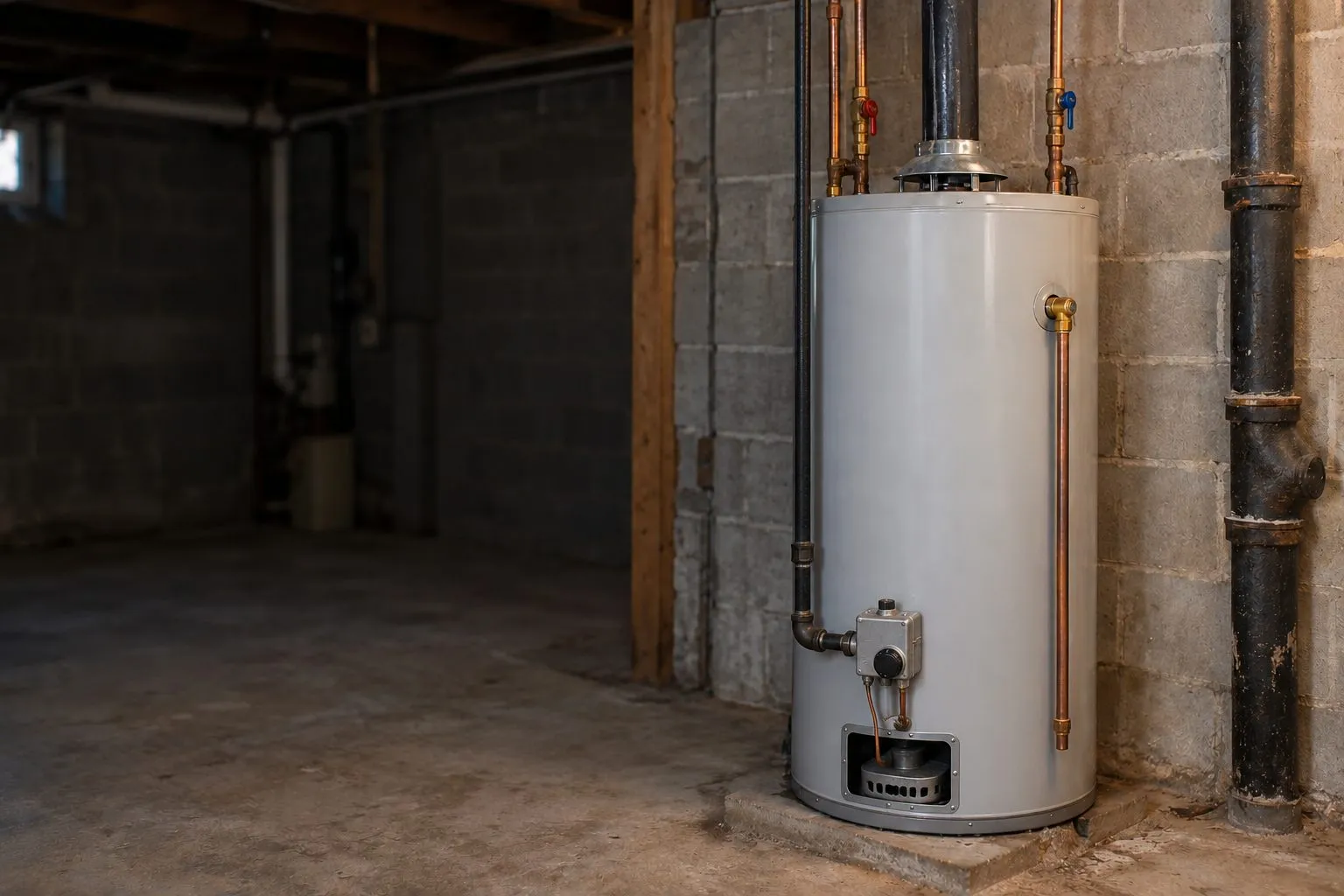
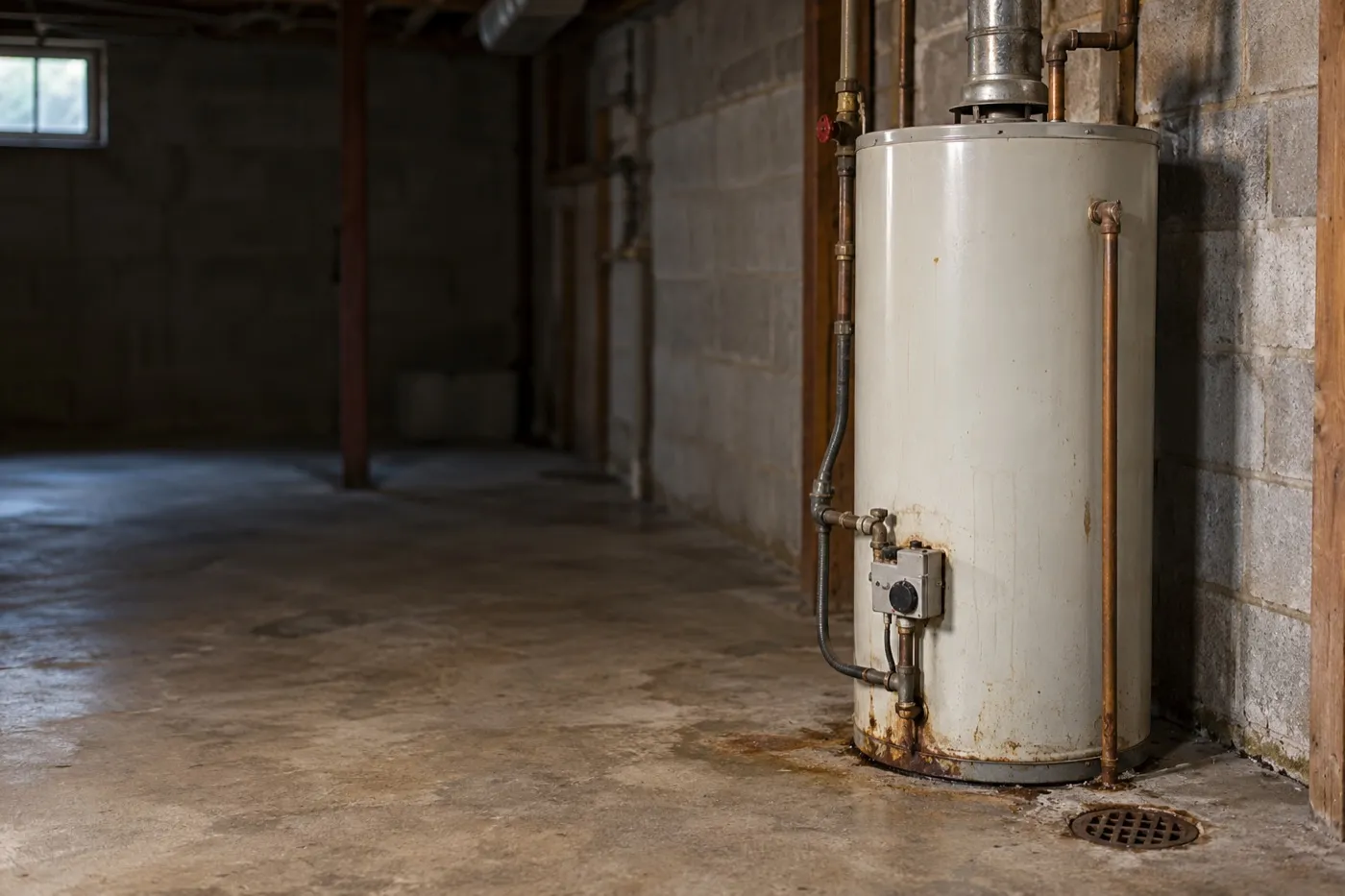
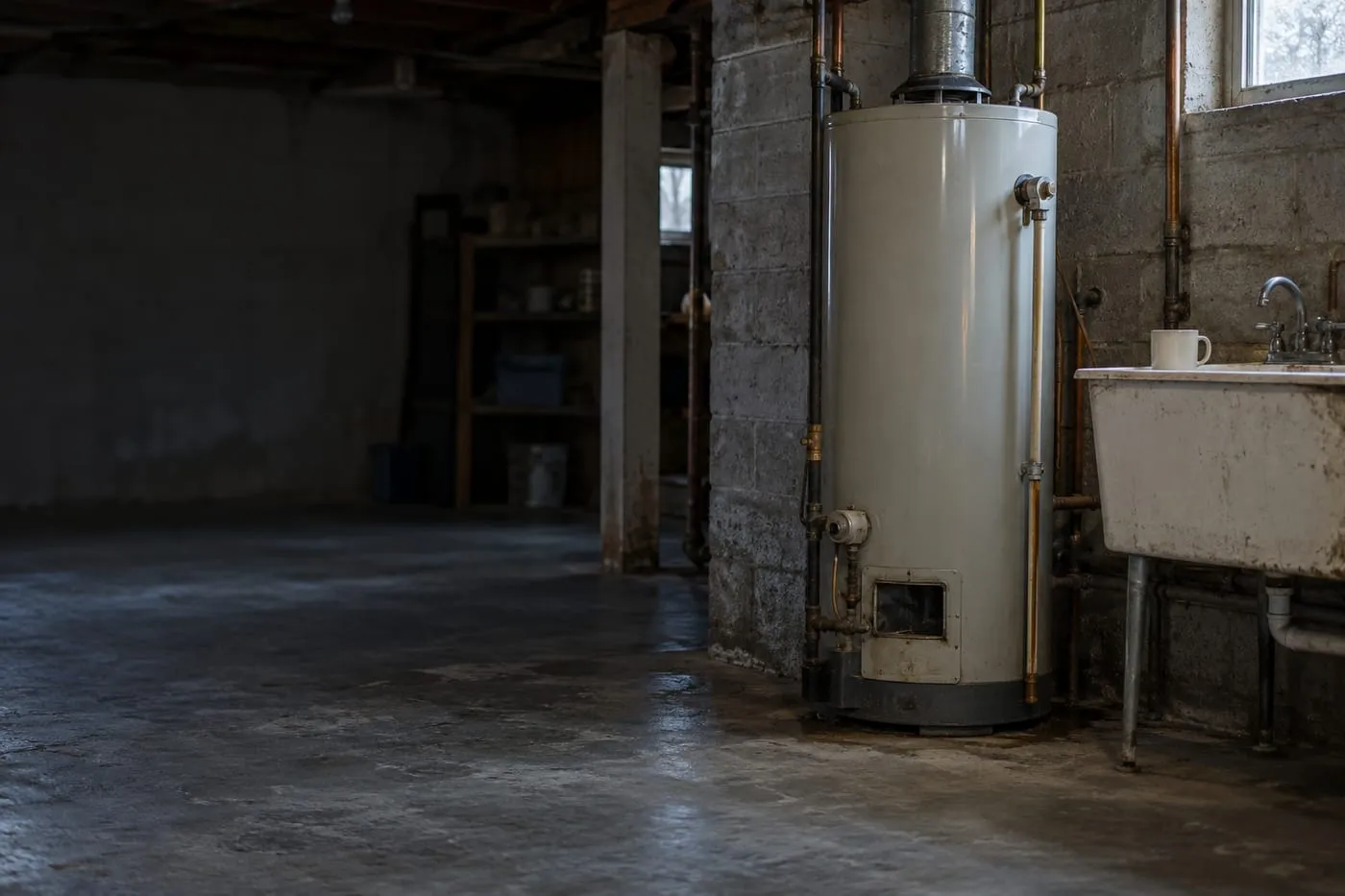
Not sure what kind of water heater you have? A gas tank has a gas pipe with a shut-off valve going into a control box near the bottom and a metal vent pipe on top. An electric tank has a thick electrical cable going into the top and two small metal panels on the side. A tankless unit is a box about the size of a suitcase mounted on the wall.
Gas water heater: what to check
Step 1: Look for the pilot flame or status light
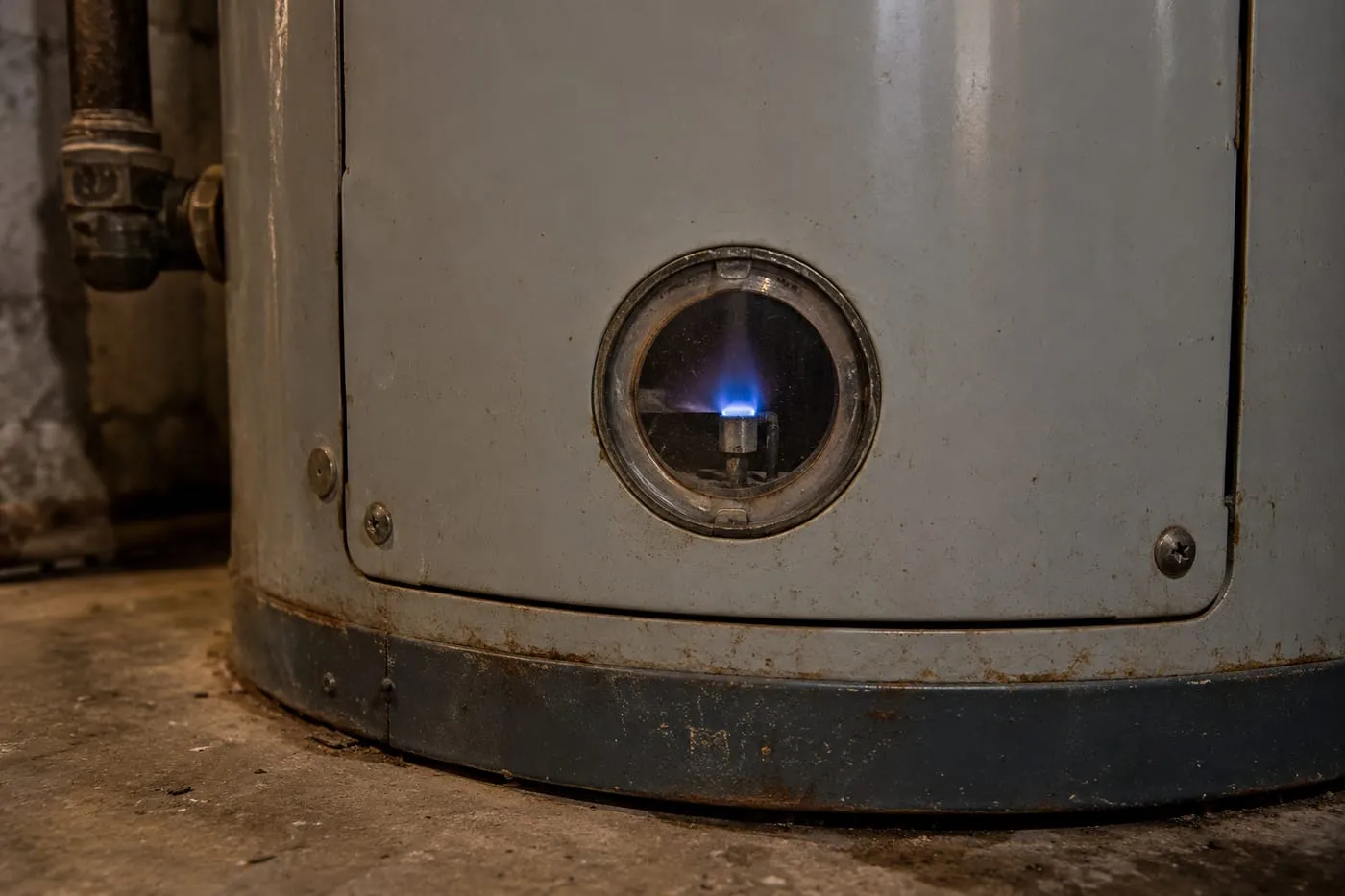
Near the bottom of many gas tanks there's a small round window. Shine a flashlight at it, or turn off the basement lights. You may see a small steady blue flame. Newer heaters may have a status light on the gas control that glows or blinks instead.
What it tells you: a blue flame or a steady light means the heater has fuel, so another part may have failed. No flame and no light, or a light blinking in a pattern, needs a plumber. Write down what you see. Don't touch the gas control.
Step 2: Check your other gas appliances
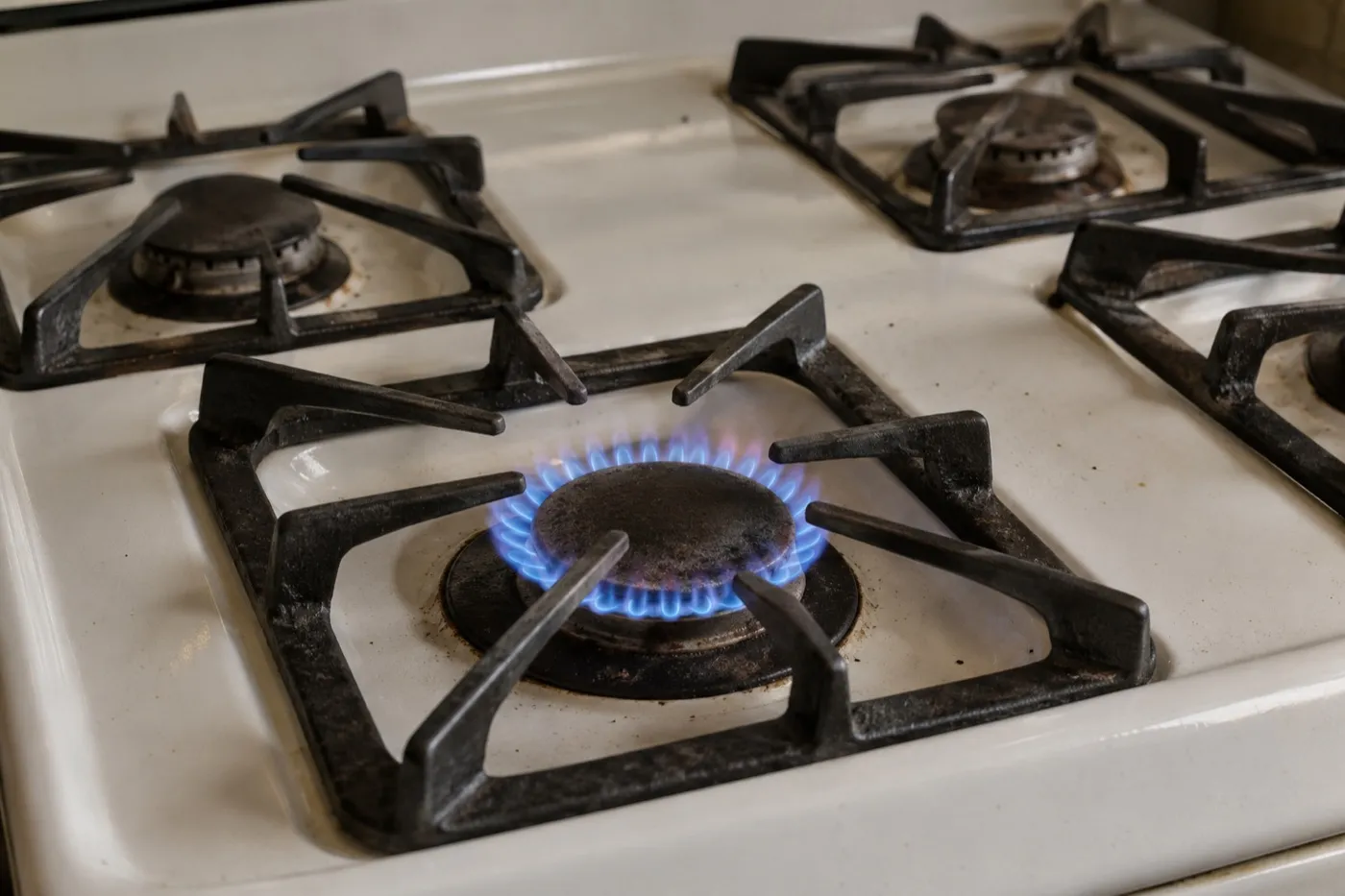
If your stove and other gas appliances also don't work, the problem may be the gas supply to the house, so call your gas utility. If you smell gas at any point, leave immediately and call 911 and the utility from outdoors.
Electric water heater: what to check
Step 3: Look at the breaker
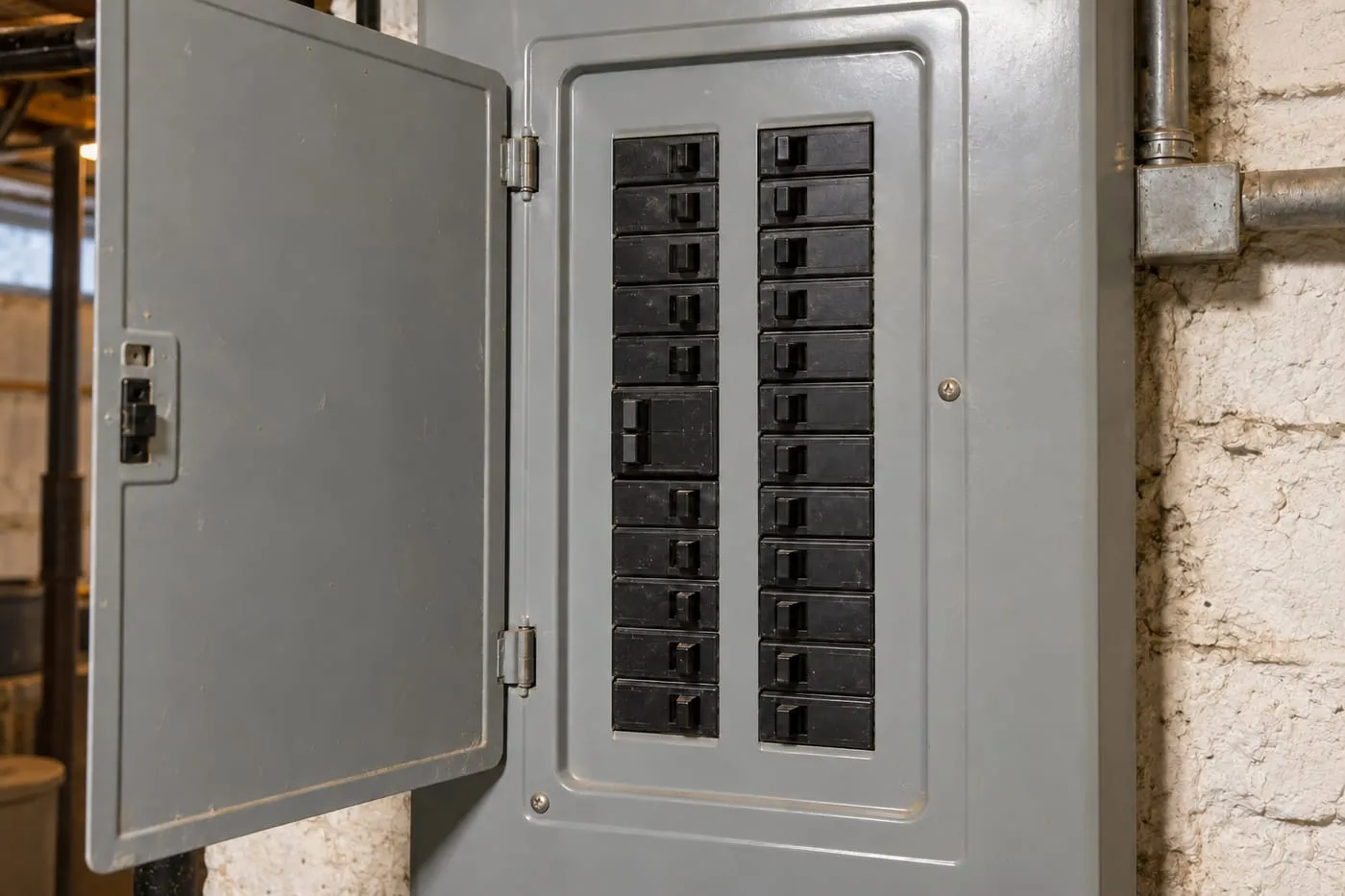
Electric water heaters usually run on their own double breaker. A tripped breaker sits in the middle, not fully on or off. Look at it if you can reach the panel from a dry floor.
A breaker trips for a reason, and a heating element may be shorted, so leave it as it is and call us. The reset button and thermostats are behind covers on the tank. Those are for a plumber.
Tankless water heater: what to check
Step 4: Read the display
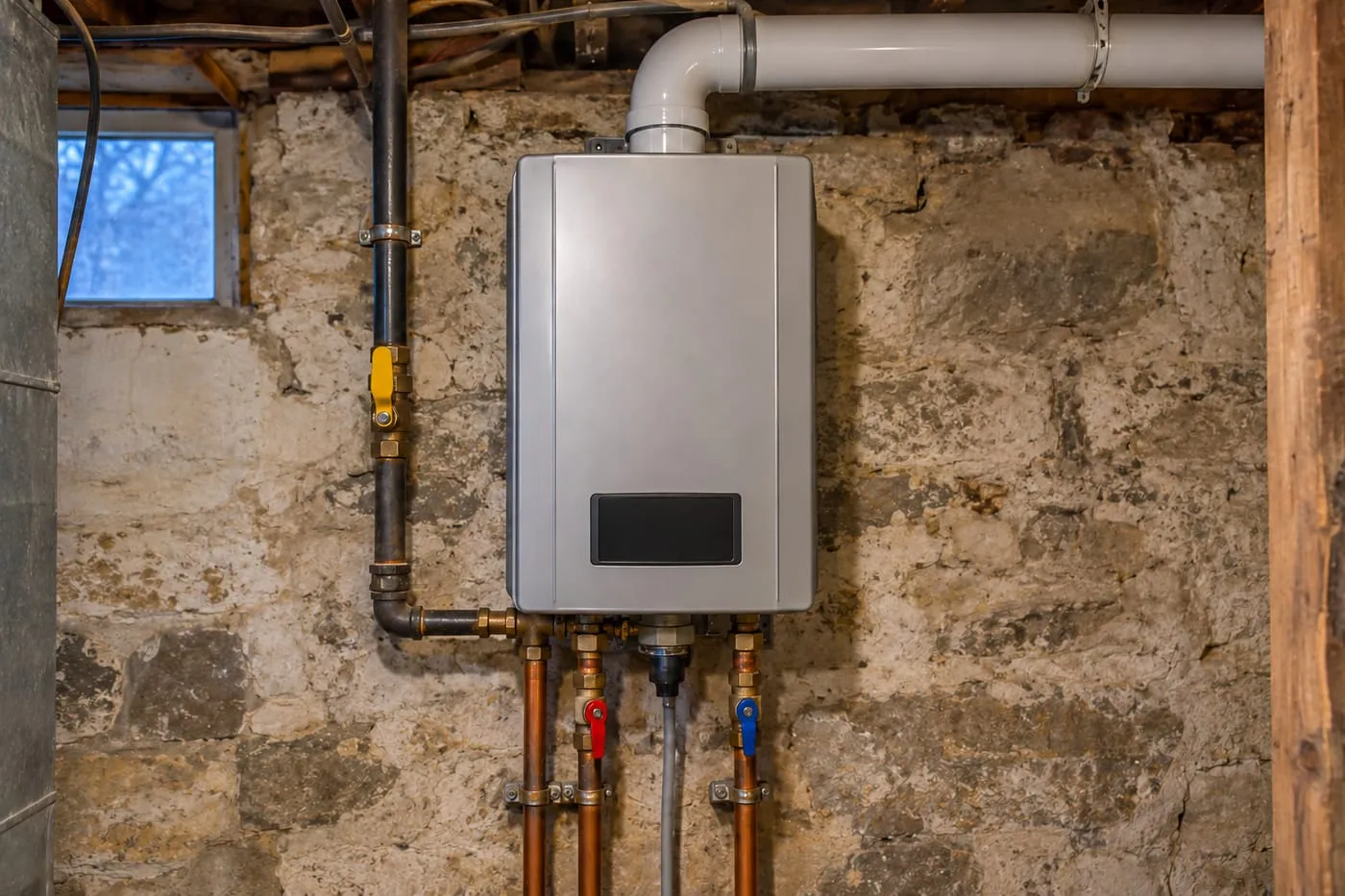
Many tankless units show a number or letter code on the front panel when they stop. Write it down and look it up in the owner's manual or on the maker's website. Common codes point to power, gas supply, low water flow or ignition.
Don't open the unit or work on the gas valve. Give us the code when you call. We diagnose, repair and maintain tankless units, including descaling.
One faucet has no hot water
Step 5: Check that faucet or shower valve
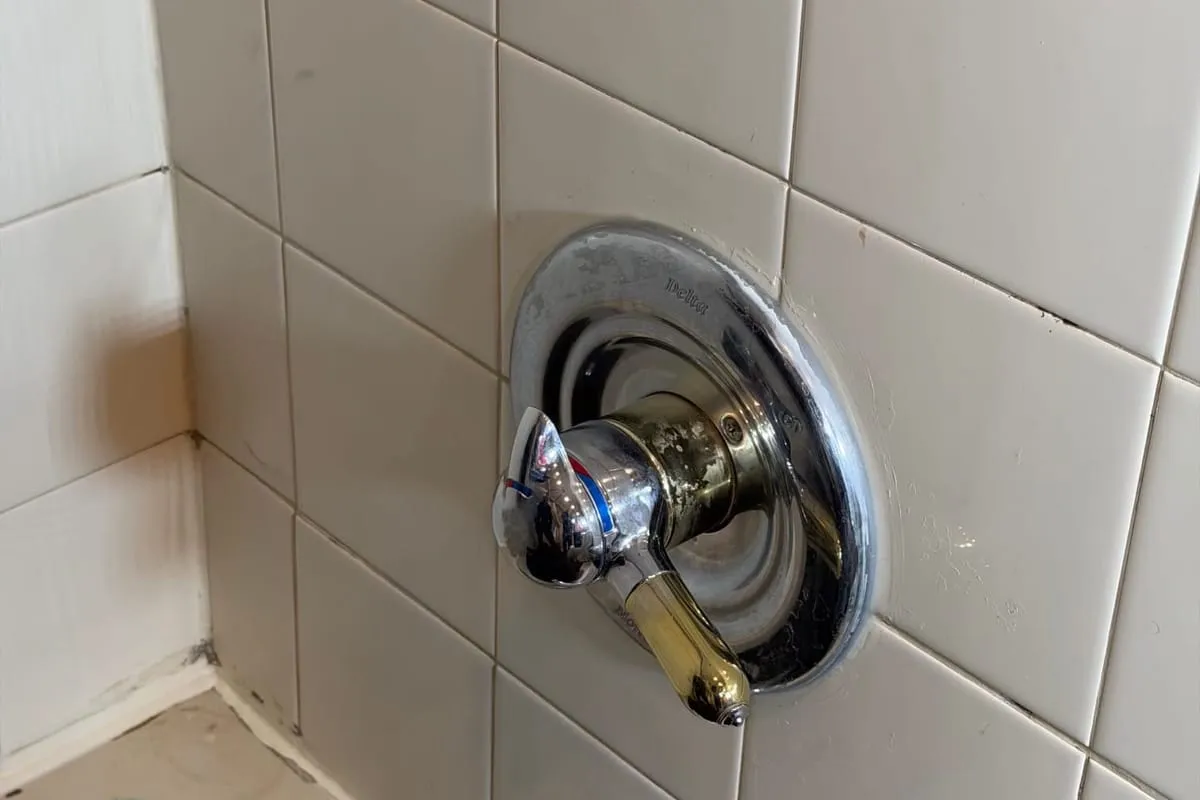
If every other faucet has hot water, the heater is likely fine. A single cold faucet often has a worn cartridge inside the handle. A shower that only gets lukewarm often has the anti-scald limit set too low or a balancing valve stuck with mineral buildup.
What you'll notice: the handle turns all the way to hot but the water barely warms, or it was fine yesterday and changed suddenly. We repair and replace faucet and shower valves; see toilets, faucets and fixtures.
Any water heater
Step 6: Look for obvious leaks
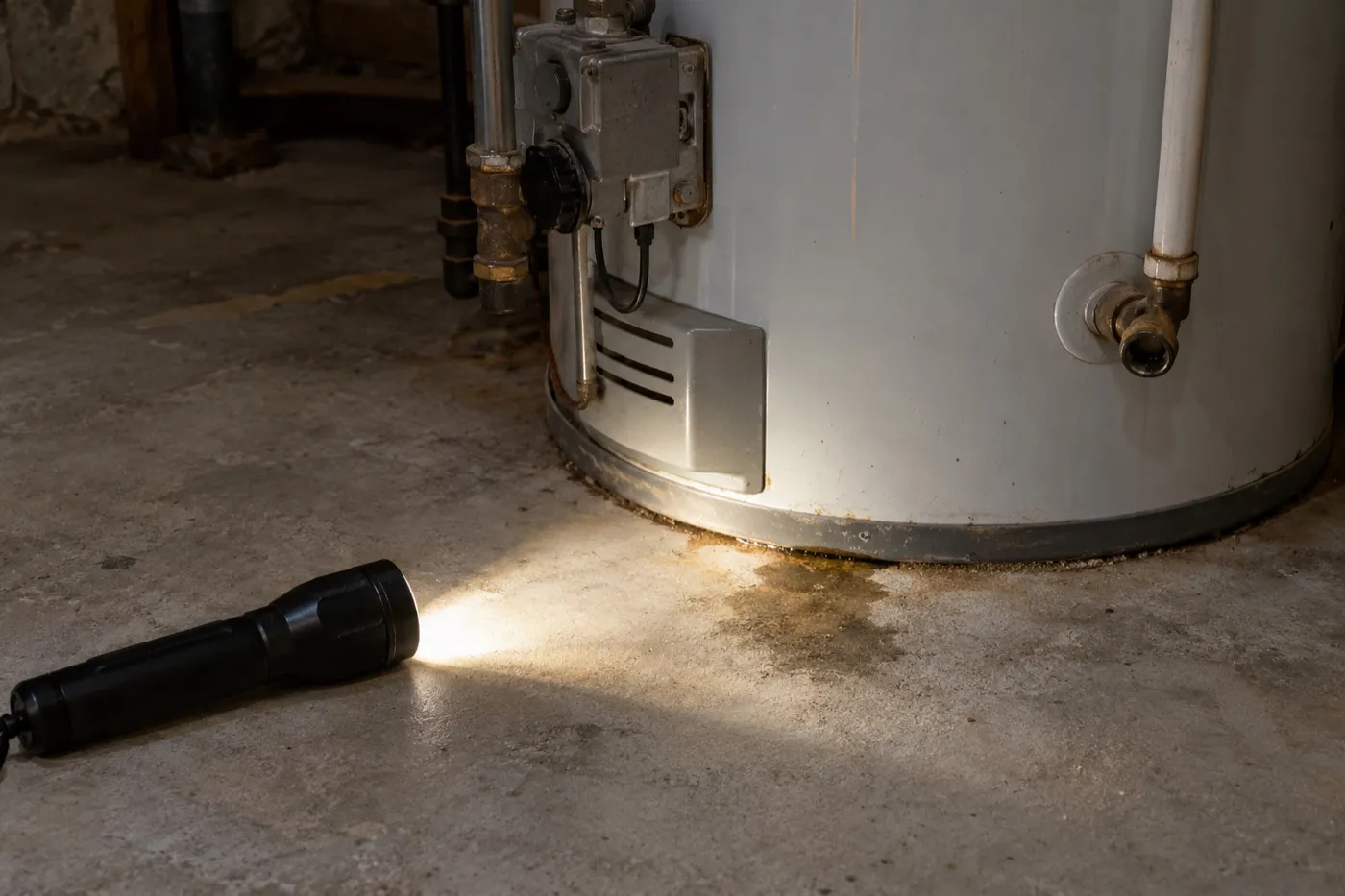
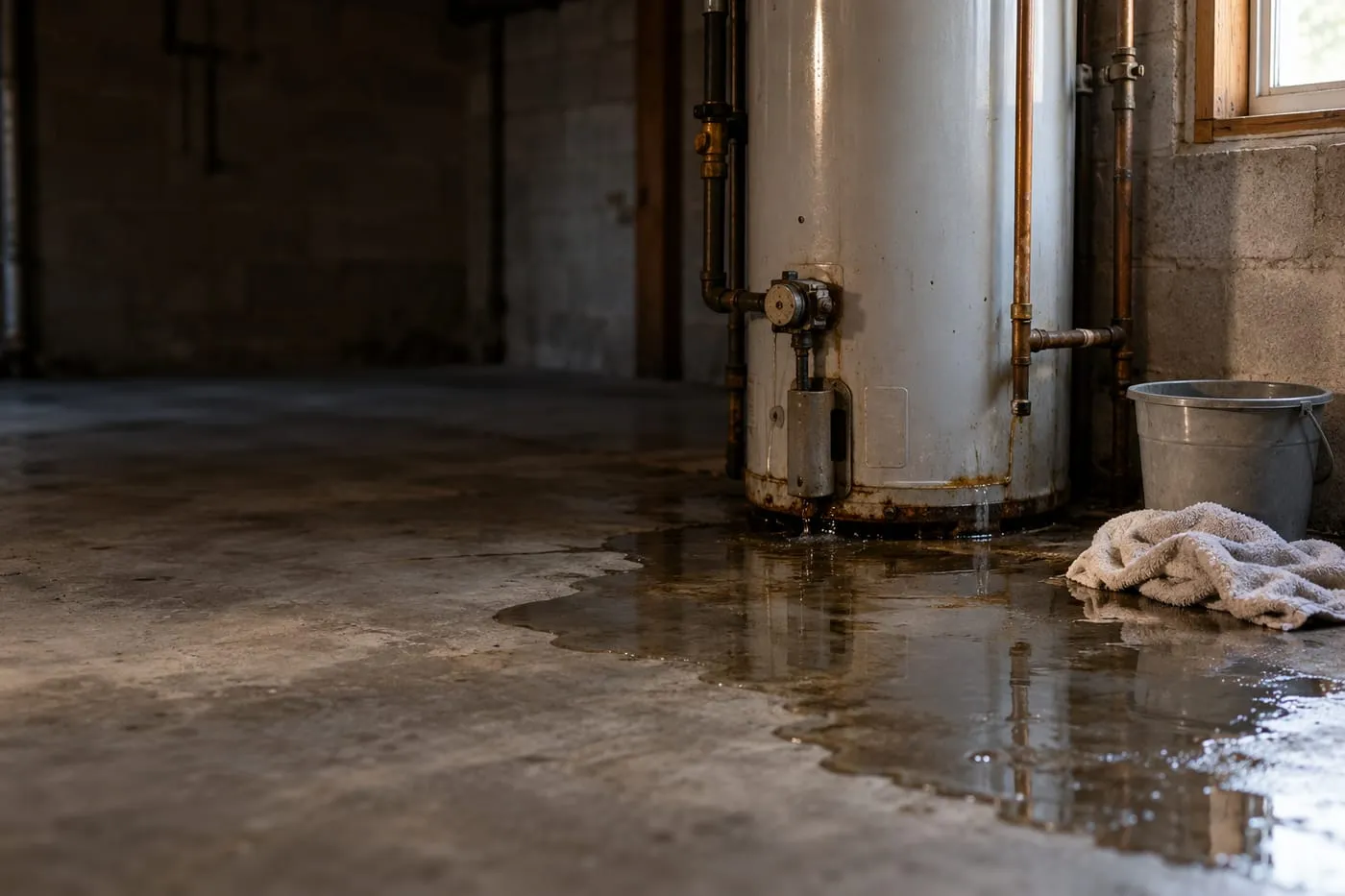
Shine a flashlight around the base of the heater and along the pipes on top. Stay out of standing water and don't touch electrical controls if there's a leak near energized equipment. If you see water, read water heater leaking and call us.
How long should a water heater last?
Many tank water heaters last somewhere around 8 to 12 years, though that varies with water quality, maintenance and installation. Check the age on the rating plate on the side of the tank; the date is often part of the serial number. If yours is in that range, goes cold often, or you see rust in the hot water, a repair may only buy a little time. Having it maintained helps slow down wear; see how to flush a water heater. If you'd like hotter or cooler water, see how to turn your water heater up or down.
When should you call a plumber?
Call when the pilot is out, a breaker has tripped, a tankless code shows or you see water around the tank. If there's water, read water heater leaking first. We repair and replace gas and electric tank water heaters up to 50 gallons. On tankless units we do diagnostics, repairs and maintenance only, with no tankless installation or replacement. See water heater repair and replacement. A service call is $49, waived if you go ahead with the work. Written upfront flat-rate pricing options. You choose.
Get tips and reminders
New guides and seasonal reminders. A few emails a year.
Stop and call us if
- You smell gas, even faintly, near the water heater. Leave first and call 911 and the utility from outdoors.
- The pilot is out, or the status light is off or blinking.
- The breaker for the water heater has tripped.
- A tankless unit shows an error code.
- Water is leaking from the tank, or the relief valve is dripping.
Call 908-873-6686.

Michael Holt
Owner and operator of Plumbing Doctor, NJ Master Plumber (Lic. #36BI01345600) and U.S. Marine Corps veteran.
More about Mike