Bad Toilet Flange: Signs, Causes and How It Gets Fixed
By Mike Holt, NJ Master Plumber · November 1, 2026 · 3 min read · Updated November 1, 2026
Quick answer
The toilet flange is the ring in the floor that holds the toilet to the drain pipe. When it cracks, rusts or sits too low, the toilet rocks, the wax seal fails, and you get water at the base or a sewer smell. Fixing it means pulling the toilet, repairing or replacing the flange, and resetting the toilet on a new wax ring.
- Difficulty
- Hard
- Time
- 1 to 3 hours
- You need
- Adjustable wrench, putty knife, bucket, sponge, rags, new wax ring and bolts, flange repair ring
Rather not risk it? A licensed plumber can handle this for you, with written upfront flat-rate pricing options before any work starts.
Water at the base every time you flush? Stop using that toilet. The water can come from the drain, and it soaks into the subfloor and the ceiling below. 908-873-6686
A toilet that rocks, leaks at the base or brings a sewer smell into the bathroom often has a problem you can't see: the flange. It's the round fitting in the floor that the toilet bolts to, sitting on top of the drain pipe. When it breaks, the wax ring under the toilet stops sealing, and water and sewer gas get out.
What does a bad toilet flange look like?
- The toilet rocks or shifts when you sit on it, even with the bolts snug.
- Water shows up around the base after flushing.
- The bathroom smells like sewer gas, especially near the toilet.
- The floor around the toilet is stained, soft or the tiles are loose.
- There's a water stain on the ceiling under the bathroom.
How a bad toilet flange gets fixed
Step 1: Check the signs first
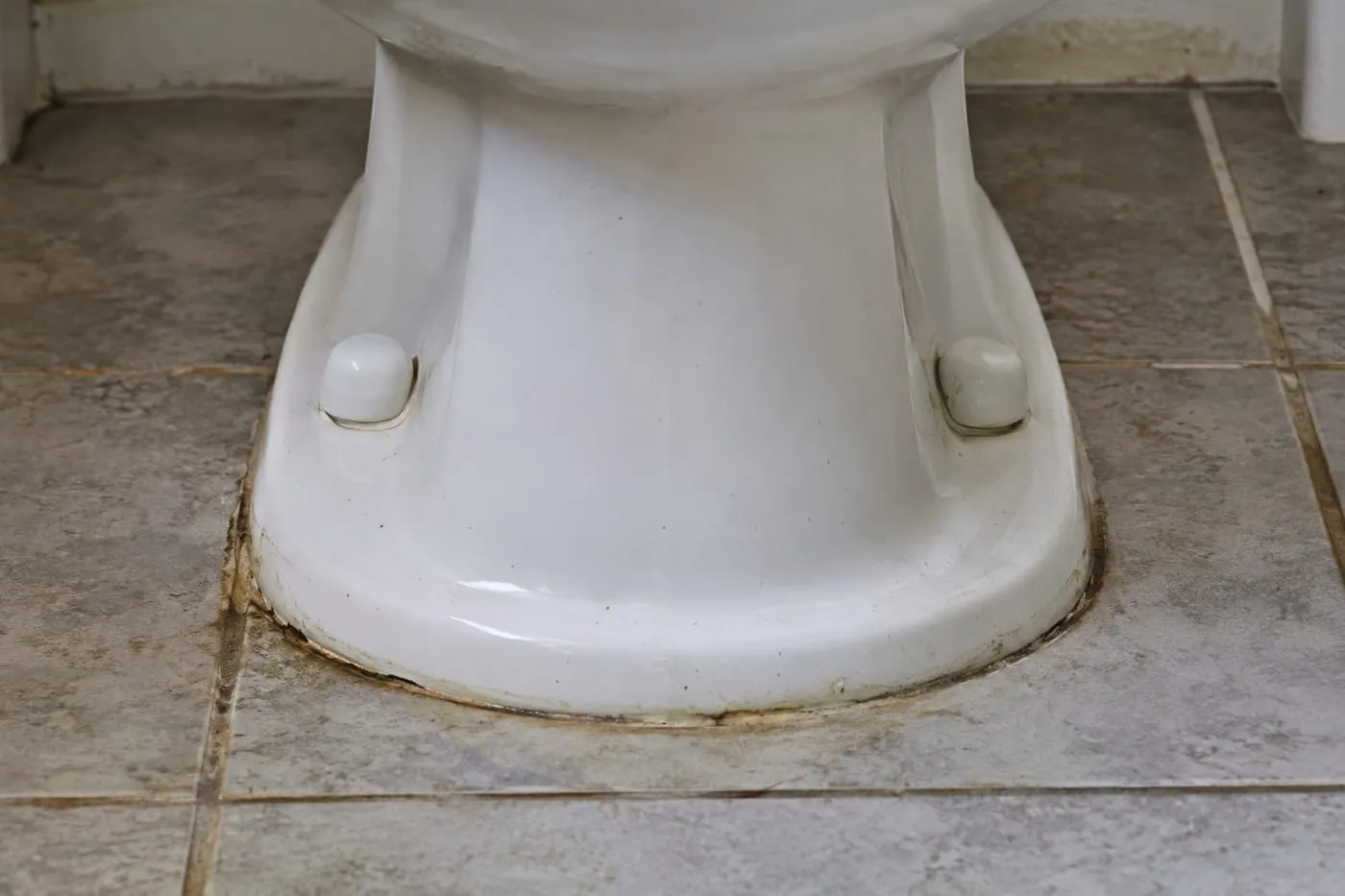
Look at the floor and grout around the base, press on the floor next to the toilet and try to rock the toilet gently with your knees. Check the ceiling below. Stains, give in the floor or a toilet that moves all point to the flange and the wax seal.
Step 2: Shut off the water and empty the toilet
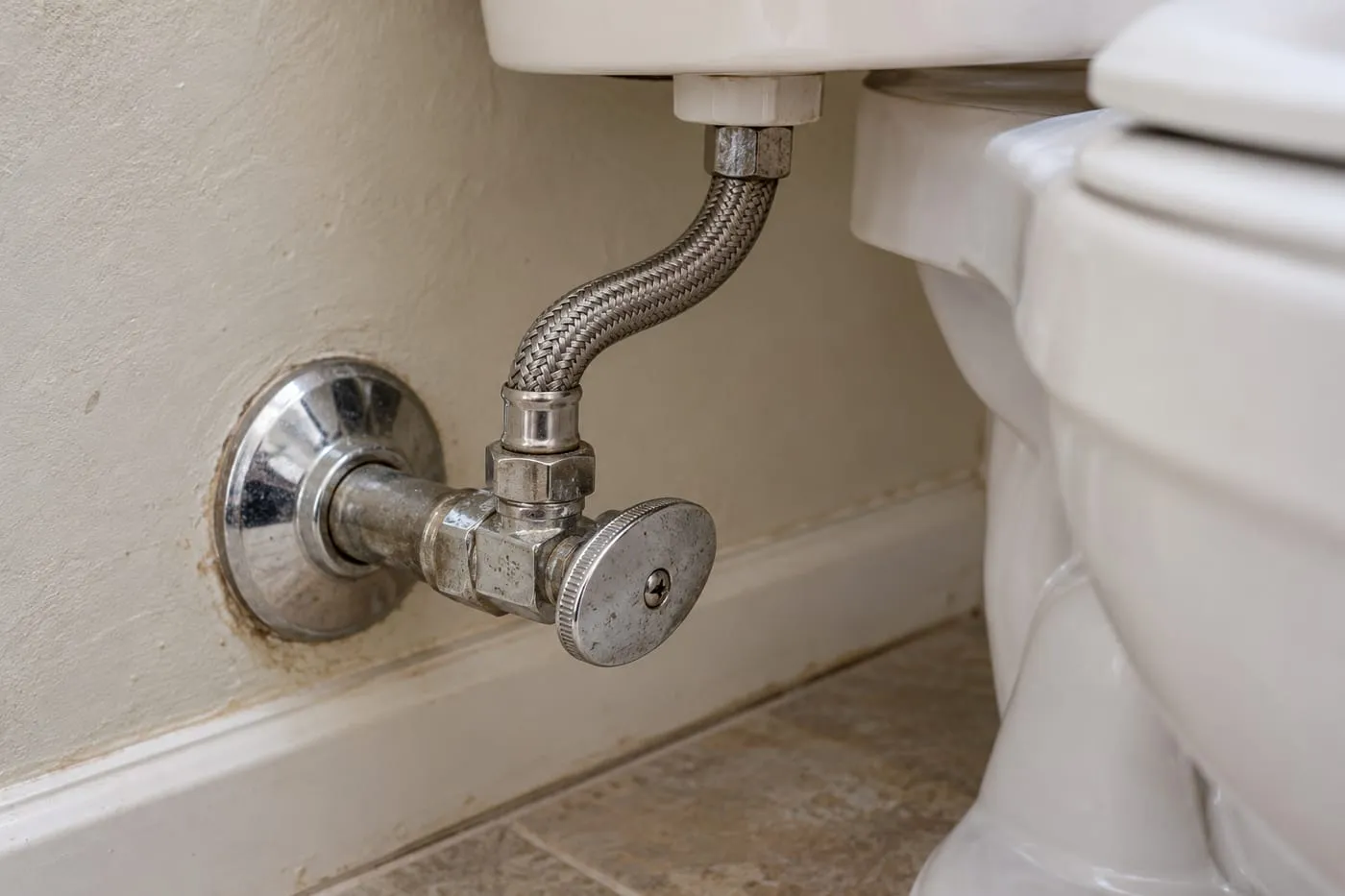
Turn the valve behind the toilet clockwise, flush to empty the tank and sponge the last water out of the tank and bowl. Disconnect the supply line. Have a bucket and rags ready.
Step 3: Pull the toilet and look at the flange
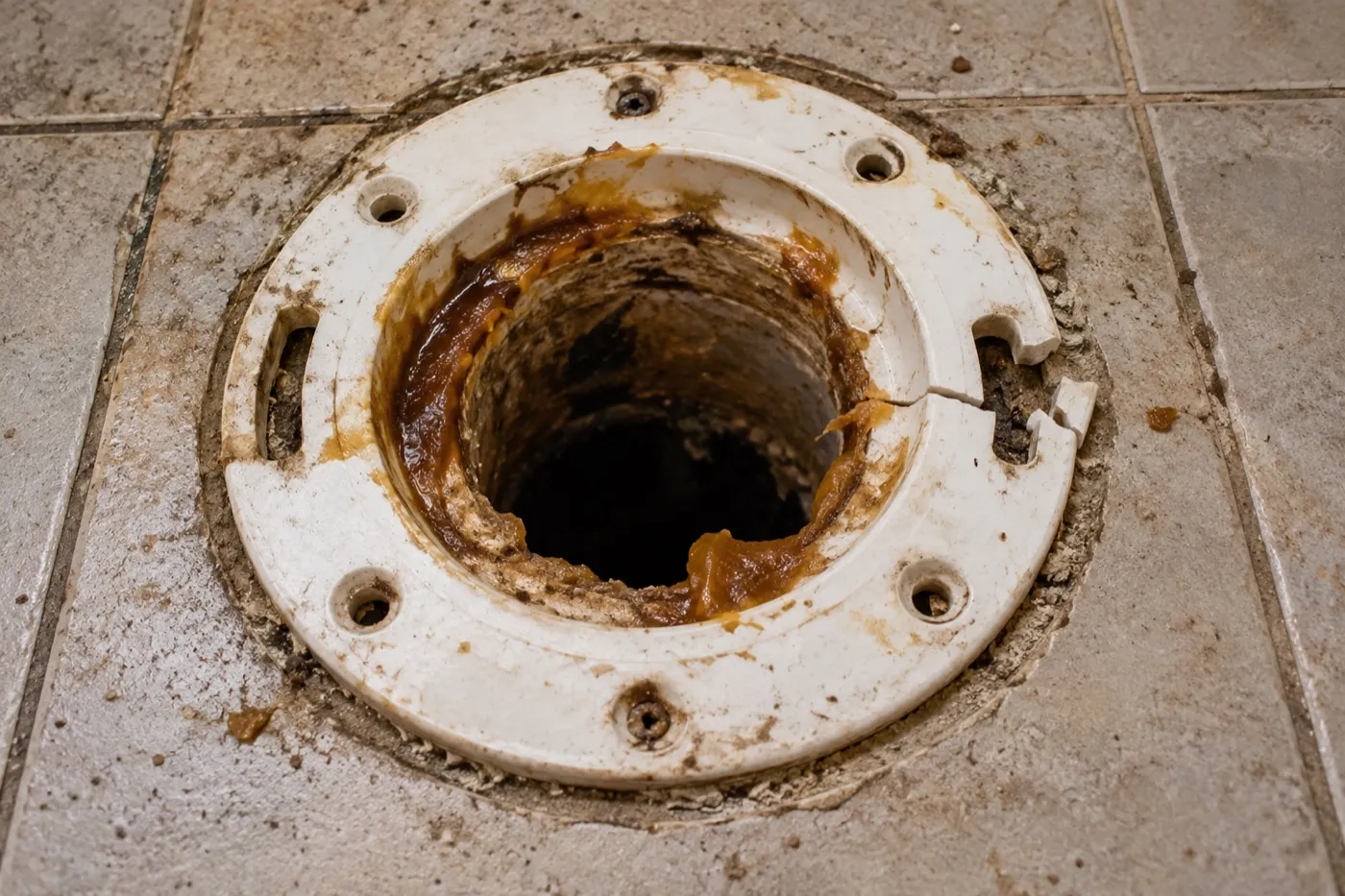
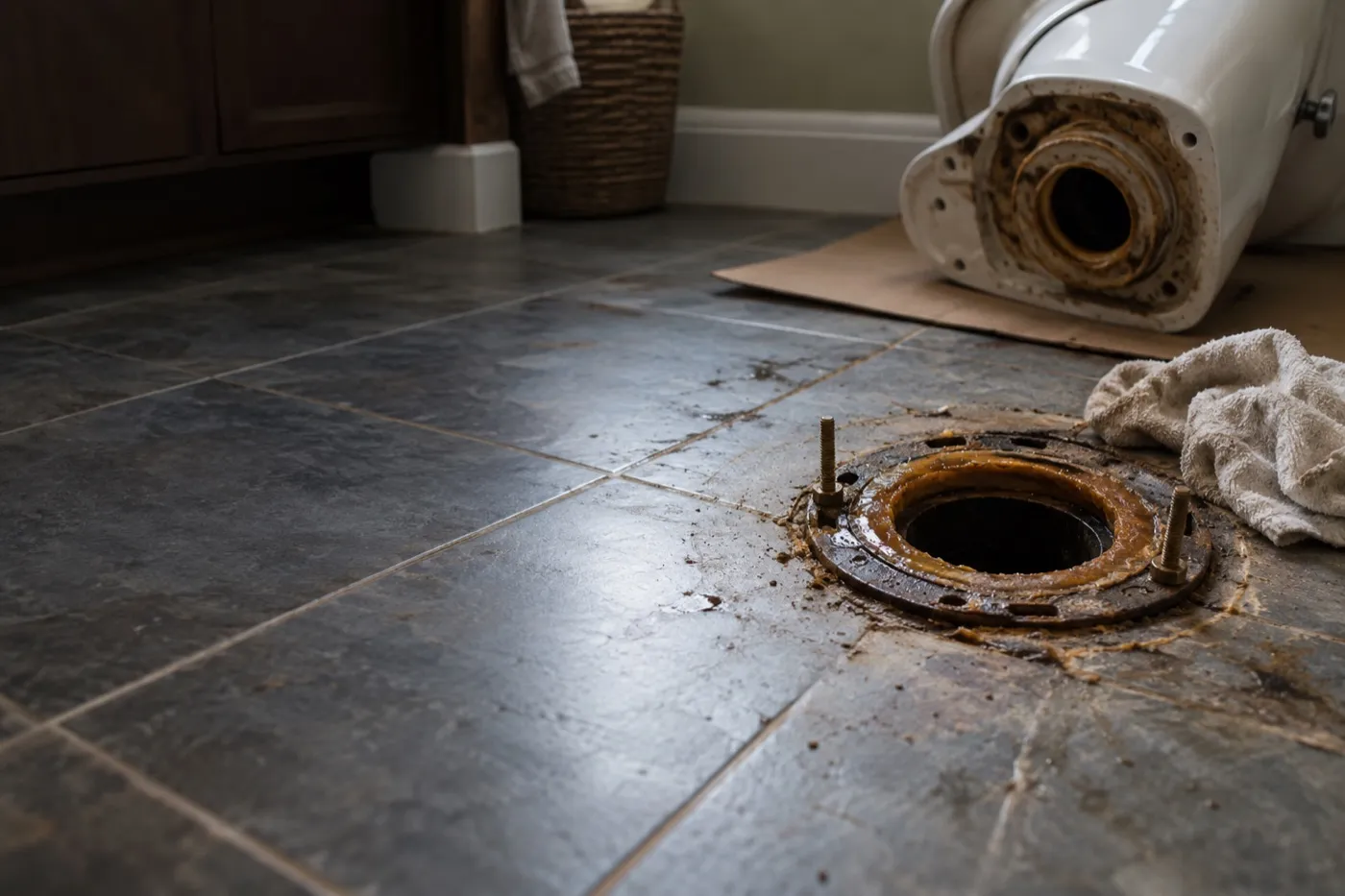
Take the nuts off the two bolts at the base, rock the toilet to break the old wax seal and lift it straight up onto cardboard. A toilet is heavy and awkward, so get help. Stuff a rag in the drain opening to block sewer gas, scrape off the old wax with a putty knife and look for cracks, broken bolt slots, rust and how high the flange sits next to the floor.
Step 4: Repair or replace the flange
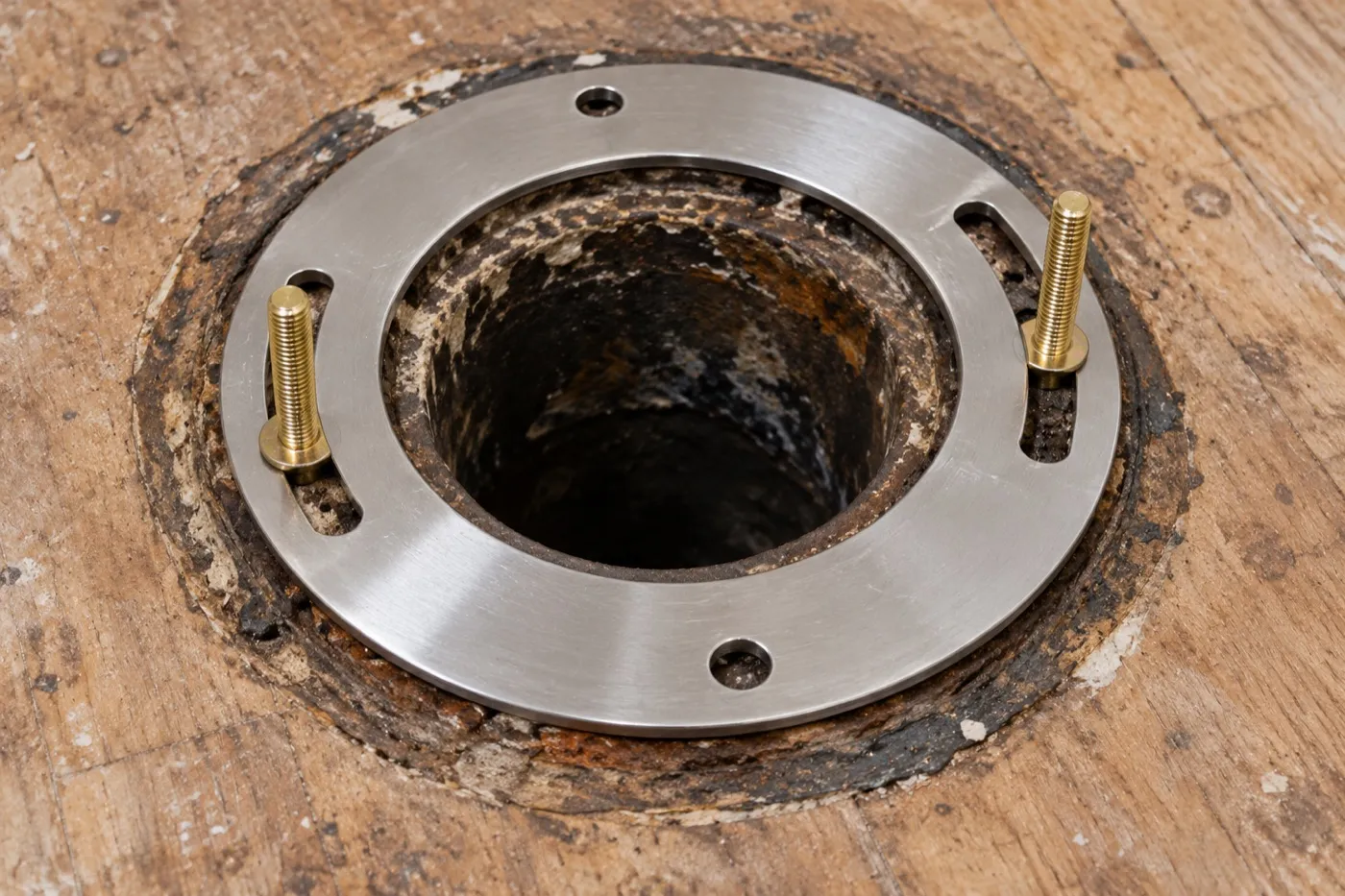
A cracked plastic flange or a broken bolt slot can often be fixed with a metal repair ring screwed down over it. A flange that sits below the finished floor needs an extender or spacer. A rusted cast iron flange or a rotted subfloor means replacing the flange and repairing the floor, which is a job for a plumber.
Step 5: Set the toilet on a new wax ring
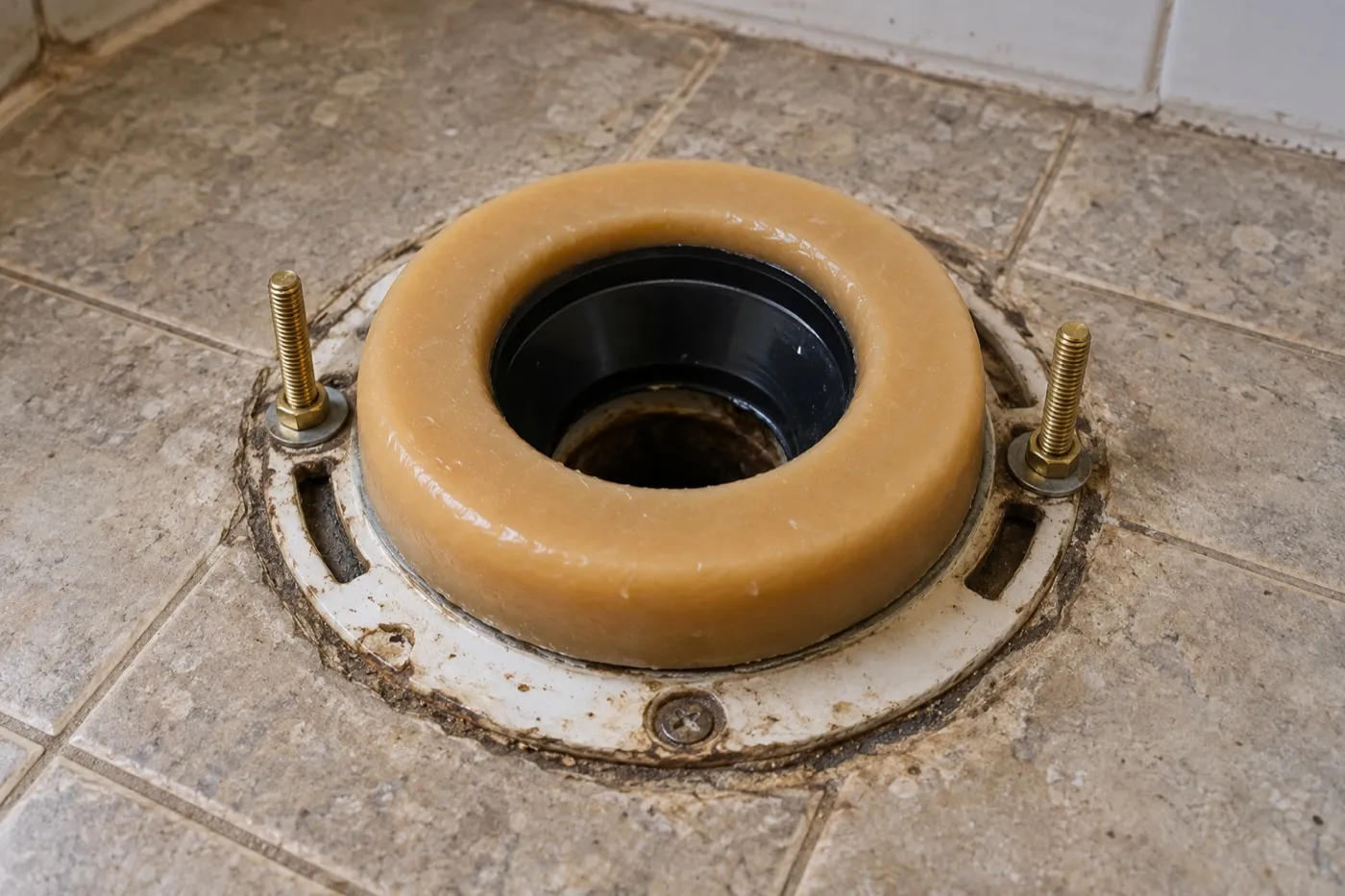
Put new bolts in the flange, press a new wax ring onto it, and lower the toilet straight down over the bolts. Press down firmly, then tighten the nuts a little at a time on each side. Don't overtighten; porcelain cracks. Reconnect the water, flush several times and check the base for leaks.
What causes a toilet flange to break?
- Age. Older Central New Jersey homes often have cast iron flanges that rust through, and plastic flanges get brittle.
- A toilet that rocked for a long time. Every rock puts stress on the bolt slots until one breaks.
- Overtightened bolts, which crack plastic flanges.
- A new floor laid without raising the flange, which leaves the flange too low to seal.
- A slow leak that rotted the subfloor, so the flange has nothing solid to hold.
When to call a plumber
Pulling a toilet is heavy work and opens the drain to the room, so it's reasonable to leave it to a plumber. Rusted cast iron, a soft subfloor, a low flange after a remodel or a ceiling stain below means the repair goes past a wax ring, and doing it wrong leads to leaks into the floor. We repair flanges and reset toilets across Central New Jersey, with written upfront flat-rate pricing options before any work starts. See our toilets, faucets and fixtures service, read about a sewer smell in the house, or call 908-873-6686.
Get tips and reminders
New guides and seasonal reminders. A few emails a year.
Stop and call us if
- The floor around the toilet is soft, spongy or stained.
- There's a water stain on the ceiling below the bathroom.
- The flange is cast iron and cracked or rusted away.
- The flange sits below a new tile floor after a remodel.
- The toilet still rocks or smells after a new wax ring.
Call 908-873-6686.

Michael Holt
Owner and operator of Plumbing Doctor, NJ Master Plumber (Lic. #36BI01345600) and U.S. Marine Corps veteran.
More about Mike