How to Winterize an Outdoor Faucet in 4 Steps
By Mike Holt, NJ Master Plumber · October 15, 2024 · 3 min read · Updated November 1, 2026
Quick answer
Disconnect the garden hose, close the indoor shut-off valve that feeds the outdoor faucet, open the faucet outside to drain the pipe, and put on an insulated cover. Leave the outside faucet open all winter. Do it before the first hard freeze, which in Central New Jersey usually comes in November.
- Difficulty
- Simple seasonal task. Frozen or split faucets need a professional
- Time
- 10 minutes per faucet
- You need
- Bucket, insulated faucet cover
Rather not risk it? A licensed plumber can handle this for you, with written upfront flat-rate pricing options before any work starts.
Water leaking inside behind the faucet? Close the indoor valve for that faucet, or the main water shut-off, then call us. 908-873-6686
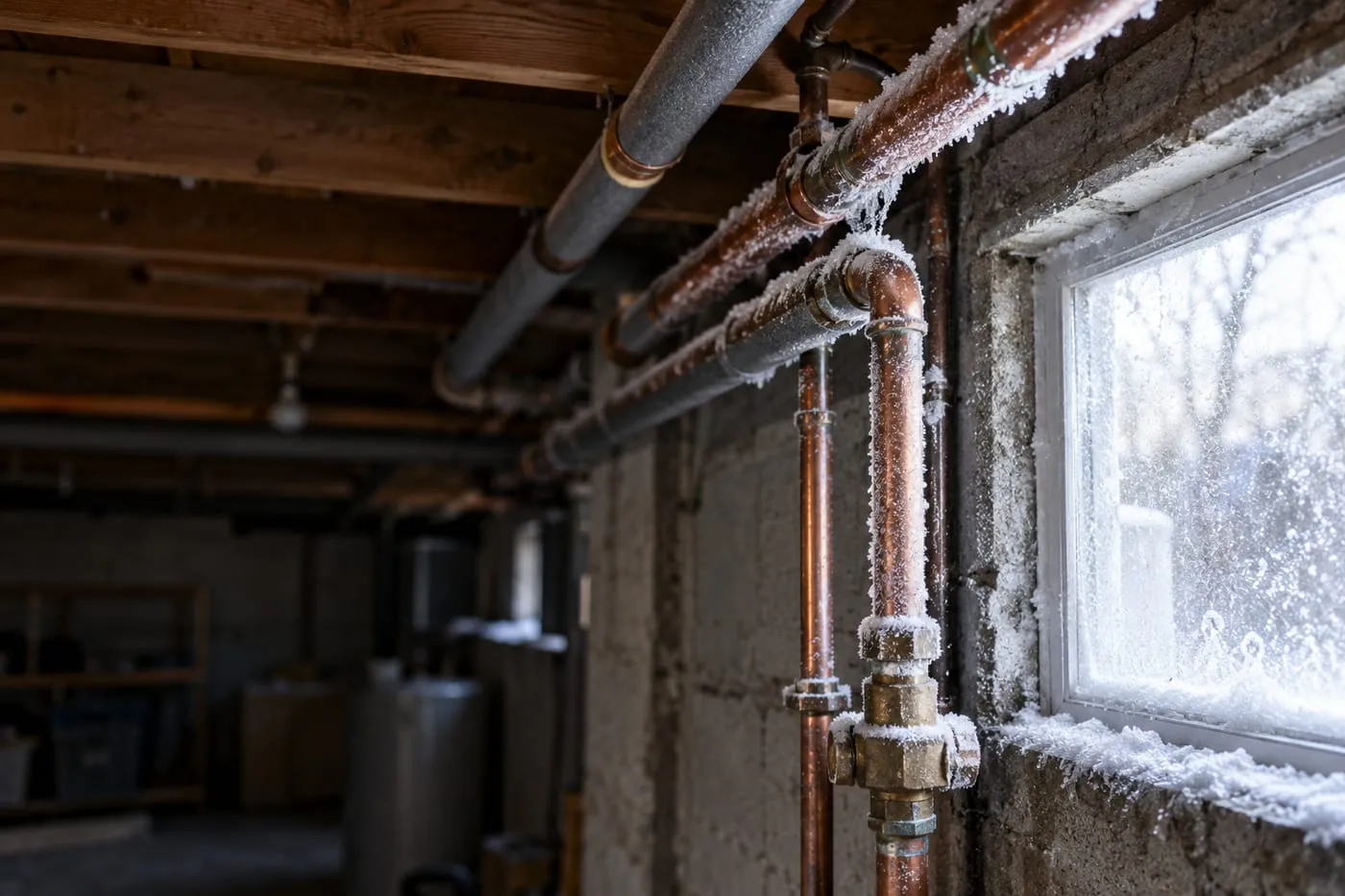
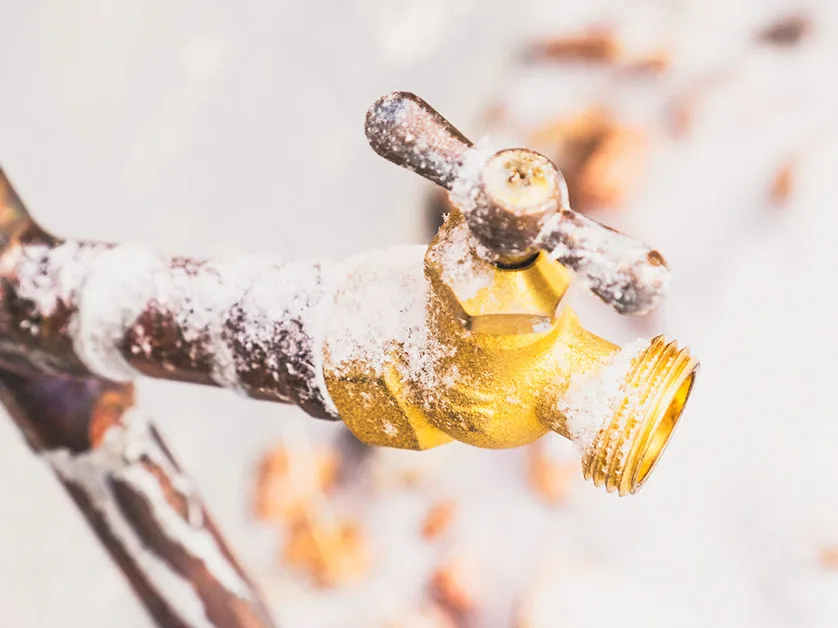
Outdoor faucets (hose bibs) are often the first part of the plumbing to freeze. The faucet sits outside and the pipe behind it runs through the cold edge of the house. When the water inside freezes, it can split the faucet or the pipe inside the wall, and you usually don't find out until spring, when you turn it on and water runs into the basement.
How to winterize an outdoor faucet
Step 1: Disconnect the hose
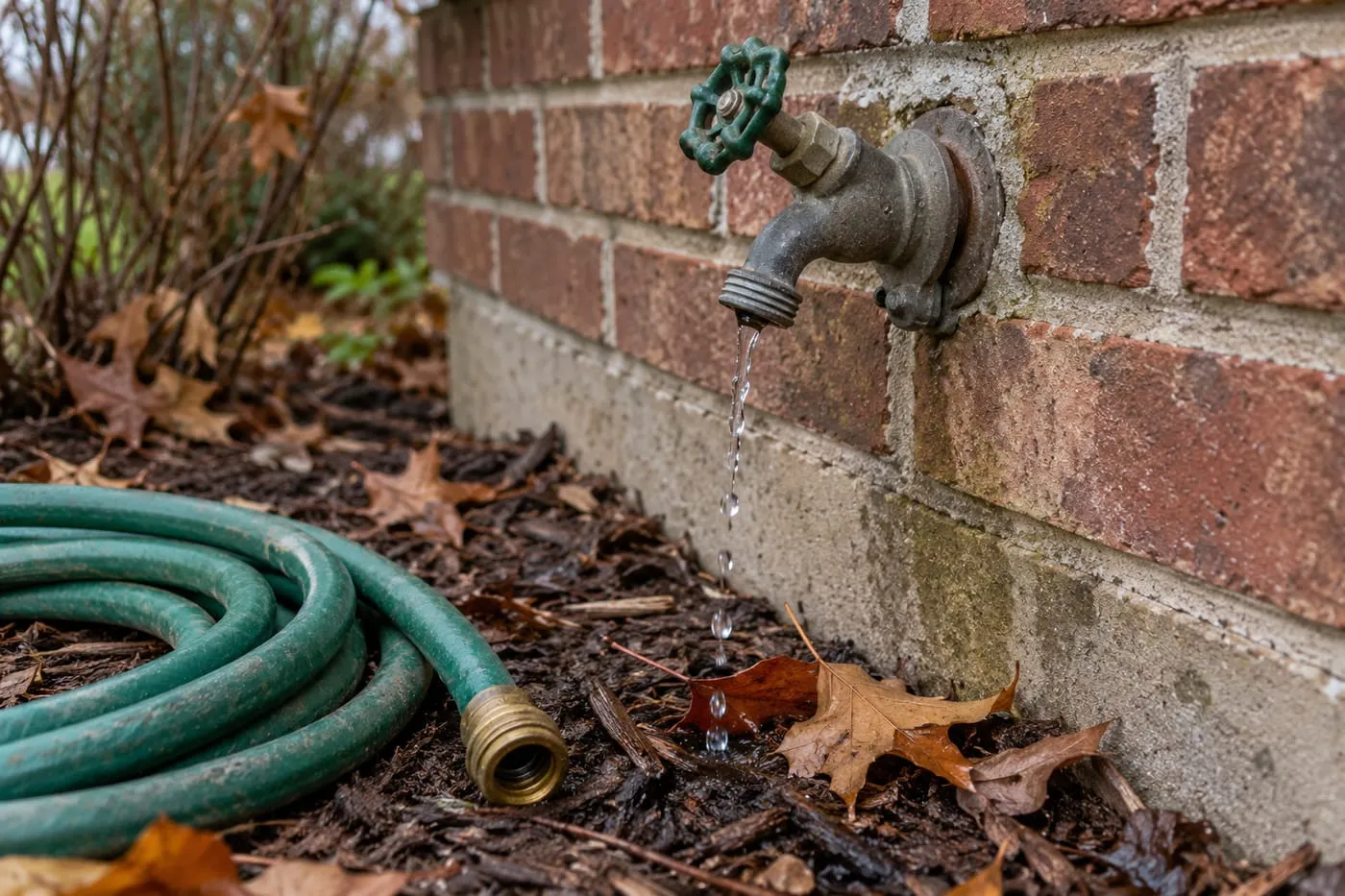
Take off the garden hose, splitters and timers. A connected hose traps water in the faucet, and that's the most common reason outdoor faucets split, frost-free ones included. Drain the hose and store it in the garage or shed.
Step 2: Close the indoor shut-off valve
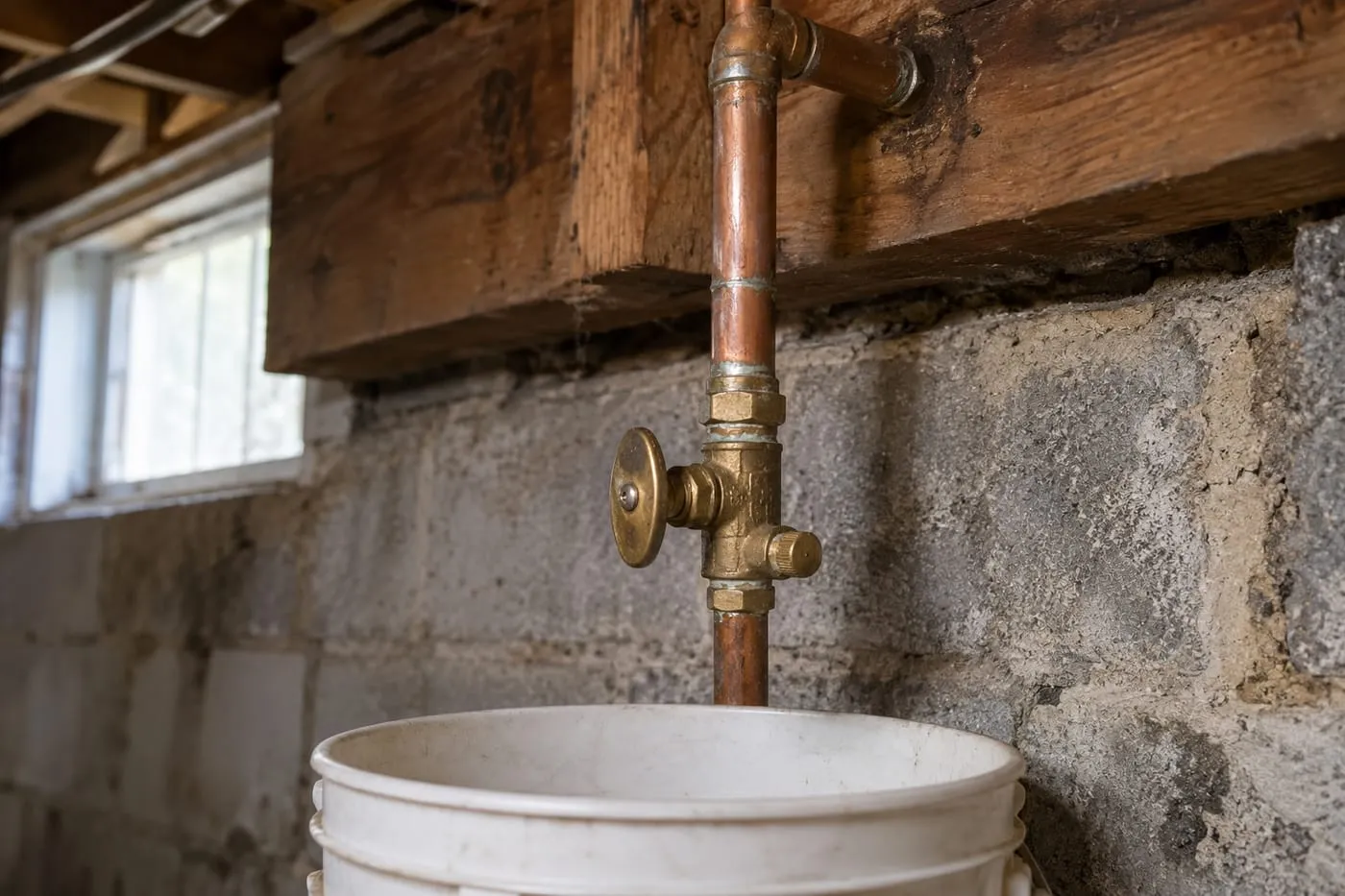
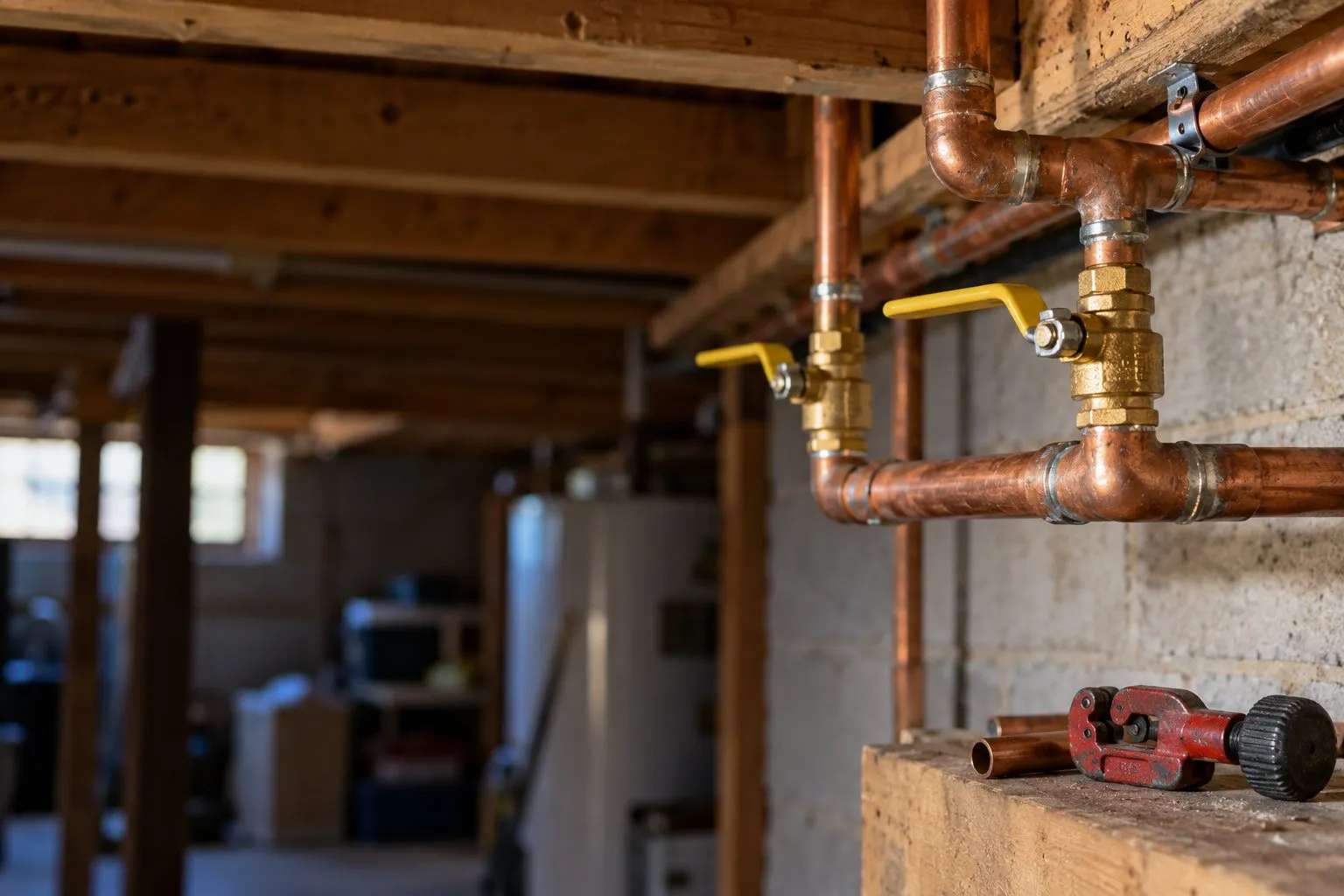
Go to the basement or crawl space and find the pipe that runs to the outdoor faucet, on the inside of the wall right behind it, usually up near the ceiling. Turn its valve clockwise until it stops. No valve? The faucet may be frost-free (see below), or it may need a valve added.
Step 3: Drain the line
Open the outside faucet all the way and let the water run out. If the indoor valve has a small brass drain cap on its side, put a bucket under it, unscrew the cap to drain the last of the water, then put the cap back. Leave the outside faucet open for the winter.
Step 4: Cover the faucet
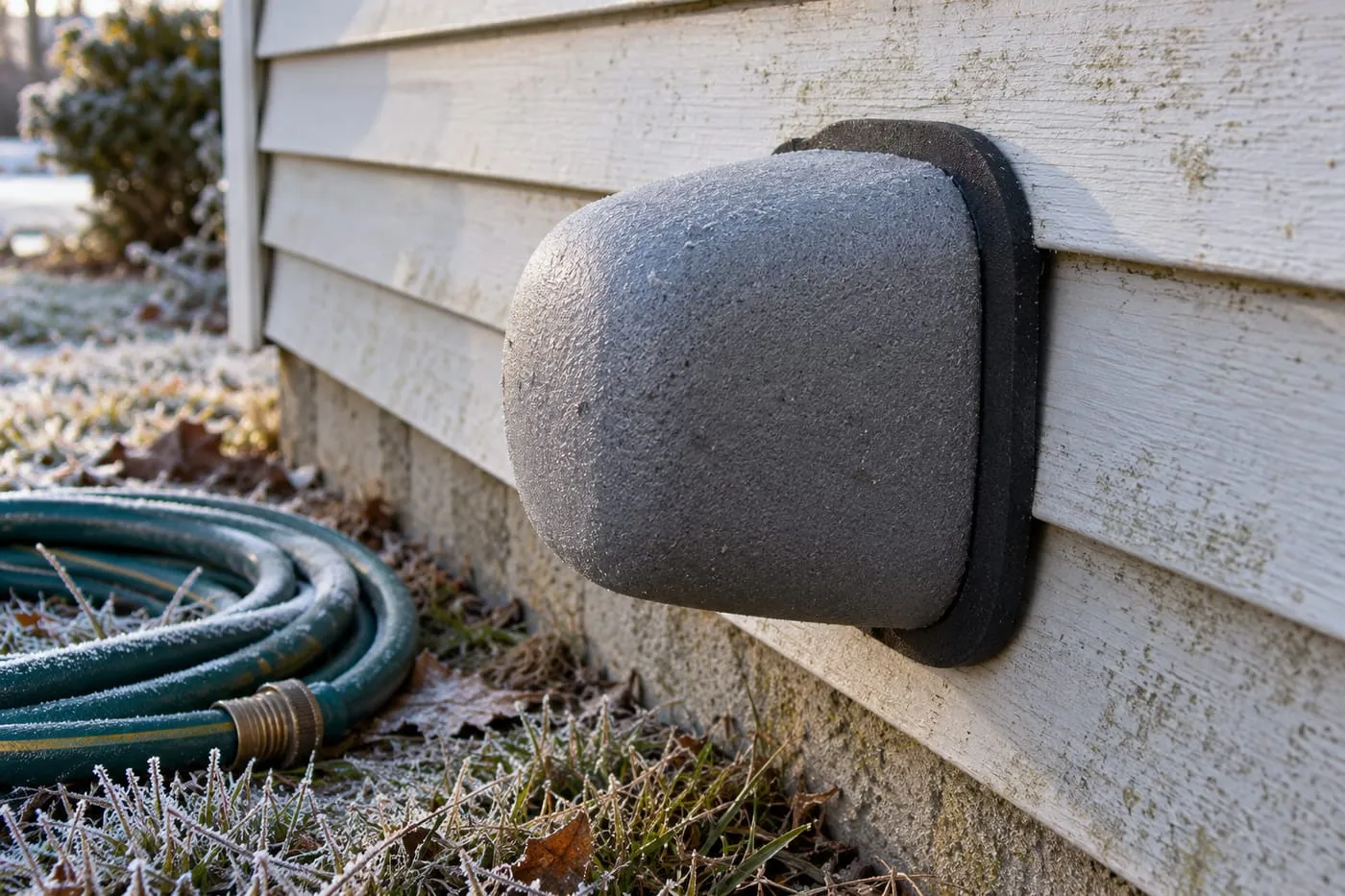
Push an insulated foam cover over the faucet and tighten its loop behind the spout. Covers cost a few dollars at any hardware store. On a drained faucet it's extra protection. It won't save a standard faucet that still has water in it.
Should you switch to a frost-free hose bib?
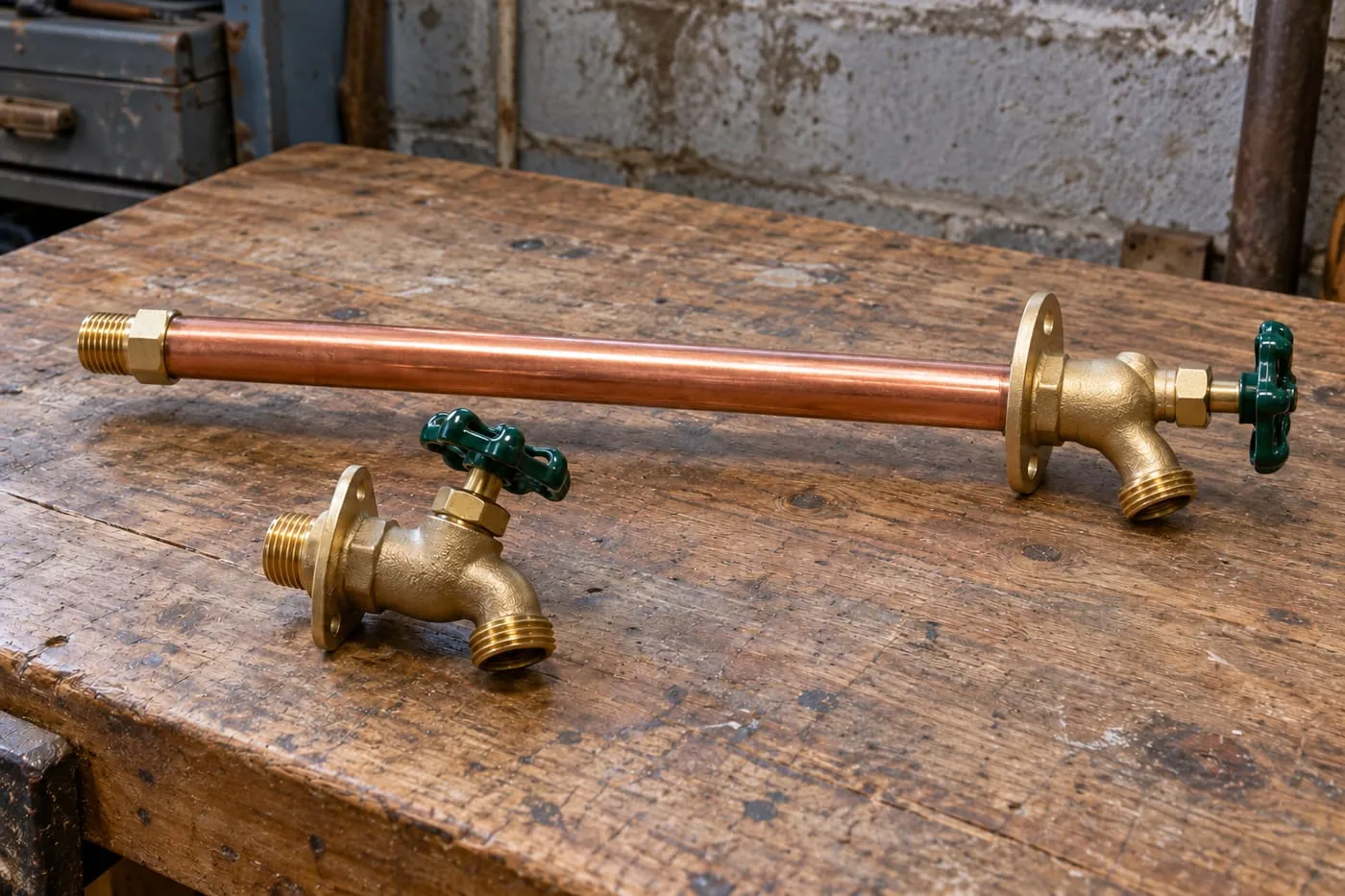
A frost-free hose bib (frost-proof sillcock) has a long body that reaches through the wall. Its valve shuts the water off at the inside end, 6 to 12 inches or more into the heated house, where it won't freeze. It's worth it if:
- Your outdoor faucet has no indoor shut-off valve
- The shut-off is hard to reach, behind a finished ceiling for example
- A faucet has split before
- You want to use the faucet on mild winter days
It only works if it's installed with a slight downward slope toward the outside, and you still have to take the hose off every fall. We install frost-free hose bibs and add indoor shut-off valves. Call 908-873-6686. Written upfront flat-rate pricing options. You choose.
Faucet already frozen?
Leave the thawing to us. A pipe can split while frozen and only leak once it thaws, and that can happen inside the wall.
Step 1: Close the indoor valve
If there is one and you can reach it safely, close it so a split pipe can't flood the wall as it thaws. If there's no valve, use the main shut-off where safe.
Step 2: Never use a torch or open flame
Don't use a torch or any flame against the house.
Step 3: Call us
Call 908-873-6686 and tell us what you found. Our guide to preventing frozen pipes covers the rest of the house.
Did it split over the winter? Check in spring
The first time you use the faucet in spring, turn it on and have someone watch the basement or the wall behind it. A split frost-free faucet often leaks only while the handle is open, so the damage stays hidden until then. Look for:
- Water dripping inside the wall, or a wet spot on the ceiling or foundation below the faucet
- Water spraying from behind the faucet outside
- Weak flow from a faucet that used to run strong
Shut it off and call us. A split hose bib can usually be replaced. Water that ran inside a wall may need leak detection to find out how far it went.
Get tips and reminders
New guides and seasonal reminders. A few emails a year.
Stop and call us if
- You can't find an indoor shut-off valve for the faucet.
- The indoor valve won't close, or drips from the stem.
- Water shows up inside the wall or basement when the faucet is on.
- The faucet split last winter and you want a frost-free hose bib instead.
Call 908-873-6686.

Michael Holt
Owner and operator of Plumbing Doctor, NJ Master Plumber (Lic. #36BI01345600) and U.S. Marine Corps veteran.
More about Mike